



The government has moved to reassure Kenyans that adequate legal and regulatory frameworks are in place to oversee theological education, even as concerns mount over the rapid proliferation of theological colleges.
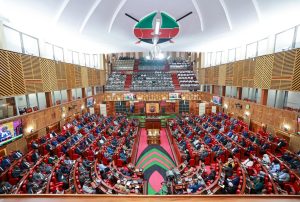
Appearing before the National Assembly’s Public Petitions Committee, State Department for Technical and Vocational Education and Training (TVET) Principal Secretary Dr Esther Thaara Muoria said existing laws are sufficient to regulate accreditation, recognition and registration of institutions offering theological training.
Muoria cited the TVET Act Cap. 210A and the Kenya National Qualifications Framework (KNQF) Act Cap. 214 as key pieces of legislation that provide a comprehensive framework for managing both theological and non-theological education in Kenya.
In her submissions to the committee, the PS explained that the laws not only establish standards for accreditation but also create mechanisms for the co-creation and periodic review of curricula.
She added that they outline clear pathways for institutions to gain recognition as duly registered providers of theological education and as qualification awarding bodies.
“The existing legal framework provides robust mechanisms to ensure that all training institutions, including those offering theological education, meet the required standards,” she said.
Her remarks come in response to a petition filed by Rev Josiah Njiru Wajoshuah, who raised alarm over the mushrooming of unregulated religious training institutions.
The petitioner expressed concerns over accreditation practices, the absence of standardised curricula, and what he termed gaps in the regulatory framework governing theological education.
The committee heard that the rise of unlicensed colleges and informal online training platforms has created uncertainty among learners and the public, with fears that some institutions may be issuing certificates that lack official recognition.
However, Muoria maintained that the KNQF Act already provides sufficient legal backing to address these challenges. She pointed out that Section 5 (1) (a) of the Act mandates the Kenya National Qualifications Authority (KNQA) to recognise and register qualifications awarded by accredited institutions.
According to the PS, this mandate ensures harmony, comparability and standardisation of qualifications at both national and international levels, thereby safeguarding the integrity of Kenya’s education system.
While acknowledging public concern over the proliferation of theological colleges, Muoria emphasised the government’s commitment to working collaboratively with stakeholders in the education and religious sectors.
“We acknowledge the legitimate desire by Kenyans to see proper regulation of theological institutions. As a State Department, we remain committed to engaging all stakeholders to build public confidence in accreditation processes and ensure quality training,” she said.
She added that a collaborative approach would not only enhance effective service delivery but also create an environment where institutions, learners and the public are protected under existing legislation.
Muoria further advised the petitioner and other stakeholders to work closely with regulatory bodies recognized under the KNQF (General) Regulations, 2025.
These agencies, she noted, are mandated to enforce compliance and can play a critical role in identifying and weeding out unlicensed and unaccredited institutions.