
Migwena grounds in Bondo, Siaya County, carry memories that stretch beyond sporting competitions and cultural festivals.
The venue is woven into the history of the Odinga family and is now set to host a gathering honouring Raila Odinga one year after his death.
For the people of Sakwa, the grounds have served generations as a place to meet, compete and celebrate their cultural identity.
For the Odinga family, however, Migwena also holds a deeply personal significance linked to the beginning of Jaramogi Oginga Odinga’s relationship with Mary Adhiambo.
The former vice-president is said to have noticed Mary, a young athlete from Alego, while she was taking part in sporting activities at the grounds.
Their relationship would eventually lead to marriage and a family that included Raila and his elder brother, Dr Oburu Oginga.
Akelo Gwela, chairperson of the home committee organising the first anniversary celebrations, said the encounter was an important part of the family’s history.
“His eye caught the young girl from Alego. Jaramogi immediately sent emissaries to the vibrant athlete, and that is how he got Raila and Oburu’s mother,” Gwela said.
Jaramogi and Mary married on January 23, 1943, at Maseno School before holding a traditional reception in Sakwa. Their first child, Dr Oginga, was born on October 15, 1943.
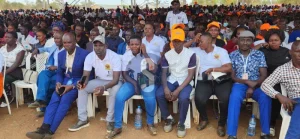
More than 80 years later, Migwena is preparing to welcome mourners, political leaders and cultural enthusiasts for the commemoration of Raila, who died on October 15, 2025.
The venue’s selection reflects its longstanding importance to the community and its association with activities that Raila enjoyed.
Prof Adams Oloo, chairman of the National Steering Committee for the anniversary celebrations, said the grounds provided an appropriate setting for an event celebrating the former Prime Minister’s life and connection with ordinary Kenyans.
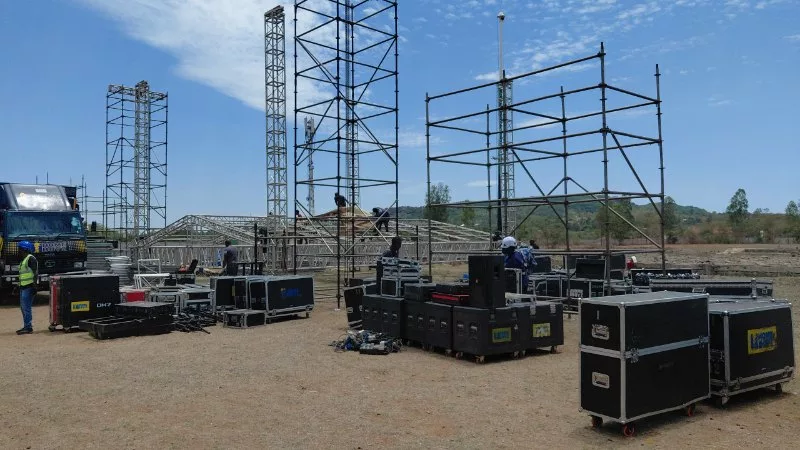
“It will be a celebration worthy of the man. Musicians from across the country and beyond will take to the stage to honour him in song, because Raila Odinga loved the people, and the people loved him back,” Oloo said.
The planned celebrations will bring together music and cultural activities, reflecting the traditions that have long defined gatherings at Migwena.
From sporting competitions to a cultural landmark
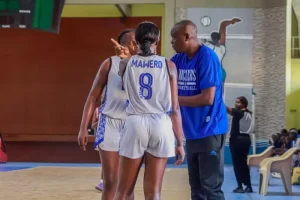
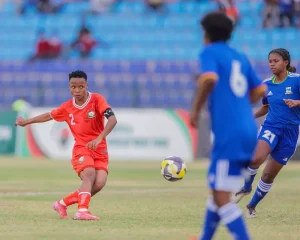
Migwena’s significance extends well beyond the Odinga family. According to Gwela, the grounds have hosted community activities since the early 1930s, when wrestling competitions and ajua games attracted participants and spectators.
By the 1960s, the venue had developed into a wider cultural meeting place. Its events helped bring neighbouring communities together and encouraged peaceful relations.
Over the years, Migwena has continued to serve as a venue for major gatherings in the greater Siaya region. Improvements to its security infrastructure, including a perimeter wall and several access points, are intended to make it easier to accommodate large crowds.
Raila maintained his connection with the grounds into adulthood. During the Migwena festivals in 2024, he watched traditional wrestling and flagged off a boat race.
The visit also offered him an opportunity to revisit memories of his younger years. He recalled a childhood fistfight in which he said he had wrestled another boy to the ground.
Siaya Governor James Orengo sees the venue as an important part of the community’s cultural heritage and a platform for nurturing local talent.
He said commemorating Raila at Migwena would reinforce the former Prime Minister’s appreciation of sports and culture while highlighting their potential to promote social inclusion.
“Holding this celebration here is continuing with Raila’s legacy of upholding our culture and sports which were close to his heart. Sports can serve as a powerful vehicle for social change. Through this, we can advocate for inclusivity, gender equality and the empowerment of the differently abled,” Orengo said.
The story behind Jaramogi’s final visit
Migwena also features in local accounts about Jaramogi’s final days, including a story that some elderly residents interpret as a premonition of his death.
According to the accounts, Jaramogi returned to the grounds on January 1, 1994, to watch sporting activities. He was already the subject of stories about his supposed immortality and the alleged ability to transform into other creatures.
During that visit, he is said to have addressed the gathering in Dholuo, saying, “Anbe an ana dhano”, loosely translated as, “I am also human”.
The statement reportedly left some listeners wondering about its meaning. Jaramogi died 19 days later, prompting some residents to interpret his words as a recognition that he, like everyone else, was mortal.
The story remains part of the oral history associated with Migwena, adding to the venue’s place in the memories of the community.