



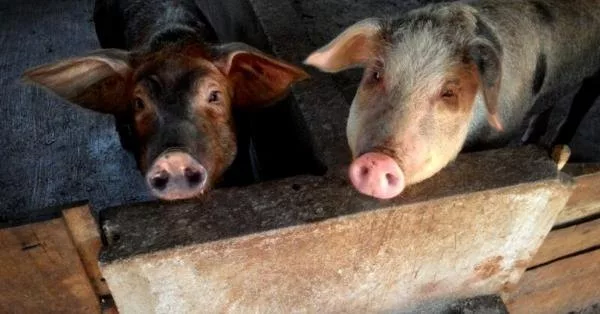
African swine fever outbreaks have been reported in at least six counties, causing high pig mortalities and substantial losses to farmers.
Significant cases have been recorded in Tharaka Nithi, Kiambu, Busia, Embu, Kakamega and Siaya.
African swine fever is a devastating and highly contagious viral disease of pigs, with no known cure or commercially available vaccine.
Director of Veterinary Services Allan Azegele said the disease continued to circulate, with surveillance conducted through the Kenya Animal Bio-surveillance System (KABS), the Laboratory Information Management System (LIMS) and field investigations confirming outbreaks during 2025 and the first half of 2026.
In Juja, Kiambu, pig farmer Alex Ndung’u said the outbreak had left farmers counting heavy losses after pigs began falling sick and dying.
He was lucky his pigs were ready for sale when he heard about the outbreak in May, allowing him to sell them before the situation worsened.
Ndung’u has since avoided bringing in another herd for fear of the disease.
“I am torn between bringing in a few pigs and waiting because I do not want to risk the outbreak. I am buying time until the government says the outbreak is over, then I can bring in other pigs,” he said.
“For now, I am only concentrating on poultry farming. I have seen my fellow pig farmers make losses, and I would rather wait.”
Another farmer in Ruiru said the outbreak had heightened fears among pig keepers, with farmers becoming more cautious about buying pigs, allowing visitors onto their farms and moving animals.
In Kakamega, where suspected cases were reported in Shinyalu and Ikolomani, farmers said the deaths had raised concerns about the future of pig farming.
The county government has urged farmers to strengthen biosecurity and avoid moving pigs between farms, markets and slaughter facilities.
On August 12, the Directorate of Veterinary Services announced enhanced nationwide measures to strengthen surveillance, improve farm biosecurity and intensify response efforts following continued outbreaks in several counties.
Azegele said the disease does not infect people and does not pose a public health risk. Pork inspected by an authorised meat inspector is safe for human consumption.
However, he said ASF causes devastating losses to farmers and threatens livelihoods, food security and the growth of Kenya’s pig industry.
“There is currently no effective treatment or commercially available vaccine for the ASF virus strains circulating in Kenya,” Azegele said.
The directorate has directed county directors of veterinary services to enhance surveillance, strengthen biosecurity, enforce movement controls, activate rapid response teams and intensify public awareness campaigns.
Farmers, traders, transporters, slaughterhouse operators, butchers and other stakeholders have been urged to immediately report unusual illness or sudden deaths in pigs to veterinary authorities.
They have also been advised to restrict unnecessary movement of people, animals, vehicles and equipment into pig farms, maintain routine cleaning and disinfection of pig houses and equipment, avoid feeding pigs untreated swill or food waste, and obtain animals only from reputable sources.
The directorate has further urged farmers to comply with animal movement permit requirements and safely dispose of pig carcasses under the guidance of veterinary authorities.
County veterinary departments have been instructed to increase inspections at livestock markets, slaughterhouses and retail pork outlets, ensure rapid laboratory confirmation of suspected cases, trace animal movements and intensify farmer training.
The measures are being implemented under the national African Swine Fever Control Strategy and the ASF Risk Communication and Community Engagement Strategy.
Data covering January to June 2026 shows the disease affected several counties, with Kiambu recording the most significant outbreak from mid-May.
More than 20 farms in Juja, Thika and Ruiru were affected, with an estimated 1,470 pigs reported sick and/or dead. Mortality rates reached up to 100 per cent in some herds.
The outbreak highlighted the vulnerability of intensive, peri-urban pig production systems in the Central region.
Tharaka Nithi recorded a major outbreak in early January, with 108 cases and 97 deaths.
The case fatality rate was nearly 90 per cent, indicating an acute form of ASF consistent with the Genotype IX virus known to circulate in the region.
Kakamega recorded one case during the same period, while Busia recorded one case in March, with no deaths.
In May, three cases and one death were reported in Embu county.
The report said the presence of ASF in Embu, which neighbours Tharaka Nithi, where a major outbreak occurred in January, suggested the disease could become endemic in the wider Mount Kenya region.
The disease was again reported in Kiambu from mid-May to June.
However, laboratory confirmation remains a major challenge. Several outbreaks, including the significant Kiambu outbreak, involved suspected cases where samples had not been submitted for testing.
“Where laboratory confirmation was conducted, cases were confirmed in Embu and other counties. However, many reports remain presumptive, based on clinical signs and epidemiological links. This gap in diagnostic confirmation remains a critical weakness in the national surveillance system,” the report said.
The Kiambu outbreak, involving more than 1,000 pigs, had not been officially confirmed, according to the report, hindering a coordinated national response and legal enforcement measures.
Kiambu County Veterinary Services responded by imposing a provisional quarantine, launching active surveillance and initiating community sensitisation programmes.
Another challenge is the presence of asymptomatic carrier pigs.
Research published in 2026 found that 15.9 per cent of healthy pigs sampled along the Kenya-Uganda border tested positive for ASF virus in internal organ tissues.
The finding raises the risk of new outbreaks occurring without clear warning signs and complicates efforts to control the disease.
The research identified the circulating virus as Genotype IX, which has been associated with high mortality rates.
Annual economic losses from ASF in Kenya are estimated at about Sh906 million, heavily affecting smallholder farmers who form the backbone of the pig value chain.
Kenya operates under a national strategy for controlling ASF that emphasises surveillance, biosecurity and rapid response. However, the 2026 outbreaks highlight persistent challenges in surveillance, farmer compliance and diagnostic capacity.
The report recommends improving laboratory confirmation, particularly in Kiambu, and enhancing surveillance in high-risk areas including Kiambu, Tharaka Nithi and Embu, as well as border regions such as Busia.
It also calls for stronger farmer education and extension services to improve understanding of biosecurity, early reporting and the risks posed by asymptomatic carriers.
The report recommends continued support for vaccine research and development targeting Genotype IX, noting that an effective vaccine remains the only long-term solution for controlling ASF in Kenya.
For farmers such as Ndung’u, however, the immediate concern remains whether and when it will be safe to return to pig farming.
“I am buying time until the government says the outbreak is over,” he said.