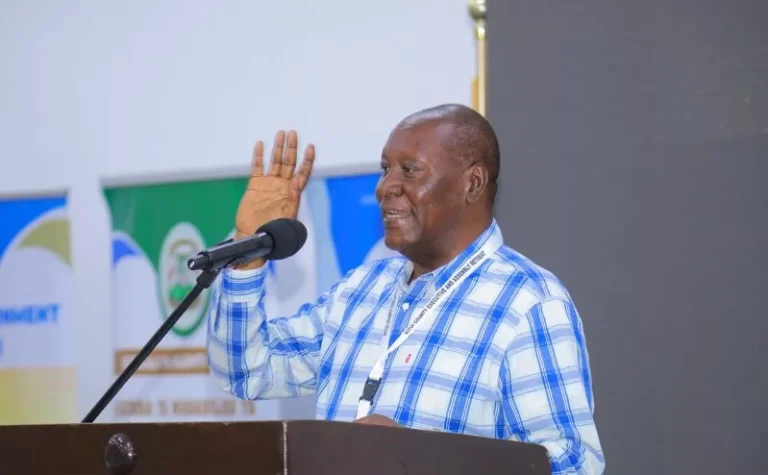


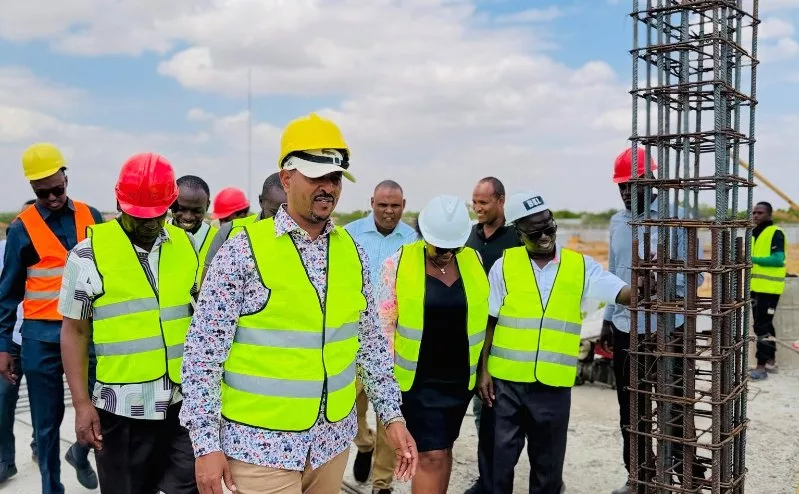
Northeastern leaders have made their political choice, with Garissa Township MP Dekow Mohamed declaring the region will back President William Ruto’s bid for a second term.
Mohamed, a first-time UDA MP, said Northeastern leaders and residents had made a deliberate decision to support Ruto and should not be subjected to criticism or pressure from politicians outside the region.
“Our position is clear. We are supporting Ruto’s re-election, and we have no apologies for doing that,” he said at a function in Garissa town.
The legislator said the region has the same right as other communities to determine its political direction.
“For us as a region, in one accord, we have decided that we will stand with President Ruto. Those who want to hear that and do not like our stand, that is none of our business. We are Kenyans just like any other community, and we are entitled to having our own stand and making our choices,” he said.
Mohamed attributed his support for the President partly to what he described as increased government attention to Northeastern under the Kenya Kwanza administration.
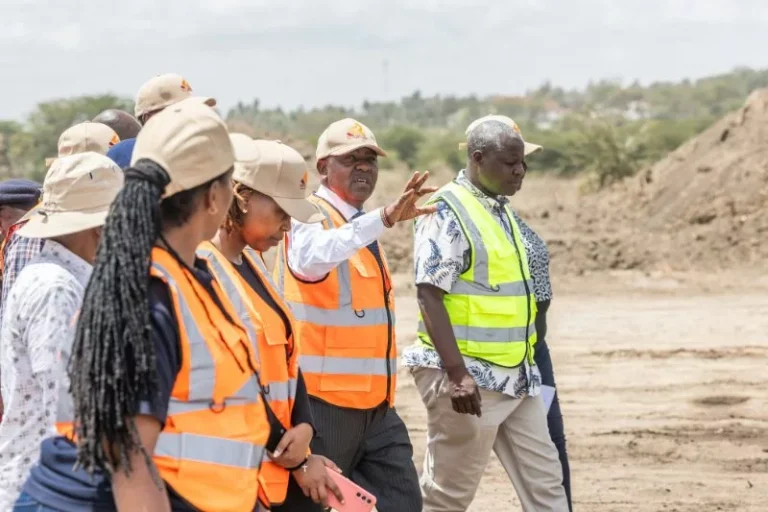
He cited the development of Garissa Airport as one of the projects he said demonstrated the government’s commitment to the region.
“It is only President Ruto who considered our region on many things. He considered this airport two years ago and today we can see the final product,” he said.
The MP said residents should be allowed to assess the administration based on projects and programmes implemented in the region rather than being expected to adopt political positions determined elsewhere.
His declaration comes as Northeastern increasingly positions voter registration at the centre of its political strategy ahead of next year’s polls.
The region has traditionally recorded relatively low voter registration figures compared with more populous parts of the country.
Political leaders have therefore been pushing for intensified national identity card registration, followed by voter registration, in an effort to increase the number of eligible voters and strengthen the region’s political influence.
The strategy is based on a simple political calculation: the more eligible residents who register and turn out to vote, the greater the region’s bargaining power in a presidential election.
Mohamed said the region would continue mobilising residents to participate fully in the electoral process.
But his declaration also brought him into the emerging debate over the importance of regional voting blocs and the political weight of different parts of the country.
He took issue with former Deputy President Rigathi Gachagua’s repeated references to the voting strength of the Mt Kenya region, questioning whether elections should be reduced to a contest over numbers.
Gachagua has repeatedly spoken about the political weight of Mt Kenya and its estimated voting numbers, including claims the region commands millions of votes that could influence the outcome of the next presidential election.
Mohamed challenged the former DP to focus on leadership records rather than perceived numerical advantage.
“Gachagua should also stop boasting about perceived numbers. He should tell us whether we are going to the election to elect leaders based on their track record and what they have done for Kenyans, or whether we will be electing individuals based on perceived numbers for the sake of it,” he said.
For Mohamed, voters should be presented with choices based on leadership performance, development and the ability to unite the country rather than ethnic or regional arithmetic.
The remarks signal the increasingly competitive political calculations taking shape across Kenya ahead of the 2027 election.
For Northeastern, the debate is not only about which presidential candidate to support but also about turning its political preference into measurable electoral influence.
The renewed focus on identity card and voter registration is therefore becoming an important part of the region’s emerging political mobilisation strategy.
Having declared its preferred presidential candidate, the next challenge for Northeastern leaders will be to translate that political position into voter numbers and turnout when Kenyans eventually go to the ballot.