


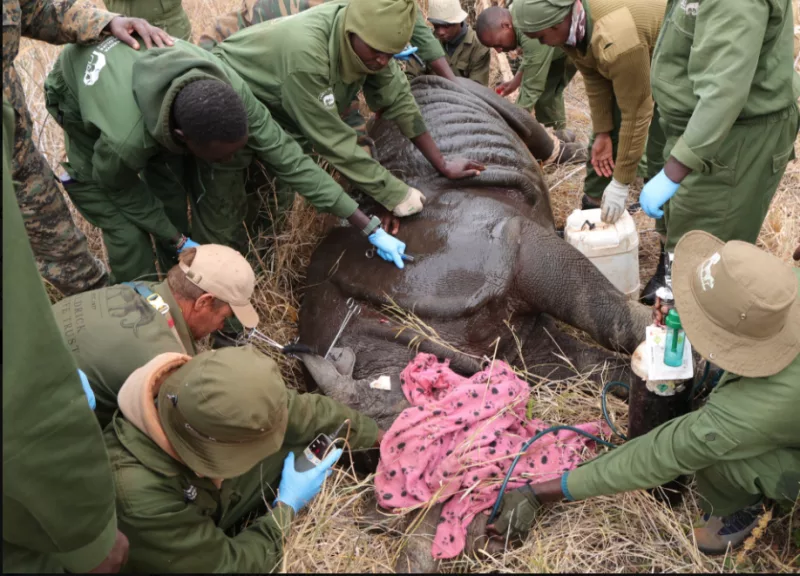
The Kenya Wildlife Service (KWS) has explained why it notches rhinos, saying the distinctive marks are an important tool in monitoring and protecting the endangered animals.
KWS said ear-notching enables conservation teams to identify individual rhinos, track their movements and maintain records on their health, survival and reproduction.
“Why do we notch rhinos? Those distinctive marks are more than just identifiers,” KWS said in a statement.
“They help conservation teams tell individual rhinos apart, track their movements and build vital records on their health, survival and reproduction.”
The wildlife agency said it is currently undertaking an ear-notching and tagging exercise targeting 22 black rhinos at the Tsavo West Rhino Sanctuary.
The sanctuary is described by KWS as the world’s largest rhino sanctuary, making the exercise an important component of efforts to strengthen the monitoring and management of the critically endangered species.
KWS said identifying individual rhinos allows conservationists to develop a better understanding of their movements and population trends while also helping them identify emerging threats.
“Every notch helps tell a story,” the agency said.
“By identifying individual rhinos and tracking their movements, conservation teams can better understand population trends, identify emerging threats and make informed decisions that support the species’ recovery.”
The exercise comes against the backdrop of Kenya’s long battle to protect black rhinos from poaching and other threats.
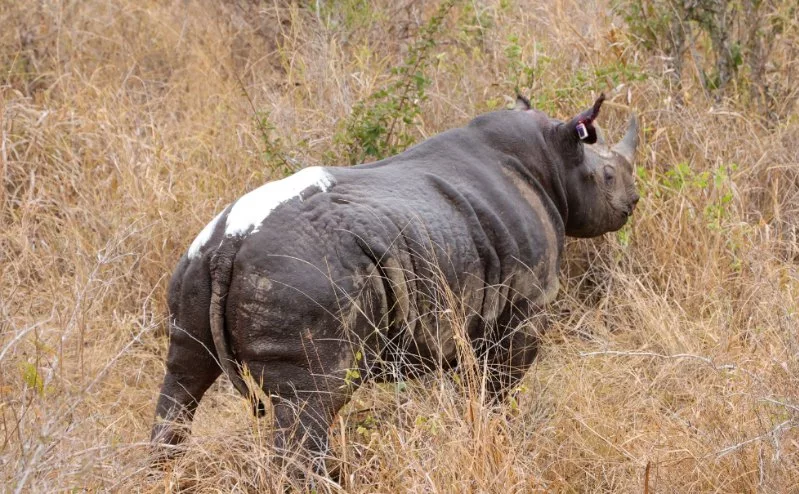
An ear-notched rhino at Tsavo West Rhino Sanctuary/KWS
According to KWS, Kenya had approximately 20,000 black rhinos in 1970. However, rampant poaching during the following years drastically reduced their numbers, with the population falling to fewer than 400 by the mid-1980s.
The agency said sustained conservation efforts have since helped reverse the decline.
By 2025, Kenya’s black rhino population had increased to an estimated 1,147 individuals, representing a significant recovery from the crisis witnessed in the 1980s.
Despite the progress, KWS warned that conservation efforts must continue to safeguard the gains made over the decades.
“But the work is far from over,” the agency said.
It added that every rhino identified through the monitoring programme strengthens conservationists’ ability to protect the species.
“Every rhino identified strengthens our ability to monitor and protect the species. Every record adds to our understanding. Every conservation action helps secure their future,” KWS said.
The ear-notching exercise is therefore expected to provide conservation teams with valuable information that can be used in making decisions about the management and protection of Kenya’s black rhino population.
KWS said it remains committed to ensuring the continued recovery of the species and its survival in the wild.
“KWS remains committed to securing the future of Kenya’s black rhinos, ensuring this iconic species continues to recover, reproduce and thrive in the wild for generations to come,” the agency said.