

The National Fund for the Disabled of Kenya has called for more funding to fully support institutions that cater for the disabled.
NFDK Board of Trustees chairman Francis Kibera said limited funding has derailed many projects yet the number of those wityh disabilities continue to rise.
“We receive more than 250 applications from institutions every year, but because of limited resources, we are only able to support about 60 institutions in a financial year,” Kibera said.
He spoke during the commissioning of a new girls’ dormitory at Muriranjas Rehabilitation Centre in Murang’a county on Wednesday.
Kibera said most institutions seek funding for major infrastructure projects, including dormitories, classrooms, dining halls, kitchens and vocational training workshops to improve learning and rehabilitation services.
The fund receives more than 10,000 applications annually from individual persons with disabilities seeking assistive devices and tools for income-generating activities but only about 2,500 beneficiaries receive support.
“We will continue strengthening partnerships with county governments, institutions, development partners and other disability stakeholders to ensure that no one is left behind,” he said.
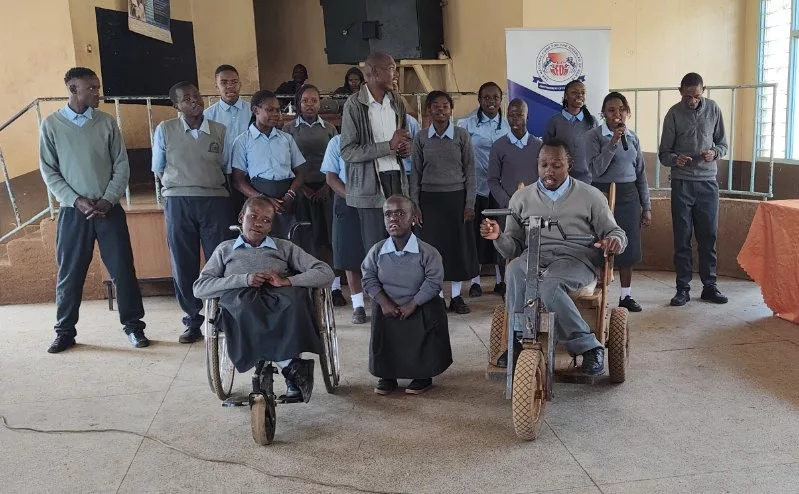
The newly commissioned dormitory at Muriranjas Rehabilitation Centre will provide a safer and more conducive environment for female learners, improve their education, rehabilitation and overall well-being.
Kibera said the fund was also rolling out similar projects in other parts of the country, including the construction of three classrooms at Muiri Primary School in Nyandarua county, three classrooms at Lkurroto Primary School in Samburu and two classrooms at Muchatha Primary School in Kiambu county.
Established in 1980, the National Fund for the Disabled of Kenya is a state corporation mandated to improve the welfare of persons with disabilities by supporting institutions and individuals through grants for infrastructure development, assistive devices, mobility equipment and tools of trade.
Under its flagship infrastructure programme, the fund provides grants of up to Sh3 million for construction and equipping of essential facilities, while smaller grants of up to Sh300,000 support infrastructure improvements and income-generating projects.
It also promotes advocacy for disability rights and inclusion.
Muriranjas Rehabilitation Centre deputy manager Johnson Njoroge welcomed the new dormitory, saying it will ease the institution’s accommodation challenges for female learners.
“The centre has 102 learners, about 90 per cent of whom are persons with disabilities, and we still need support to establish an ICT centre and acquire more vocational and artisan training equipment,” he said.
Area chief Mathew Miako urged parents to take children living with disabilities to specialised learning institutions so they can access education, rehabilitation and life skills instead of being confined at home.
He said early enrolment would enable the children to receive appropriate care and acquire skills that would help them become independent members of society.