


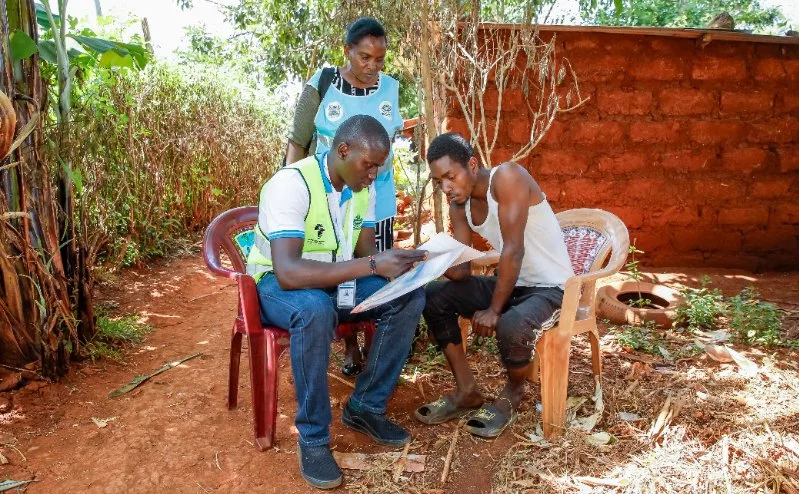
Kirinyaga has partnered with the national government to map snakebite hotspots in the county as part of efforts to support the development of a locally produced antivenom.
The exercise seeks to establish the burden and geographical distribution of snakebite cases.
It is being undertaken by the health department in collaboration with the Kenya Institute of Primate Research (KIPRE) through the Kenya Snakebite Research and Intervention Centre (K-SRIC).
Kirinyaga county director of public health and sanitation Peter Irungu said the study will provide the first comprehensive data on snakebite cases, enabling authorities to plan targeted prevention and treatment interventions.
“This is the first study of its kind in Kirinyaga. The findings will help us determine the actual burden of snakebites, map out the affected areas and enable the county to plan better for prevention, treatment and procurement of antivenom,” he said.
Irungu said snakebite remains a neglected public health challenge despite affecting many residents and the data collected will strengthen surveillance, improve referrals and guide resource allocation.
The findings will also support the development of an affordable antivenom tailored to snake species found in Kirinyaga, while helping identify areas requiring priority interventions.
The mapping drive, which has covered about 600 households over the last two and a half weeks, is expected to extend to all subcounties before completion.
Public health research scientist Cecilia Ngari, representing KIPRE, said the study will help establish the prevalence of snakebite cases while documenting the challenges faced by community health promoters (CHPs) in responding to emergencies.
“Working closely with the county, we have been able to map around 600 households over the last two and a half weeks and we expect to cover all the subcounties before completing the exercise,” she said.
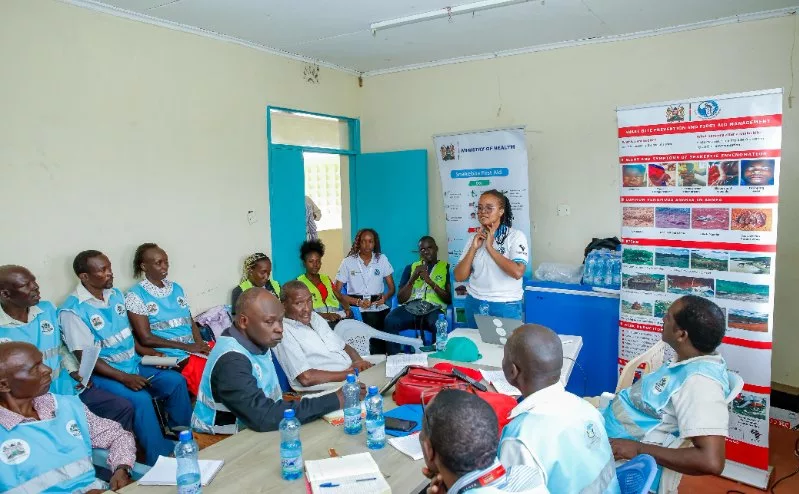
Ngari said the project also involves training CHPs on snakebite prevention, first aid, early recognition of venom exposure and the timely referral of victims.
The trained health workers will educate communities on preventive measures, improve the reporting of cases and ensure victims receive medical attention before complications develop.
Ngari said the mapping data will provide researchers with the evidence needed to develop a locally available antivenom that works effectively against snake species found in Kenya.
“Our institution has been mandated to develop a locally available antivenom that works better against the snake species found in Kenya,” she said.
CHPs were educated on the common signs of snakebite envenoming, including swelling, bleeding, blisters, wounds and drooping eyelids. Snakebite envenoming is a potentially life-threatening disease caused by toxins in the bite of a venomous snake
They were also trained on safe emergency response measures and the importance of immediate referral to health facilities.
Venomous snakes such as the red spitting cobra and black mamba are among the species found in parts of Kirinyaga.
Community health promoter Charity Mugo from Kangai location said the training had equipped her with practical skills to help reduce snakebite-related injuries and deaths.
“We have learnt about different snake species, where they hide and how to prevent them from invading our homes. We have also been trained on safe first aid without putting ourselves at risk,” she said.
“We will now educate our communities to keep compounds clean, use torches when walking at night and seek medical attention immediately after a snakebite.”
Her counterpart from Mumo, Charles Waweru, said the training had helped correct misconceptions about venomous snakes and improved the ability of CHPs to respond to emergencies.
Residents from snake-prone areas welcomed the initiative, saying improved surveillance and access to treatment would help address snakebite cases.
Murinduko resident Ephantus Kariuki said brown spitting cobras were common in the area, especially around homes where they searched for eggs, chicks and water during hot weather.
Pius Muriithi recalled surviving a snakebite after he was bitten on the leg outside his home at night.
“I did not realise I had been bitten until I started bleeding and later developed severe swelling on my face. I was rushed by ambulance to Kimbimbi Hospital, where I received treatment for more than a week,” he said.
The county government said the initiative was part of efforts to strengthen the healthcare system and improve access to preventive and curative services for residents.