




For decades, Nigeria has lagged behind in embracing fintech as a new economic pillar, but that has changed with the Central Bank of Nigeria’s publication of a new fintech policy report.
The recently released survey research included fintech operators, a closed-door stakeholder workshop, and a high-level roundtable. This is clear evidence that the West African powerhouse is setting new standards in the Fintech industry. The country is no longer content to play second fiddle to other powerhouses such as Kenya and South Africa.
The country has attracted numerous investments in the Fintech sector, but the lack of regulatory framework had continued to hinder its growth. In 2024 the Fintech startups raised over $ 520 million capital and supporting transaction worth $ 11 billion. An indication that the Fintech ecosystem larger can no longer be governed by improvisation.
As per the Central Bank of Nigeria findings, fintech ecosystem has grown and it’s now the range in Africa, yet deeply constrained by fragmentation. Half of operators still describe the regulatory environment as restrictive.
CBN survey further states that nearly 88 percent of those interviewed believe that regulatory bottlenecks limit their capacity to innovate and enable them to drive growth. The taxman was also accused of introducing taxations that choke the growth of this sector as per the report.
Lack of better digital infrastructure is also a major deterrent of growth within the sector.The Data-sharing rails remain incomplete hence API standards vary widely in cost and reliability.
Broadband access is inconsistent beyond urban centres. The issue is not a lack of policy declarations, but the persistent gap between policy on paper and delivery on the ground. Markets cannot code their way out of missing plumbing.
However, with this new bold move by the Central Bank of Nigeria, players within this sector view this as major gains however the perception gaps still lingers.This is because of the negative narratives associated with online / digital financial crimes which are majorly attributed to Nigerians yet some of these crimes are committed by other foreigners.
The survey suggests that the Nigeria government should embark closing the narrative gap through enforcement, transparency, and communication awareness.
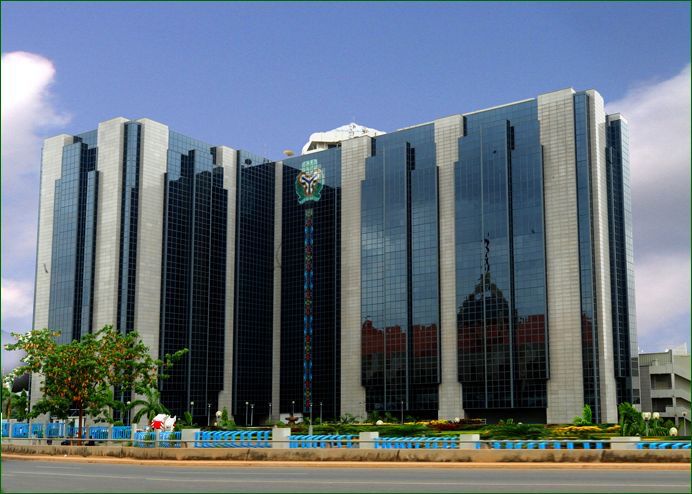
In a bid to fully utilize the Fintech sector as a key economic earner, the CBN proposes a series of regulatory framework changes.The first being the need for a Standing Fintech Engagement Forum to institutionalize dialogue, and a Single Regulatory Window to collapse licensing processes into one digital portal.
This is not cosmetic reform but directly targets the bottlenecks cited by 62.5% of firms and reframes regulation as an enabling system rather than an obstacle course.
The second pillar that needs to be adopted is the need for an affordable API-based access to digital ID which will in return support payments and credit rails, expand digital banking licences and finally strengthen the USSD infrastructure, together addressing the lastmile reality of inclusion.
With this in place, the 26% of Nigerian and 47% in the North will be connected to a reliable credit, savings, and capital formation for micro and informal enterprises that enable them to grow. The other vital pillar is the need for a more streamlined system integration and reputation.
The CBN is advised to move beyond enforcement into narrative strategy where a more modernised consumer protection, tighter AML supervision, and the proposed Digital Trust Charter are paired with a commitment to tell the reform for better clarity to both local and global players.
On the need to foster growth within the fintech industry, the CBN has laid out 10 key actions that the government intends to address for better Fintech regulatory reforms.
The research findings suggest that by having an open banking standard, expanding sandboxes covering AI and crossborder payments, interoperable credit infrastructure, and affordable digital ID access address the technical foundations of scale.
CBN should embrace regional regulatory harmonisation through bilateral passporting pilots with Ghana, Kenya, South Africa and Senegal; this will open the markets and put Nigeria on a continental stage .
The proposed Responsible AI Hub is particularly notable. By converting sandbox learnings into formal playbooks, Nigeria is attempting to govern AI in finance before it becomes a crisis. For an emerging market, that is an unusually anticipatory posture—and one that global investors will notice.
With this new policy in place, Nigeria is simply creating a new fintech playbook rule that not only supports the growth of the sector in West Africa, but connects the entire African continent into a seamless and better fintech system.
This can be supported by the fact that nearly 20 central payment switches visited NIBSS in 2025 suggests this learning is already underway.
For fintech operators and investors reduced compliance friction and clearer capital pathways could materially change risk calculations.
A Fintech Credit Guarantee Window and secondary market mechanisms for fintech debt addresses one of Africa’s most persistent bottlenecks which is growth of the fintech sector in the continent.
If this new CBN Fintech initiative is successfully implemented and adopted by the Nigerian government, the country will have set up a new regulatory framework that can be adopted throughout the African continent.
The CBN has sequenced actions across three phases, assigned governance structures, and embedded measurement. This is not policy as aspiration; it is policy as infrastructure.
Nigeria is making a credible bet that regulation, done well, can be a competitive advantage. If that bet pays off, the story will not belong to Nigeria alone. It will reshape how African fintech scales, how capital flows, and how trust is built in digital finance.
By Wayne Wafula