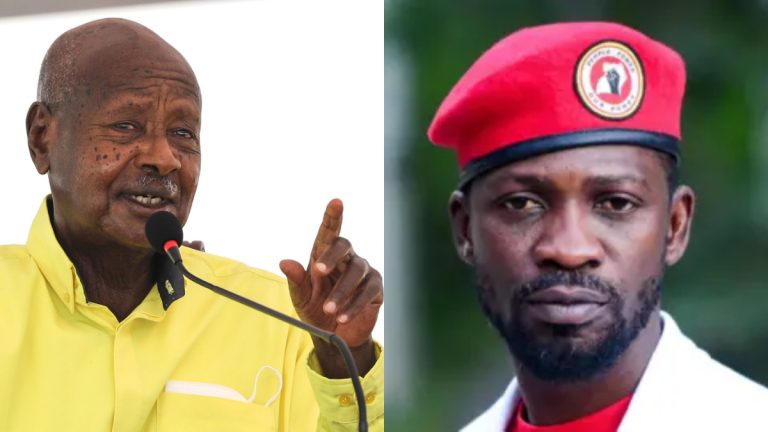


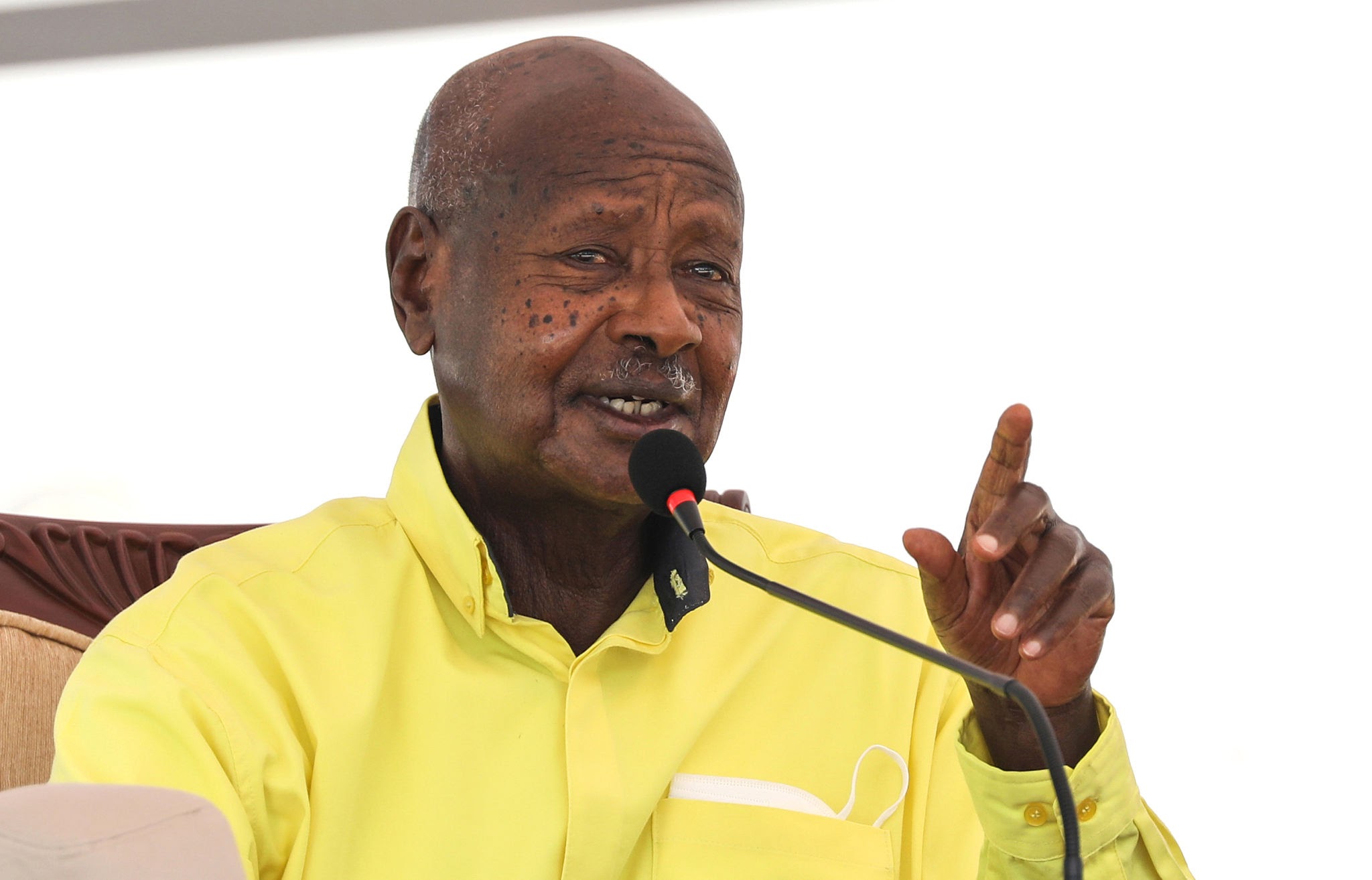
President Yoweri Museveni has dismissed suggestions that he intends to rule Uganda indefinitely, saying decisions about his leadership rest with voters rather than personal ambition.
The 80-year-old leader, who has been in power for nearly four decades and has faced repeated accusations of electoral manipulation, said such claims do not reflect his position.
Asked whether he plans to remain president for life, Museveni responded: “That is for the people to decide.”
Museveni, who has won six consecutive elections since 1986, remains Africa’s fourth-longest-serving president.
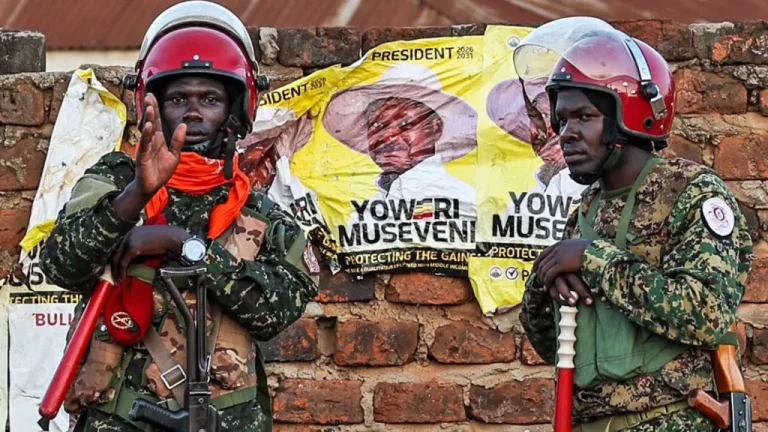
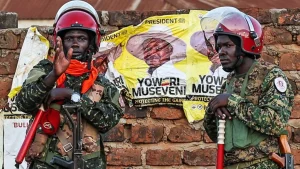
In every election cycle since Uganda returned to multiparty politics, opposition candidates and civil society groups have accused the state of rigging, repression, and systematically crushing dissent.
These allegations have ranged from voter intimidation and ballot irregularities to arrests of opposition leaders and violent dispersal of rallies.
Museveni has, however, rejected such accusations, saying Uganda conducts regular elections under a constitutional framework and that his victories reflect popular support, particularly in rural areas.
He argues that opposition parties are free to organise, campaign, and contest power, but often fail because they lack coherent programs or national reach.
Supporters of the president credit him with restoring stability after years of civil war, growing the economy, and maintaining relative peace in a volatile region.
They say continuity of leadership has been key to Uganda’s security and development, and that voters have repeatedly endorsed Museveni because of his experience.
Opposition figures counter that the playing field is fundamentally unequal.
They argue that constitutional changes, most notably the removal of presidential term limits in 2005 and the age limit in 2017, were engineered specifically to keep Museveni in power.
For them, the absence of a successful successor is not evidence of public choice, but of a system designed to favour the incumbent.
The rise of younger opposition leaders in recent years, particularly Robert Kyagulanyi, known as Bobi Wine, has intensified the debate.
His campaigns have energised urban youth but have also been met with heavy security deployments, arrests, and violence, fueling claims that the state fears genuine competition.
Museveni maintains that Uganda’s future leadership will emerge through the ballot box, not pressure or street protests.
“Leadership is not imposed,” he has said in past remarks, adding it comes from the people.
Vote tallying from the presidential elections put Museveni in front with 75% of the votes, based on returns from 60% of polling stations.
He is followed by opposition leader Bobi Wine on 21%.
The preliminary figures were announced by the electoral commission on Friday afternoon.
by FELIX KIPKEMOI