


Professor Mukoma wa Ngugi, son of the legendary Kenyan author Ngugi wa Thiong’o, has shared a poignant and raw account of their strained relationship following his father’s death on May 28, 2025, in the United States.
The news of Ngugi’s passing, a towering figure in global literature known for his advocacy of African languages and fierce critique of colonialism, sparked tributes from intellectuals, political leaders, and admirers worldwide.
Yet, for Mukoma, the loss was compounded by years of unresolved family pain, laid bare in an emotionally charged interview with NTV.
Ngugi, whose works like Decolonising the Mind and Weep Not, Child reshaped African literary discourse, left an indelible legacy.
However, Mukoma revealed that their father-son bond had been distant for years, fractured by a public falling out in March 2024.
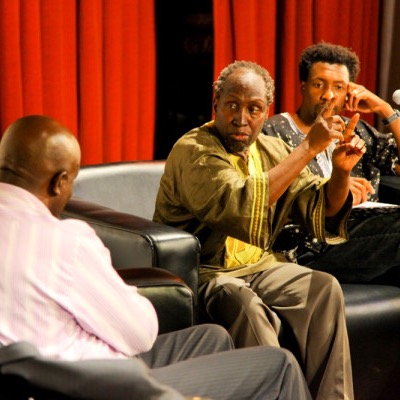
Mukoma accused Ngugi of physically abusing his mother, Nyambura wa Ngugi, a revelation that severed their communication.
“We never recovered from that,” Mukoma said, describing how he learned of his father’s deteriorating health only through a brother’s call. Without this, he might have discovered Ngugi’s death via social media, a stark reflection of their estrangement.
The rift deepened family tensions, with Mukoma unaware of Ngugi’s cremation—a decision that sparked a feud among relatives.
“I didn’t know he’d been cremated until it caused a family uproar,” he noted, learning it was Ngugi’s wish only after the fact. Despite the pain, Mukoma stood by his decision to speak out, emphasizing his commitment to truth.
“My conscience is clean,” he said, crediting Ngugi for instilling in him the value of honesty, even if it led to their divide.
Mukoma’s candor about the family’s fractured dynamics, marked by silence in Ngugi’s final years, resonated with Kenyans familiar with their public dispute.
Mukoma’s reflections were not devoid of love. “I just love him. He’s my father,” he said, grappling with the complexity of their bond.
His only regret was not spending more time with Ngugi before his passing, a sentiment tinged with sorrow for the lost opportunity to reconcile.
BY Geoffrey mbuthia