


A community-based organization has rolled out a campaign to eradicate period stigma and period poverty while promoting menstrual health and dignity to achieve menstrual health and gender equality.
Despite being a natural and healthy part of life, menstruation is still surrounded by stigma rooted in taboo and misinformation.
The initiative by Young African Women Initiatives (YAWI) is primarily focusing on ending period shame and associated harmful stereotypes and barriers that deepen gender inequality and limit opportunities for adolescent girls who experience menstruation.
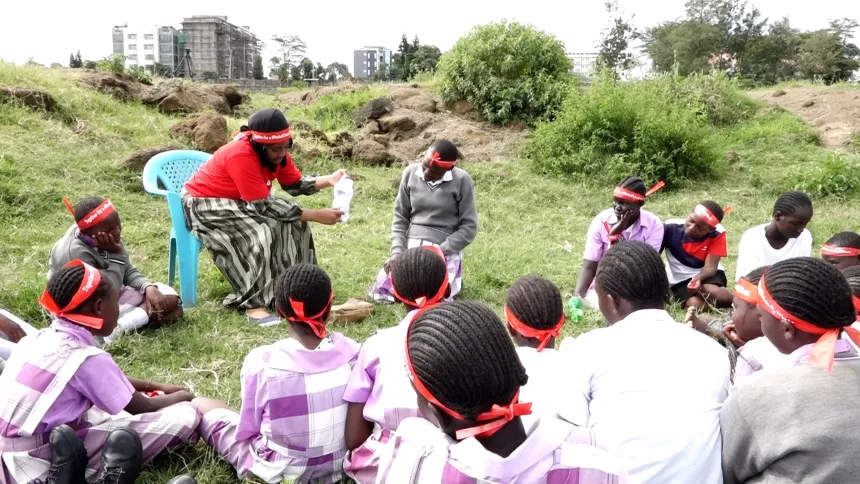
According to YAWI Executive Director Fidelis Karanja, the exercise that kicked off at Naka Comprehensive School in Nakuru is meant to promote menstrual health to safeguard the dignity of female pupils towards ensuring that they can fully exercise their rights.
Karanja noted that beyond the stigma, challenges in managing menstruation continue to create further barriers for pupils including lack of access to menstrual health products, lack of information and inadequate care for complications, which exclude them from education.
The Executive Director stated that in addition to community level engagements, the campaign is advocating for stronger action from government, policy makers and partners to enhance the implementation of menstrual health and hygiene policies and increase funding for menstrual health initiatives.
She cited a case in 2019 where a schoolgirl on her menses committed suicide after being called dirty and sent home by her teacher.
She noted that lack of access to menstrual hygiene products, sanitation infrastructure such as private toilets, hand washing facilities and menstrual hygiene education can prevent women and girls from reaching their full potential in the classroom, in the workplace, and at home.
During the occasion YAWI donated over 1,000 sanitary pads to girls.
The pupils were also taught on proper ways of handling sanitary pads when put on, proper ways of disposal, and checking the quality of sanitary pads.
Karanja pointed out that menstruation is a good indicator of female fertility and therefore men and boys need to support the natural bodily function if we’re looking forward to seeing generations in future.
She indicated that through the initiative male pupils are being taught about menstrual hygiene and health to enable them to understand menstruation as a normal bodily function that occurs as part of a woman’s monthly cycle.
“Many studies have established that menstrual stigma is caused by men. Boys should not remain ignorant about menstruation. We are involving boys in this conversation as well as having their proactive participation to come up with innovative ideas that will ensure dignified menstruation experiences,” she said.
Karanja added: “A major contributor to this problem is the fact that it is culturally assumed that men and boys cannot, and should not, talk about women’s menstruation. The purely natural process is branded with terms like ‘mambo ya Wanawake’, ‘women’s secrets’ and ‘that time of the month’. This is despite the fact that most of these men live with women in their homes, and are even aware when it is ‘that time of the month.”
Naka Comprehensive School head teacher Joseph Salano said there is need for increased government funding for free sanitary pads and provision of sufficient female hygiene products in all public schools.
Salano suggested that state, non-state actors and individuals collaborate to raise awareness of menstrual hygiene issues and support Kenyan women and girls in realizing their reproductive rights.
According to the United Nations, one in 10 African schoolgirls misses school during their menstruation, and many of them, studies show, have ended up dropping out of school altogether after lagging behind month in month out.
According to government data, only an estimated 46 per cent of women and girls in rural areas and 65 per cent in urban areas have access to and use disposable pads. Many use toilet paper, pieces of blanket or cloth, or natural materials to handle their menstruation.
Apart from dropping out of school, girls and women have endured poor hygiene, urinary tract and vaginal infections, early pregnancies and STIs. The victims often feel unwanted.
Salano noted that social restrictions, cultural beliefs and myths hinder effective menstrual management, consequently affecting the daily lives of girls and women on how to access menstrual products.
He observed that despite their exclusion from discussions on menstrual health and hygiene, male teachers and boys can play a crucial role in providing psychosocial support to girls and women.
“They can contribute to providing menstrual materials and creating menstruation-friendly sanitation facilities, enabling menstruators to undergo the process with privacy, dignity and confidence. The involvement of boys and men leads to significant changes in perceptions, attitudes and support for girls and women,” he pointed out.
Keith Waithera, a pupil at Naka Comprehensive School indicated that access to safe, decent menstrual health and hygiene improves mental wellbeing, boosts school attendance leading to better grades.
She said there was a need for quality and affordable reusable sanitary towels especially for women and girls in low-income areas.
Jane Wangeci, a grade7 pupil at the school decried high levels of school absenteeism among girls following the onset of puberty, attributed to the unreliable and uncoordinated supply of sanitary pads.
She said that the situation is worse in rural schools, as most girls cannot afford the pad. She added that in some situations girls miss three to four days from school every month, translating to two weeks in a term.
Wangeci called on the government and other well-wishers to ensure the pads are distributed to schools in low-income areas as the high level of absenteeism is affecting the academic performance of the girls.
“The situation is dire as girls can scarcely afford sanitary pads. They endure a challenging time during their menstrual cycle, which has resulted in school dropouts, missed classes, and a decline in the academic performance of girls. We require additional support to tackle this situation,” she said.