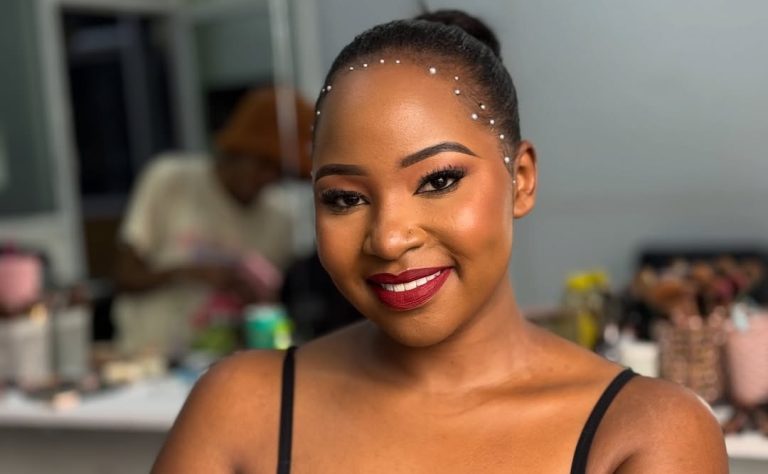


A Nation reporter took a picture of her to use with the interview story. But the picture was later used to promote another article, without consulting her. She then called the reporter and told him she didn’t want her picture used to illustrate other articles.
She says her plea was unheeded. But let’s get the basics right. She doesn’t own the picture. The reporter who took the picture (or his employer) has the copyright. He alone has the right to use, adapt, publish or publicly display the picture. She can’t demand the picture be destroyed or given to her to ensure it’s not used again.
That doesn’t mean, however, she has no rights over the use of the picture. The Kenyan law has established rights on the use of a person’s image or likeness. The courts have demonstrated that one’s image or likeness cannot be used for exploitative purposes without one’s consent.
Exploitative purposes could be commercial or promotional. The case of Wangechi Waweru Mwende vs Techno Mobile Limited & Rogers Ouma is a good example.
The singer sued Tecno for using her image and likeliness, without her consent, to drum up publicity for its Camon C9 phone. On September 16, 2020, Justice Margaret Muigai ordered Tecno to pay Mwende nominal damages of Sh500,000 for violating her privacy.
Award of damages
She didn’t, however, grant Mwende’s claim for general, aggravated and exemplary damages. Tecno mitigated the injury, the judge said, by pulling down the offending video from its social media platforms after she complained.
In her judgment, Justice Muigai adopted the case of Jessicar Clarise Wanjiru vs Davinci Aesthetics & Reconstruction Centre & 2 Others. In that case, Justice John Mativo held that a person’s image constitutes one of the chief attributes of one’s personality.
Personality rights encompass the exclusive right of an individual to market, control and profit from the commercial use of her name, image, likeness and persona, he said. “Every individual has an exclusive right to market, for financial gain, their personality, image and name, and the law entitles an individual to protect that right, if it is invaded.”
Davinci had used the image of Wanjiru in its billboards erected along Kenyatta Hospital Road in Nairobi to advertise reconstruction and plastic surgery. A similar advertisement appeared in its website www.da-vinci.ke.
However, on the question of award of damages, it was not clear whether or not there was consent. “And considering the swiftness with which the billboards were removed after Wanjiru complainted, I find that there is no material before me to demonstrate that Wanjiru suffered any loss and therefore I dismiss the claim,” Justice Mativo said.
Reasonable relationship
In general, journalism is not regarded as exploitative. In a judgment delivered on February 22, 2021, in the case of Mutuku Ndambuki Matingi v Rafiki Microfinance Bank Limited, Justice George Odunga adopted the South African case of Angella Wells vs. Atoll Media (PTY) Ltd & Anor, in which the court said the appropriation of a person’s image or likeness for the commercial benefit or advantage of another may well call for legal intervention in order to protect the individual concerned.
But “that may not apply to the kinds of photographs or television images of crowd scenes which contain images of individuals therein,” the court further said.
“However, when the photograph is employed, as in this case, for the benefit of a magazine solely to make profit, it constitutes an unjustifiable invasion of the rights of the individual, including the person’s dignity and privacy. In this dispute, no care was exercised in respecting these core rights.”
Nearly three-and-a-half years earlier, on September 21, 2017, Justice Mativo ruled in Jessicar Clarise Wanjiru vs Davinci Aesthetics & Reconstruction Centre & 2 others that the use of someone’s name or likeness for news reporting and other expressive purposes is not exploitative, so long as there is a reasonable relationship between the use of someone’s identity and a matter of legitimate public interest.
In its provisions against the use of personal data for commercial purposes without one’s consent, the Data Protection Act of 2019 also exempts journalism in cases where publication of data would be in the public interest. BY DAILY NATION