



For years, the defunct Bomet municipal council and MCAs held meetings and transacted business in an 80-year-old building that previously served as a secondary school kitchen and dining hall.
But on October 28, MCAs relocated to a modern mini-chamber built for Sh60 million.
The historical kitchen and dining hall first served as a craft centre for 40 years (1940-1980) before they were converted into a dining facility serving students at St Michael’s Secondary School.
From 1981 to 1993, the facility became a legislative chamber for civic leaders in Bomet. But that is now history as the dilapidated building lies abandoned.
The new chamber, officially opened by National Assembly Speaker Justin Muturi on October 28, was named after the Bomet governor, Joyce Laboso.
What many Bomet County residents do not know is that the St Michael’s Secondary handed over the building to the defunct Bomet county council after the former Bomet district was hived off from Kericho district in 1993.
With the separation of the provincial administrative units, Bomet county council and Bomet municipal council were created, and the two local authorities started operating from facilities at the secondary school.
The school was relocated to new grounds.
“With the division of assets, the Bomet county council was allocated the hall and some other buildings while other existing facilities in the compound were taken over by the municipal council,” said Mr Joseph Koech, the first principal of St Michael’s Secondary.
It was during Mr Koech’s tenure that the school was asked to surrender the land and its structures to the now-defunct local authorities.
Because money and space were tight, the county council had to convert the students’ dining hall into a legislative chamber, and it functioned as such for 28 years.
Apart from the chamber, the building was divided into three other rooms – the clerk’s office, the Speaker’s office and a common reception area and secretary’s office.
Relocate the school
“The main chamber was a dining hall area and the clerk’s office while the Speaker’s office was a store. That is where we used to keep cabbages, potatoes, flour, cooking oil, sugar and salt,” explained Mr Koech.

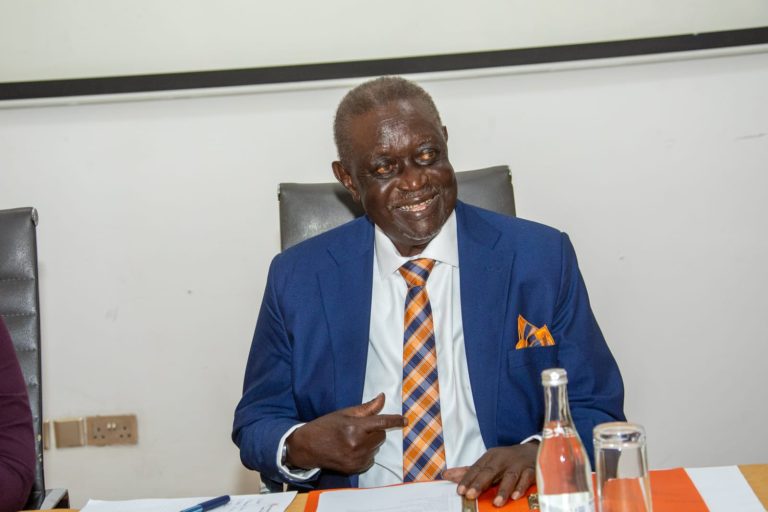
Mr Joseph Koech, a former Principal at St Michael’s secondary school in Bomet county whose dining hall and kitchen has served as assembly chamber for the last 28 years, narrates how the change over occurred during his tenure.
The former principal, now retired, told Nation.Africa at his home in Bomet town that the directive to relocate the school was issued verbally, annoying school administrators and parents, but the government had its way.
“St Michael’s Secondary was moved to its current site (next to Bomet University College) and allocated 15 acres by district commissioner John Abduba and the late county council clerk Samwel Langat after the local authorities took over the facilities,” Mr Koech said.
Parents shouldered the responsibility of building a new school, with the local authority only putting up two classrooms as a form of compensation to the community.
“The dining hall, in turn, was converted into a legislative chamber and although it was not a modern facility, a lot of decisions on the development of the county were made in there during the reign of local authorities and lately the county government,” said Mr John Kalya, a former Bomet county council chairman.
“The building has a rich historical past that should be documented and preserved. The former councillors debated and made many legislative decisions that influenced policy and impacted development in the region.”
Apart from lack of finances for infrastructure development, the trappings of power were not an issue for the old-time councilors, the predecessors of members of county assemblies (MCAs) who were ushered in with the adoption of the 2010 Constitution and devolved governments.
Mr Michael Korir, a former county council chairman, said councillors were not bothered by the state of the old chamber as their focus was on services to taxpayers.
“To us, leadership was a calling and our main agenda was to uplift the standards of living of the people without bothering about the aesthetic nature of our working environment. We came from villages and people wanted service, and we were elected to ensure it was provided,” Mr Korir said.
MCAs moved to the new chamber in February this year, when the building was hardly complete, as the old one had been condemned by the National Construction Authority (NCA) and the State Department of Public Works two years earlier.
Quality of debates
In a symbolic move, Speaker Muturi gave an address at the assembly chamber, the first to be made by a high-ranking government official besides the traditional annual address delivered by the governor and the senator.

The former St Michael’s secondary school dining hall and kitchen that was used as Bomet assembly debating chamber by local legislators for the last 28 years.
“I am glad that the county assembly, in the spirit of devolution and seeking to modernise its operations, has made a huge milestone in transiting from the old chamber to the new one, even as the main chamber is under construction and expected to be completed next year,” Mr Muturi said.
Mr Muturi, a Democratic Party of Kenya presidential aspirant, noted that he was impressed by the quality of debates and formulation of policies and laws despite the sorry state of the old chambers.
He was accompanied by Governor Hillary Barchok, Deputy Governor Shadrack Rotich, Bomet Senator Christopher Langat, nominated Senator Alice Milgo and Bomet Woman Representative Joyce Korir.
“The decision to name the new chamber after Dr Laboso was a conscious and deliberate move in memory of the contribution she made in development in the county and her close working relations with the assembly leadership, and being a trailblazer in women leadership in the Kalenjin community,” said Mr Nelson Mutai, the Bomet County Assembly Speaker.
Dr Laboso, the second governor of Bomet County and first woman deputy Speaker of the National Assembly, succumbed to cancer on July 29, 2019 at Nairobi Hospital after initial treatment in the United Kingdom and India.
“Transiting to the new mini-chambers has been a negotiated journey and we are hopeful the facilities and ambience would invigorate MCAs to deliver on their mandate,” Mr Mutai said.
Mr Isaac Kitur, the clerk of the assembly, said the new chamber is spacious and has a public gallery, a press gallery, and the Speaker’s and clerk’s offices.
“The press gallery now allows the media to fully take part in covering the proceedings with cameras and other recording gadgets without hindrance. It will help in enabling members of the public to understand the mandate of the assembly,” Mr Kitur said.
The public gallery, though not spacious, enables residents to follow proceedings during debates and committee meetings.
Once construction of the main chamber is completed, the mini-chamber will be used for committee meetings.
Assembly leaders have not decided whether to bring down or preserve the old, derelict abandoned chamber that used to be a dining hall. BY DAILY NATION