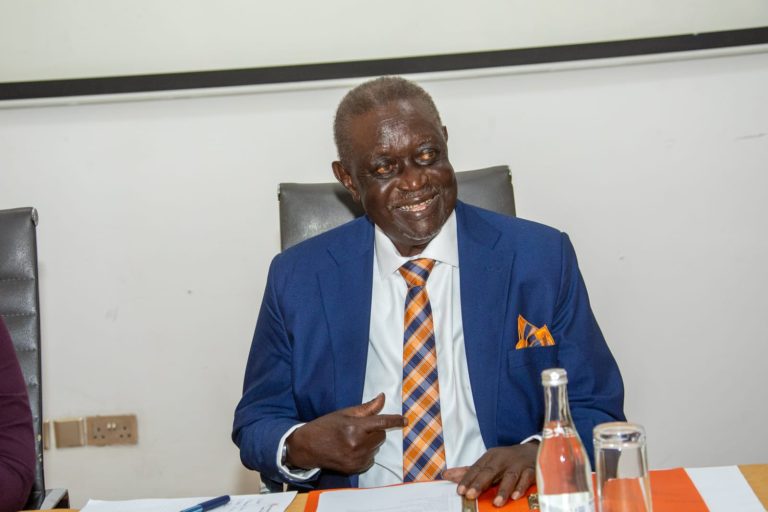




The Kisumu County Government is set to hire 210 nurses on a three-month contract in the next six days.
Deputy Governor Mathew Owili said the new staff will be stationed at the Jaramogi Oginga Odinga Teaching and Referral Hospital and the Kisumu County Hospital, which have been hit hardest by the ongoing nurses’ strike.
“We cannot continue seeing our people suffer. We have done all we can to get the nurses back to work but it seems they are not willing. We have no option but to hire new nurses, who will be on contract,” Dr Owili said.
VACANCIES
Four other counties have advertised for positions of nurses to replace the ones on strike.
Four other counties have advertised for positions of nurses to replace the ones on strike.
The counties are Lamu, Kirinyaga, Murang’a and Lamu.
Nandi Governor Stephen Sang said county officials are compiling data to establish the number of nurses who are working.
In Murang’a, county director for health Wilfred Kanyi said the regional government will soon advertise vacancies for over 400 nurses.
He said this comes after the staff on strike defied an order by the Council of Governors (CoG) that they should resume duty.
IMMUNISATION
Other counties have also indicated that they will advertise nurses posts but are yet to give information on the fate of the striking caregivers.
Other counties have also indicated that they will advertise nurses posts but are yet to give information on the fate of the striking caregivers.
While some governors are planning to advertise nurses positions, others, including Tharaka-Nithi’s Muthomi Njuki, have opposed the sacking directive.
Dr Owili said many health services in Kisumu had been affected by the industrial action
He said one of them is the immunisation of pregnant women and children, which is likely to increase the disease index in the country.
“We are not against giving the nurses what they want but they should be flexible to go back to work as negotiations continue,” he said.
NEGOTIATION
Nurses are now calling upon individual counties to sign the collective bargaining agreement (CBA), adding that the national government was not willing to engage them but, instead, threatening to sack them.
Nurses are now calling upon individual counties to sign the collective bargaining agreement (CBA), adding that the national government was not willing to engage them but, instead, threatening to sack them.
Nurses’ officials in Kisumu, Homa Bay, Kakamega, Kericho, Siaya, Mombasa, Vihiga and Busia want the respective governors of these devolved units to strike an urgent deal with the striking workers to end the suffering of patients in public hospitals.
They said the governors are better placed to understand them compared to Health Cabinet Secretary Cleopa Mailu and the top national leadership.
PATIENTS
For the last four months, thousands of Kenyans have failed to receive health care due to the nurses’ strike, which has paralysed services at all public hospitals in the country.
For the last four months, thousands of Kenyans have failed to receive health care due to the nurses’ strike, which has paralysed services at all public hospitals in the country.
It seems no one is willing to call off the industrial action, with the governors having made a decision to sack the nurses.
The Health ministry has ruled out any talks with the striking nurses and Dr Mailu has asked the CoG to sack and replace them.
DISCIPLINE
President Uhuru Kenyatta and his deputy William Ruto are busy with their campaigns ahead of the repeat presidential election that is set for October 26, and none of them is talking about the plight of the nurses.
President Uhuru Kenyatta and his deputy William Ruto are busy with their campaigns ahead of the repeat presidential election that is set for October 26, and none of them is talking about the plight of the nurses.
Dr Mailu has described the job boycott as unnecessary and illegal, as declared by the Employment and Labour Relations Court.
Speaking during the official opening of the 2017 Annual Catholic Health Conference and general meeting at Pride Inn Hotel in Mombasa, the minister said the national government fully supports the resolutions made by the CoG to take administrative and legal action against nurses who will not resume duty.
“They should go ahead with the disciplinary measures, spare those who have returned to work and recruit other people,” he said.
SRC
The CS said once the nurses resume duty, they will have obeyed the court order and negotiations can begin.
The CS said once the nurses resume duty, they will have obeyed the court order and negotiations can begin.
Dr Mailu, however, said: “The burden on the exchequer is huge and this time we cannot accommodate any new funding. But in the context of the CBA, we can spread the pay period. We can agree on when it can be implemented.
The CoG has also described the nurses’ strike as illegal and unprotected.
The Salaries and Remuneration Commission (SRC), which has criticised the strike, said it is not responsible for the prolonged boycott.
PAY DISPUTE
The commission said the job boycott is not entirely over better pay and the job evaluation it undertook.
SRC vice-chairman Daniel Ogutu told MPs that the caregivers are pushing for their own commission.
“The complications we have are beyond money. People are keen on pushing for their own commissions to advance their interests. They want something like the Teachers Service Commission,” he said.
During the recent signing of a back-to-work agreement with clinical officers, Dr Mailu urged the nurses to get back to work as they continue negotiations.
Nurses have defied the order and said the government was treating them as if their strike does not have an impact on the country’s health system.