

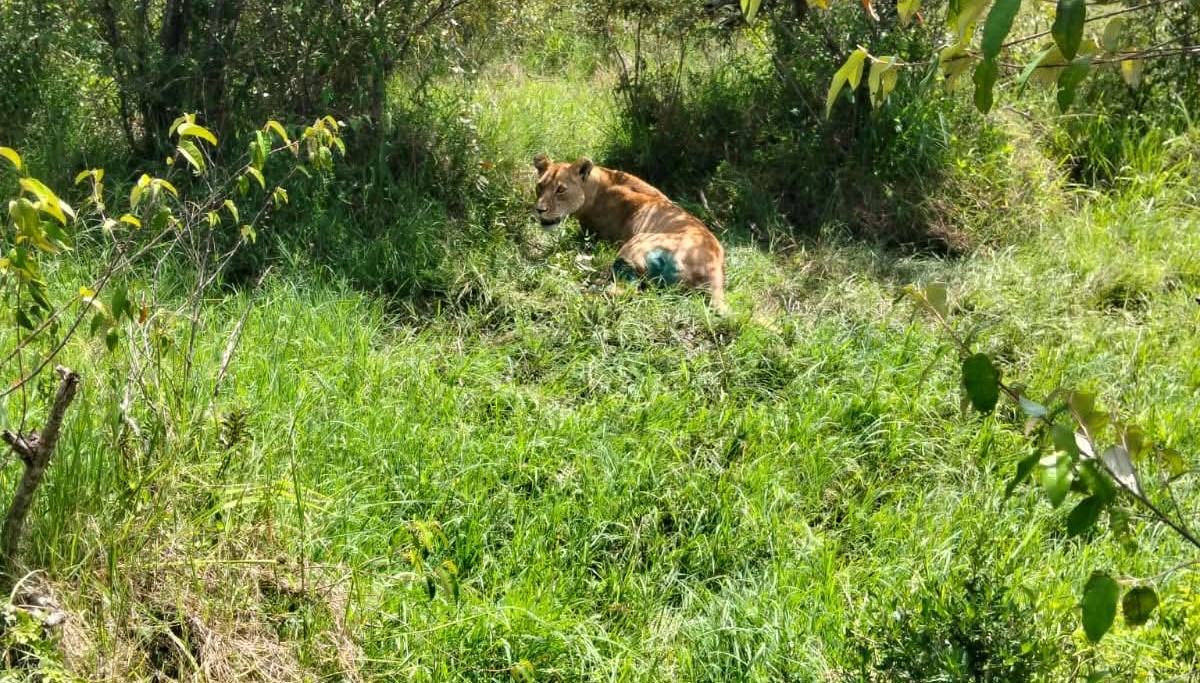
The Kenya Wildlife Service (KWS) has announced the successful rescue of an injured lioness in the Hammerkop area of the Maasai Mara National Reserve.
According to KWS, the adult lioness sustained injuries to her left fore and hind limbs, prompting swift intervention to ensure her recovery.
The rescue operation was carried out by the KWS Mara veterinary team in close collaboration with the David Sheldrick Wildlife Trust.
Upon locating the lioness, the veterinary team safely immobilised her to assess and treat her wounds.
“The KWS Mara veterinary team, with support from the Sheldrick Trust, responded swiftly. The lioness was safely immobilised, and her wounds were carefully cleaned and sutured,” KWS stated.
The team meticulously cleaned and sutured both limb injuries, administering systemic and topical antibiotics to promote healing and prevent infection.
KWS attributed the lioness’s stable condition to the timely provision of urgent care.
“Thanks to timely and skilled care, the lioness’s prognosis is good—but this incident is a reminder that conservation demands presence and collective responsibility,” the statement added.
KWS emphasised that the rescue highlights the ongoing challenges of wildlife conservation, where human-wildlife interactions, natural hazards, and other threats place animals at risk.
The operation follows the treatment of a black male rhino, Ewaton, who was seriously injured in a territorial fight in Nakuru National Park.
An intense clash left Ewaton with serious injuries to his eye and mouth, putting his survival at risk. KWS immediately dispatched its air wing response team to administer treatment.
“Ewaton responded well, has stabilised, and safely returned to his territory. This is rapid response in action, protecting Kenya’s wildlife when every minute matters. We wish Ewaton a quick recovery,” KWS said.
Rhinos are highly territorial and often engage in deadly fights to defend their spaces.
The 2025 National Wildlife Census by the Wildlife Research and Training Institute shows that Kenya’s rhino population now stands at 2,102, including 1,059 black rhinos, 1,041 white rhinos, and two northern white rhinos.
The Maasai Mara National Reserve, renowned for its rich biodiversity and the annual wildebeest migration, faces ongoing conservation challenges. Human activity, climate change, poaching, and natural injuries all affect the health and survival of wildlife.
Veterinary interventions like the one undertaken for this lioness are crucial not only for the survival of individual animals but also for maintaining the ecological balance of the reserve.
by JAMES GICHIGI