The Port of Mombasa continues to cement its role as the lifeline of Kenya’s and East Africa’s trade, recording strong growth in 2025.
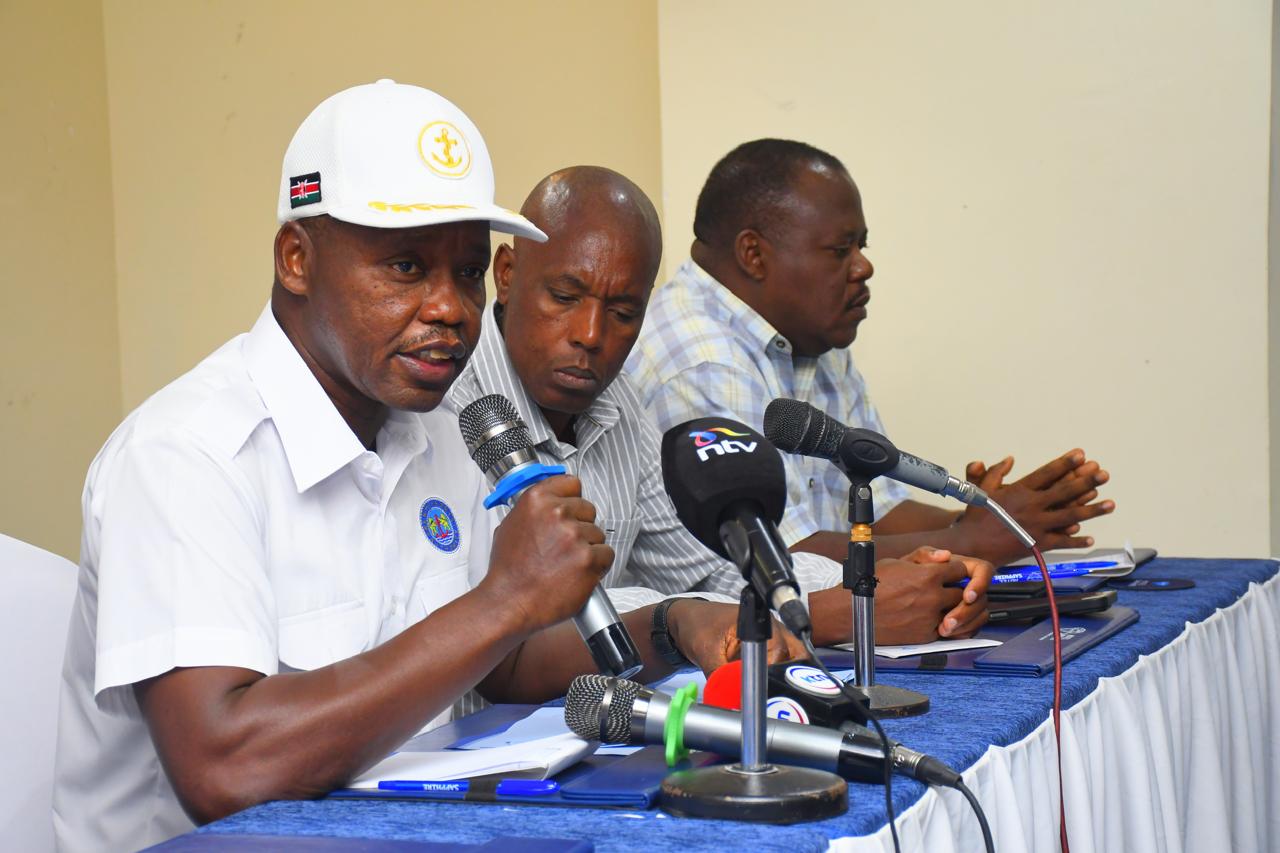
Container traffic rose by 5.5 per cent to 2.11 million twenty-foot equivalent units (TEUs), up from 2 million in 2024, Kenya Ports Authority Managing Director Captain William Ruto said.
Overall cargo handled at the port reached a record 45.45 million tonnes, a 10.9 per cent increase from the previous year.
Imports, including goods from Asia, Europe and other regions, were the main driver. Volumes surged by 20.1 per cent to 36 million tonnes.
Exports, mainly tea, coffee, flowers and manufactured goods, recorded modest growth to 5.03 million tonnes.
Transit cargo—goods moving through Kenya to neighbouring countries—jumped by nearly 20 per cent to 15.88 million tonnes. Uganda, Rwanda, the Democratic Republic of Congo and Tanzania all recorded strong growth.
“This shows that Mombasa is the most reliable and preferred trade corridor in the region,” Captain Ruto said.
He noted that domestic cargo grew by 16.1 per cent, reflecting strong local economic activity and improved cargo handling efficiency.
To meet rising demand, KPA is expanding and modernising the port.
Work is underway on Berth 19B, while new berths 23 and 24 will add 1.4 million TEUs to capacity.
The Dongo Kundu multipurpose berth, linked to the Dongo Kundu Special Economic Zone, is also under construction.
The port’s terminal operating system is being upgraded, gates are being automated, and equipment modernised to speed up cargo handling.
Other KPA facilities are also performing strongly.
Lamu port handled nearly 800,000 tonnes, up from just over 74,000 tonnes. Kisumu port recorded 55 per cent growth to 496,516 tonnes, highlighting the potential of lake ports in supporting regional trade.
Inland Container Depots in Nairobi and Naivasha have also improved efficiency.
Beyond trade, the port is supporting local communities.
In Lamu, 4,734 fisherfolk affected by port projects are receiving cash compensation, with the next phase focusing on economic empowerment.
Captain Ruto said the growth is driven by government support, dedicated staff and collaboration with agencies along the Northern Corridor.
“We remain committed to expanding capacity, modernising operations and strengthening partnerships to meet growing demand,” he said.
For businesses and consumers across Kenya and neighbouring countries, the port’s growth means faster delivery of goods, more job opportunities and a stronger economy.
With continued investment, Mombasa is poised to remain the region’s trade hub for years to come.
by CHARLES MGHENYI