

Kenya is not tapping into billions in pension funds to drive infrastructure development, a pan-African fund managers’ conference in Nairobi, was told on Tuesday.
This, according to experts, is mainly because of weak project preparation and poor financial structuring that continue to lock billions of shillings into government securities.
Kenya’s pension assets are currently estimated at about $20 billion (Sh2.58 trillion), while collective investment schemes, particularly money market funds, managing about $6 billion (Sh774 billion).
They are pointing to the state for the failure to provide bankable projects and ineffective packaging of development initiatives for institutional investment.
On the contrary, ‘sweet’ returns due to high interest returns that the local capital markets have been granting investors and government appetite for borrowing, has been a risk-free avenue for the fund managers.
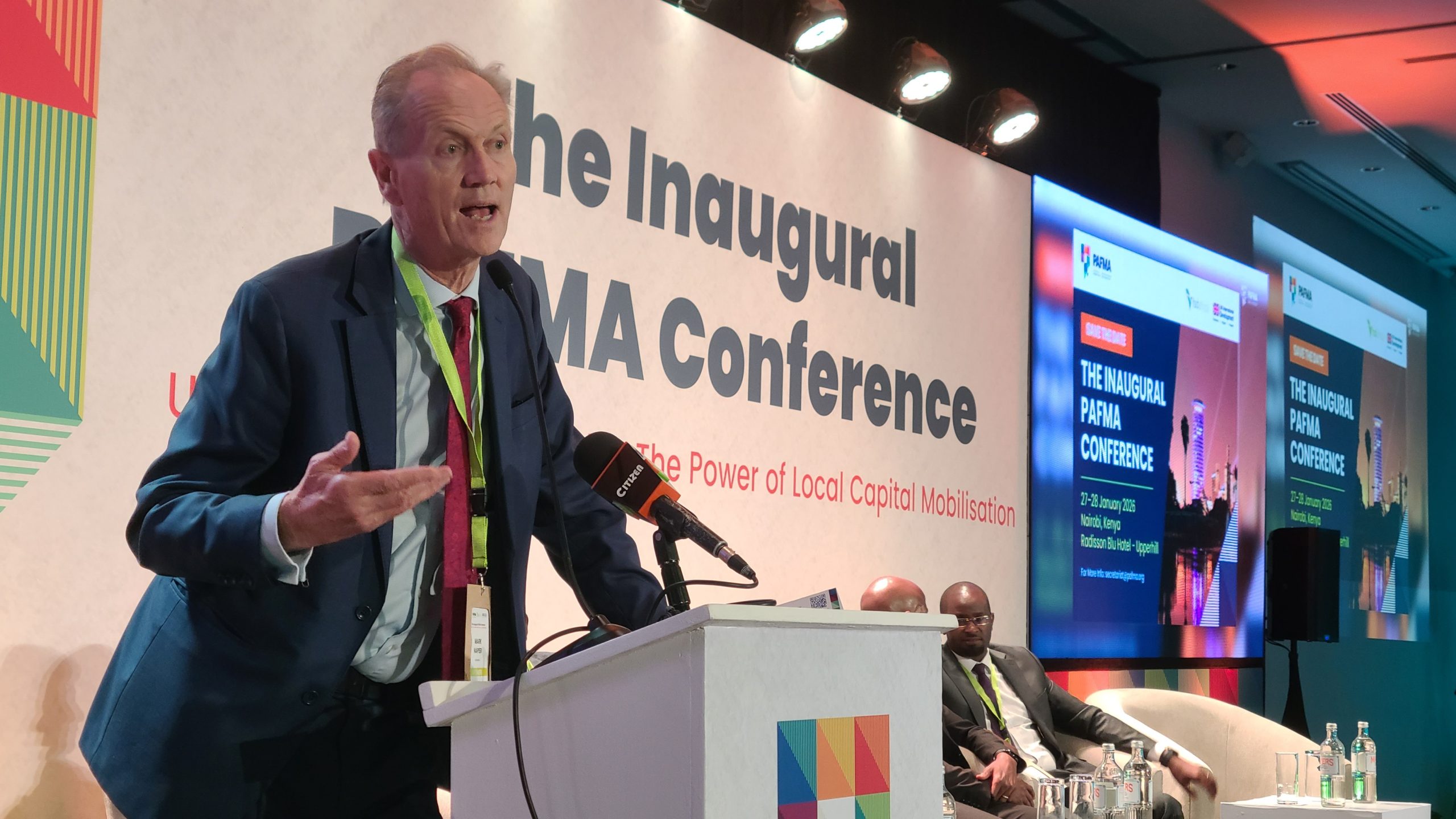
Speaking at a pan-African fund managers’ conference in Nairobi, Financial Sector Deepening Africa CEO Mark Napier, noted that a large proportion of these assets remains invested in government securities, mirroring a broader continental trend.
“In Kenya and many African markets, investment in government securities can be as high as 86 per cent or even 90 per cent. It is good to finance governments, but we also need to channel a lot of that investment to the private sector, because it is the private sector that creates jobs,” said Napier.
Pension funds and asset managers continue to favour Treasury bills and bonds due to their relative simplicity, predictable returns and regulatory comfort — even as infrastructure and development financing gaps widen.
Despite regulatory limits allowing over 15 per cent allocation to alternatives, Kenyan pension funds invest less than 10 per cent in infrastructure, private equity and real assets.
The Landscape Study of Pension Systems and the Asset Management Industry in Africa (January 2026) places Kenya among the continent’s most mature pension markets, with assets exceeding $10 billion (Sh1.29 trillion), alongside South Africa, Morocco and Nigeria.
Yet despite this scale, the report finds that Kenyan pension funds have made only limited use of alternative investments such as infrastructure, private equity and real estate — asset classes widely viewed as better suited to long-term retirement savings.
Industry leaders said the problem is not a lack of capital, but a lack of projects that meet institutional investors’ requirements.
“There are two main reasons why we’re not seeing enough pension fund investment in the real economy, one is the lack of investable projects, and the second is that the projects that do exist are often not presented in a way that professional investors can respond to,” added Napier.
FSD Africa chief financial markets officer Evans Osano said intermediaries, including financial advisers and investment bankers are not doing enough to structure projects in formats that pension funds can assess, such as clearly defined cash flows, risk allocation and long-term revenue certainty.
“These trustees have spent their lives investing in government securities, which are easy to understand,” he said.
“When you bring a green bond or a sustainability-linked instrument, they panic because they don’t know what it is. So, it takes a long time before they can do it.”
Chairman of the Fund Managers Association of Kenya (FMA), Nicholas Ithondeka, said Kenya has built up enough domestic savings to finance major development projects, but fund managers remain constrained by risk perception and structural weaknesses.
He noted that foreign investors often take on infrastructure risk in Kenya, while local institutional investors remain on the sidelines — a paradox given that pension funds are designed to be long-term investors.
“For a very long time, we have been putting money into government bonds and government securities. Yet we have enough capital and enough savings as Africans to drive infrastructure, hospital developments and productive sector investments ourselves,” Ithondeka said.
“The foreign capital comes in, takes the risk, and appreciates the returns,” Ithondeka said. “Local fund managers stay away and allow that to happen, even though this is our own economy and our own development.”
According to their analysis, collective pension funds and other institutional investors across Africa are managing approximately $700 billion (Sh90.3 trillion) — a figure expected to balloon to an estimated $7 trillion (Sh903 trillion) by 2040 if current growth trajectories continue.
This represents one of the largest untapped domestic capital pools in the world. Yet, much of it remains concentrated in low-risk government instruments.
The conference also marked the launch of a new African Pension and Asset Management Data Hub, aimed at reducing information barriers and improving visibility of institutional capital across markets.
by JACKTONE LAWI