


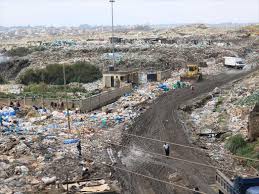
Smoke rises over Nairobi’s Dandora dumpsite, curling into the early morning sky as waste pickers and children sift through piles of fresh and decomposing garbage.
Birds and stray dogs scavenge alongside them, oblivious to the invisible hazards that linger in the soil, air and water.
For 32-year-old Mary Achieng, the mountain of trash is both livelihood and health risk.
“Sometimes we eat the food that comes from the trucks,” she says, holding a torn sack of plastic bottles. “We cook it at home. What else can we do? Here is where we get our life.”
Nearby, Joseph, 19, who has sorted scrap since age 12, watches cattle feeding on rotting vegetables. “These cows are sold in the estates,” he says quietly. “People don’t know they are eating meat from here.”
Dandora, Nairobi’s main dumpsite, has operated since 1975 and long exceeded its capacity.
The city generates 2,400–3,000 tonnes of waste daily, depositing over half at Dandora. Around 5,000 people earn a living directly from the site, exposing them to myriad biological and chemical risks.
Heavy metals such as lead, cadmium and mercury have been found in soil and nearby vegetables, according to the United Nations Environment Programme studies, raising concerns about chronic health impacts.
Emerging alongside this chemical hazard is a silent threat: antimicrobial resistance (AMR), increasingly described as a global pandemic. The Lancet reports that AMR was directly responsible for 1.27 million deaths in 2019 and associated with nearly five million deaths globally. Kenya lacks reliable nationwide data, though officials acknowledge rising trends.
To address the knowledge gap, a consortium of Kenyan and Danish research institutions last week launched AMELIORATE, a five-year One Health project investigating how dumpsites contribute to heavy metal contamination and AMR spread.
Led by the Technical University of Denmark with Kenya Agricultural and Livestock Research Organisation, Kenya Medical Research Institute and the University of Nairobi, and funded by Denmark’s Strategic Sector Cooperation programme, the study aims to quantify hidden health risks and inform policy.
“Dumping sites receive everything—industrial waste, market waste, household waste,” Dr Moses Olum of Kalro said at the launch. “Bacteria break down the organic matter, heavy metals accumulate, and both people and animals are exposed. Cooking removes bacterial risk but not metallic toxins.”
AMELIORATE researchers have documented patterns similar to Dandora across Mombasa, Nairobi and Kisumu.
Waste pickers and nearby residents live alongside cattle, goats and scavenging birds, all interacting with contaminated waste.
Dr Eugine Lusanji, a research associate at the International Livestock Research Institute, explains that heavy metals can cause neurological effects and chronic illnesses, and may co-select for antimicrobial resistance, making common antibiotics less effective.
The study will involve testing blood, urine and fecal samples from residents and waste pickers to measure exposure levels.
Erick Ogallo of the Danish Embassy said the research will support Kenya’s Sustainable Waste Management Act, which aims to shift the country from a linear “collect-dump” model to a circular system emphasising Extended Producer Responsibility. But implementation remains nascent, and infrastructure gaps persist. Proposed relocation of Dandora to Ruai has stalled for years due to land and aviation concerns.
Baseline assessments indicate Nairobi formally collects only 38–45 per cent of its 2,400 tonnes of daily waste, leaving much to illegal dumping, open burning, or accumulation in waterways.
Unep studies show elevated heavy metals in children living near Dandora, alongside chronic exposure to toxic fumes from e-waste and smoldering trash.
In coastal Kenya, Mombasa generates roughly 325 tonnes of solid waste daily, with only 62 per cent formally collected, leaving the rest in informal dumpsites like Likoni and Kisauni.
Nakuru produces 540 tonnes daily, collecting about 59 per cent, with uncollected waste ending up in unmanaged sites such as Giotto.
Kisumu generates 231 tonnes daily, with only 30 per cent collected; much accumulates in informal sites near the former Kachok dumpsite, raising concerns for Lake Victoria’s water quality.
Researchers stress that dumpsites are not merely hazards—they are economic ecosystems.
“We cannot avoid dumpsites,” Olum says. “People must be able to earn livelihoods safely.”
AMELIORATE aims to provide the data needed to protect those livelihoods while mitigating chemical and microbial threats, bridging the gap between environmental management, public health and sustainable urban planning
by AGATHA NGOTHO