


A conservation programme at the Mau Forest Complex has recorded major gains, with the State Department for Environment and Climate Change announcing a high tree survival rate at one of its sites.
The department said a 90 per cent survival rate of planted trees has been achieved at the Presidential Site in the Gacharage Forest Block, Nakuru county.
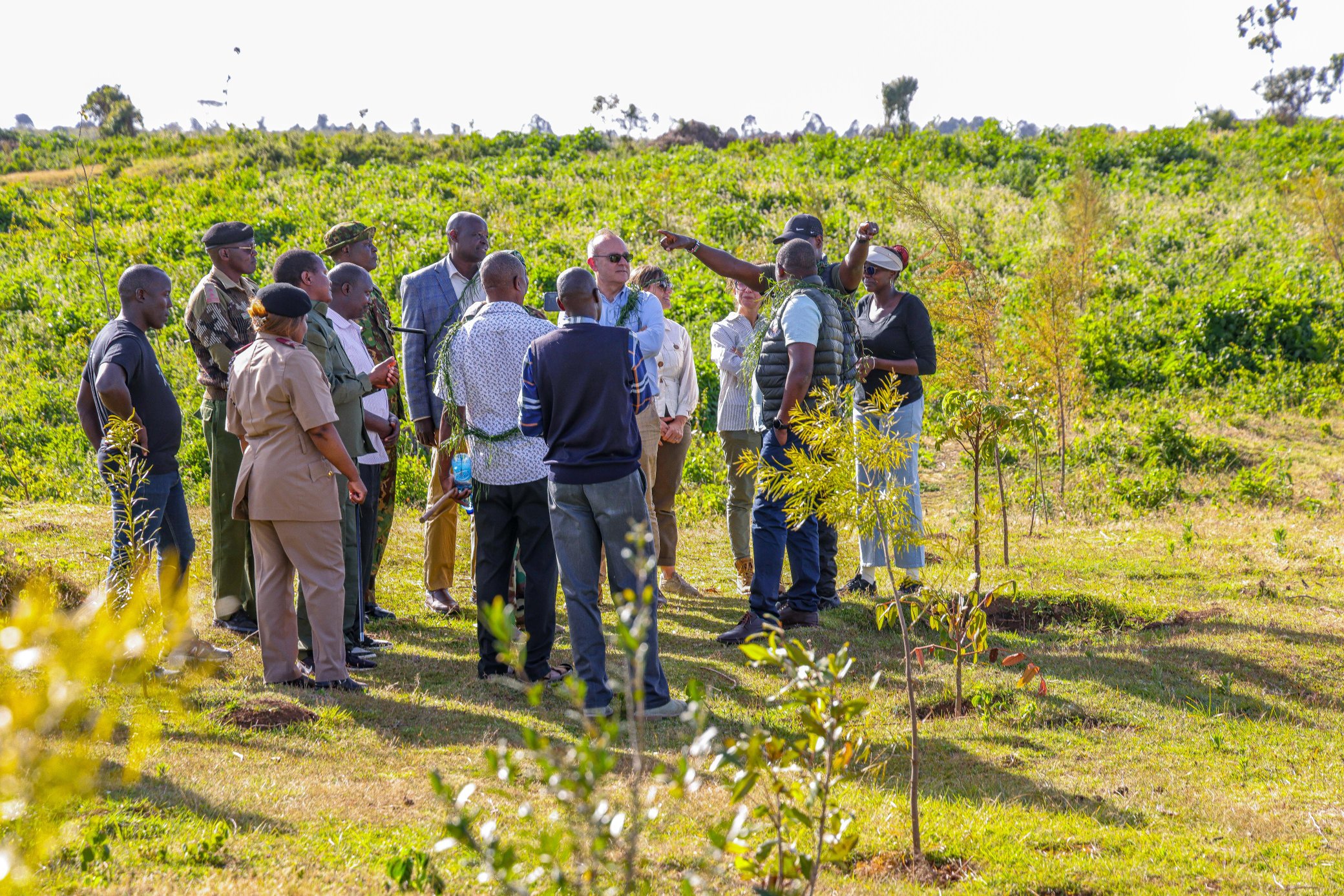
The achievement was confirmed on Wednesday during a site visit by State Department for Environment and Climate Change Principal Secretary Festus Ng’eno and an Italian delegation led by Ambassador Vincenzo Del Monaco.
The visit included an inspection tour by key partners and the Italian delegation, who were briefed on the programme’s integrated approach to conservation and community livelihoods.
Officials said the progress demonstrated that restoration efforts anchored on community participation can deliver tangible and sustainable results.
The initiative, known as the Mau Forest Complex Integrated Conservation and Livelihood Improvement Programme (MFC-ICLIP), seeks to restore degraded forest ecosystems while simultaneously improving the socio-economic wellbeing of communities living around the forest.
The programme recognises that conservation efforts cannot succeed in isolation from the needs of forest-adjacent communities.
A major intervention under MFC-ICLIP is the Trees Establishment and Livelihood Improvement Scheme (TELIS), a community-driven agroforestry model that allows farmers to grow food crops alongside trees.
The approach is designed to ensure food security and income generation while encouraging farmers to actively care for planted trees, thereby increasing survival rates.
“The initiative is designed to enhance household incomes while ensuring higher tree survival through active community participation and care,” the department said.
Beyond tree planting, the programme incorporates a Circular Economy component, implemented in partnership with Eco Rafiki, a youth-led environmental organisation based in Kenya.
Through this collaboration, communities are being supported to improve waste management practices and adopt circular economy solutions that turn waste into economic opportunities.
The partnership focuses on addressing waste streams such as glass and plastic, while developing eco-products that generate environmental and economic value.
Eco Rafiki Africa is also promoting inclusive environmental stewardship by creating green and sustainable employment opportunities, particularly for youth and women.
Ng’eno also acknowledged the contribution of the Smachs Foundation, which has supported forest-adjacent communities by providing beehives as part of livelihood improvement initiatives.
Beekeeping, officials said, not only boosts household incomes but also supports biodiversity conservation through pollination.
Earlier, the Principal Secretary and the Italian delegation paid a courtesy call on Baringo Governor Benjamin Cheboi, where they reviewed progress of the European Union-supported programme and discussed other ongoing environmental conservation and climate action initiatives in the county.
The Mau Forest Complex Integrated Conservation and Livelihood Improvement Programme is a multi-sector initiative that brings together national and county governments, development partners, conservation agencies and local communities.
Its core focus is on forest restoration, sustainable land-use practices and community empowerment.
by Allan Kisia