


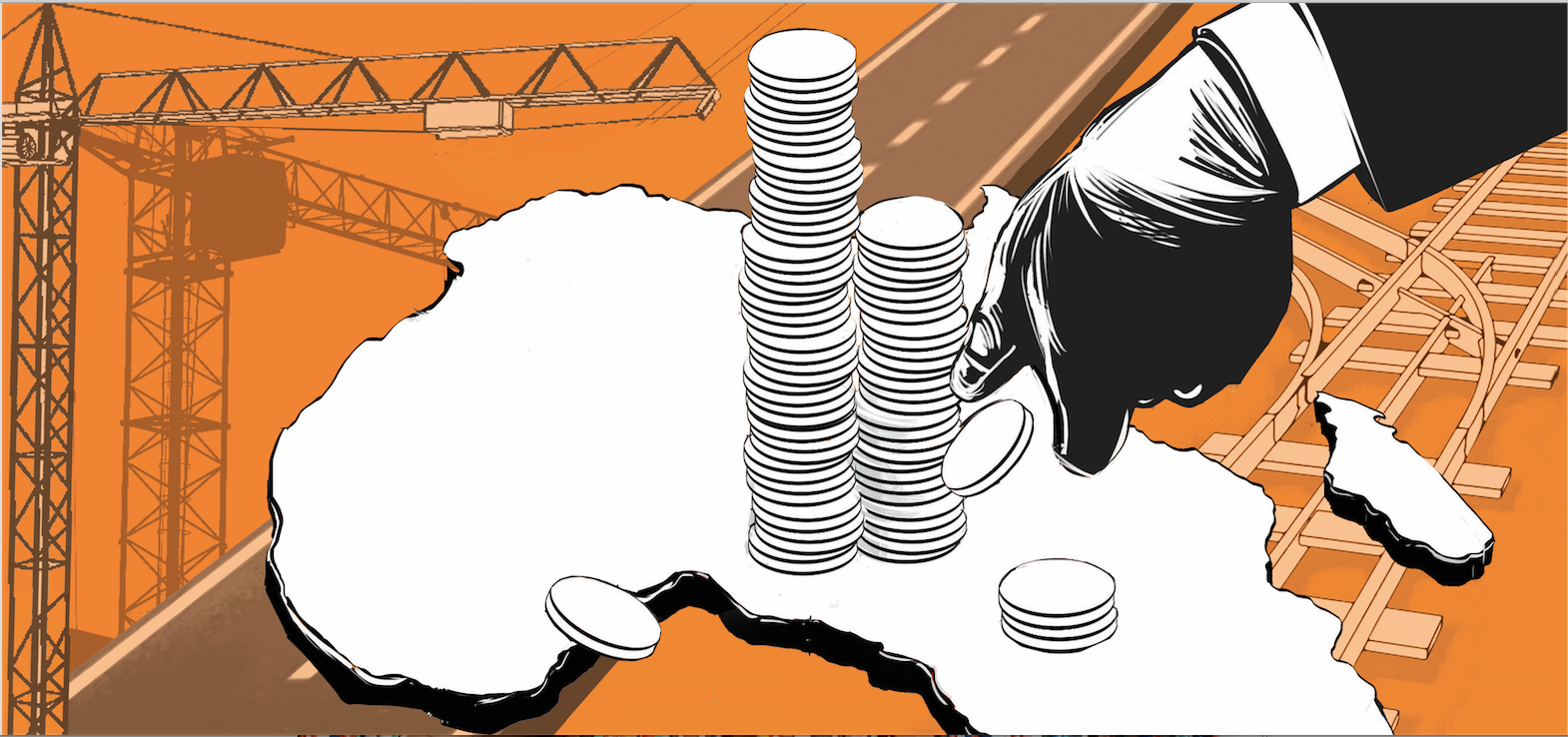
In the gilded halls of the African Union, the continent is charting its destiny and a quiet financial revolution is underway. The Africa Credit Rating Agency is no longer a whisper in policy corridors—it is at an advanced stage of establishment, backed by the AU’s resolve to dismantle the invisible barriers that keep African nations locked out of global capital markets.
Yet, as I witnessed in Kigali at the Sixth African Peer Review Mechanism-AGoSS Conference in October 2025, the path is fraught with scepticism, hope and hard truths.
The room buzzed with divergent voices. Delegates decried the Big Three—S&P, Moody’s and Fitch—as biased gatekeepers who systematically undervalue African sovereigns. “They rate us by perception, not potential,” one delegate thundered. Another countered sharply: “The term ‘bias’ is a convenient shield for fiscal indiscipline.” Both sides had merit.
Data from the World Bank (2023) shows that over 30 African nations rated lower than peers with comparable debt, growth or reserves. Kenya, for instance, languishes at B+ despite stronger fundamentals than Uruguay’s BBB. Yet Zambia’s 2020 default—blamed on ratings—stemmed from unsustainable debt and governance lapses long flagged by the same agencies.
Amid this tension, a critical fact emerged: 22 African countries have no sovereign rating at all. Burundi, Eritrea, South Sudan, Somalia—these nations are financial phantoms, barred from issuing Eurobonds, forced into bilateral loans at eight to 12 per cent interest when rated peers borrow at four to six per cent. The cost? Billions in lost development annually. Tanzania’s debut rating in 2013 unlocked a $1 billion bond at 5.8 per cent. Multiply that across 22 nations, and the stakes become existential.
I presented S&P’s methodology to ground the debate: five pillars—institutional, economic, external, fiscal and monetary—scored on a six-point scale (1=strongest, 6=weakest). Ratings emerge from opaque committee debates, peer groupings and consultations with central banks, finance ministries, media and even opposition leaders. It is rigorous but subjective.
Institutional scores, often the Achilles’ heel for Africa, penalise perceived risks while ignoring reform trajectories. Regional peer clustering traps high-growth Rwanda with stagnant neighbours. And the issuer-pays model? A structural conflict favouring advanced economies.
The loudest warning at the conference was that AfCRA risks inheriting these flaws. Political capture looms large. If governments fund or influence ratings, the agency becomes a sovereignty slogan, not a market tool. China’s Dagong CRA, criticised for inflating domestic scores, is a cautionary tale.
Capacity is another hurdle—only four African CRAs exist, none rating sovereigns. Yet the opportunity is immense. AfCRA can start where the Big Three fear to tread: the unrated 22 countries. Using a transparent, IOSCO-compliant framework, it could deliver shadow ratings to unlock markets, build credibility and force global agencies to compete.
To illustrate, I modelled hypothetical AfCRA ratings for all 22 using 2024-2025 IMF, AfDB and World Bank data. The results are sobering but actionable. Burundi earns a B (up from B- base) thanks to EAC membership and fiscal consolidation, despite 22 per cent inflation and 1.6 months of reserves.
DR Congo, with 6.5 per cent growth and mining wealth, hits B. Comoros and Mauritania reach BB-, buoyed by integration and gas reforms. At the bottom, Eritrea, Sudan and South Sudan languish at CCC, reflecting war, hyper-debt and institutional collapse. Somalia, post-HIPC (Highly Indebted Poor Countries) debt relief, claws to CCC+ with a positive outlook.
But credibility demands governance. I present a draft AfCRA Charter clause proposing an 11-member independent board: four from AU/ Regional Economic Communities, three from civil society, two non-voting global CRA advisors and two from International Financial Institutions. Funding caps to prevent capture—no source over 30 per cent.
Rating committees, 70 per cent African analysts, must publish methodologies and undergo annual IOSCO audits. Dual ratings (AfCRA + Big Three) on bonds would enforce market discipline.
At the Sixth APRM-AGoSS Conference, I floated the idea of rating regional blocs—Ecowas, EAC, SADC—as supranational entities to pool risk. The response was swift: eight overlapping RECs with competing interests make it impossible. Fair point. But bloc-adjusted sovereign ratings are feasible. S&P gives uplift for EU membership. AfCRA could add +1 notch for EAC monetary union progress or +0.5 for AfCFTA compliance. This rewards integration without erasing sovereignty.
The unrated 22 are AfCRA’s killer app. Start there. Shadow-rate them in 2026. Publish side-by-side with Big Three scores. Let markets judge. A bias audit (back-testing 2015–2025) would expose discrepancies—Kenya’s growth ignored, Zambia’s risks foreseen. Transparency, not rhetoric, will earn trust.
Africa’s credit story is not one of victimhood but of agency. The Big Three are flawed, but so is denial. AfCRA must be African-led, globally respected. It must rate the unseen, reward reform and punish indiscipline. Only then will the continent borrow on its terms, build on its strengths, and silence the sceptics—not with speeches, but with results.
by LAWI SULTAN