


Kenya is unlikely to feel the heat of the ongoing mass protests in Iran and the impact of US President Donald Trump’s announcement of a 25 per cent tariff on all countries trading with the Islamic nation.
“Effective immediately, any country doing business with the Islamic Republic of Iran will pay a tariff of 25 per cent on any business being done with the US. This order is final and conclusive,’’ Trump posted on his Truth platform on Monday.
The announcement has caused anxiety in many countries trading with both Iran and the US with with some like Kenya forced to tow the line, lest they severe economic and diplomatic ties with Washington.
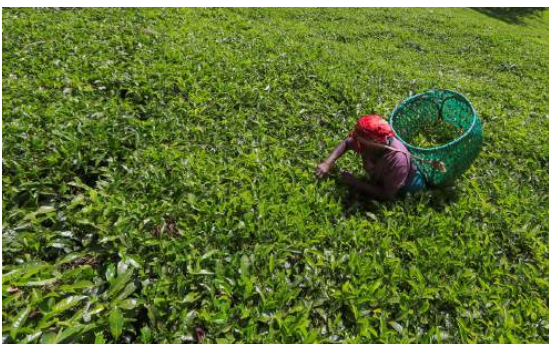
Iran is among Kenya’s top ten tea export markets. In 2024, the East African nation exported about 13 million kilogrammes of tea to Iran, valued at Sh4.26 billion, according to official trade data.
Kenya continues to enjoy a healthy trade surplus with Iran; for instance, in 2024, exports to Iran were valued at $50.8 million (Sh6.5 billion), compared to imports worth $18 million (Sh2.3 billion). Tea accounts for 90 per cent of the total exports to the Middle East nation.
Even so, Kenya has not sold tea to Tehran for the past 15 months, even after setting a 60-day deadline to settle a tea export row in August last year.
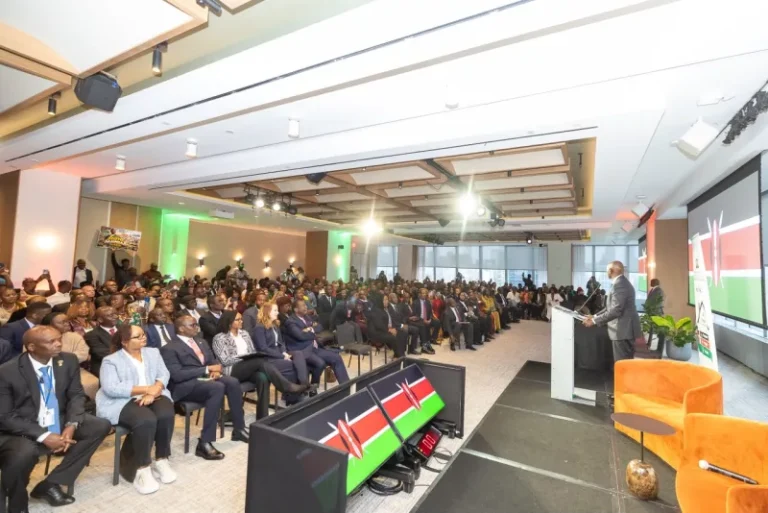
The decision was reached during the 7th Session of the Kenya–Iran Joint Commission for Cooperation (JCC) in Nairobi, led by Kenya’s Prime Cabinet Secretary Musalia Mudavadi and Iran’s Minister of Agricultural Jihad Gholamreza Nouri Ghezelcheh.
The dispute arose from a scandal involving Cup of Joe Limited, a Kenyan firm accused of importing low-grade tea, blending it, and re-exporting it to Iran as premium Kenyan tea.
On Tuesday, an official at the East African Tea Trade Association (EATTA), who spoke anonymously due to the sensitivity of the matter, downplayed the significance of Trump’s threats on Kenya’s tea exports, saying that the produce is in high demand elsewhere.
“Kenya has not solved the tea issue in Iran for a while. Although the announcement by the US is not good for the market, Kenya will suffer the least if it opts to tow the line. Our total trade with Iran is less than Sh10 billion,’’ he said.
Apart from tea, Tehran buys sheep and goat meat ($1.93 million) and coffee ($1.25 million). Over the past five years, exports from Kenya to Iran have increased at a rate of 33 per cent annually , growing from $11.5 million in 2018 to $50.8 million in 2024.
In 2023, Iran exported $28.4 million worht of goods to Kenya.
The main products were asphalt mixtures ($13.8 million), petroleum coke ($8.64 million), and pasta ($2.14 million). Over the past 5 years, exports from Iran to Kenya have decreased at an annualised rate of 20 per cent, decreasing from $86.6 million in 2018 to $28.4 million in 2023.
Although the Kenyan officials were yet to comment on the threat by the US by the time of going to press, various trade and diplomatic experts indicated that it is only wise for Kenya to cut trade with Iran.
According to Humphrey Rono, a trade advisor with a local bank, Kenya stands to lose a lot if it ignores Trump’s order saying it will be suicidal for Kenya to disobey Trump’s order.
Apart from a huge trade, the disobedience is likely to threaten something far more valuable: Kenya’s access to American markets, investment, security cooperation and diplomatic cover.
“The relationship with Washington is deeply asymmetrical. The US provides intelligence cooperation, counter-terrorism support, military training, equipment and political backing in multilateral forums.”
The U.S. goods and services trade with Kenya totaled an estimated $3.3 billion in 2024, up 18 per cent from 2023. U.S. total goods trade (exports plus imports) with Kenya was an estimated $1.5 billion in 2024.
Kenya’s Exports to the United States were $662.51 million in 2024.
John Ngaira, a trade expert, did not mince his words. ‘’Even the most foolish man on earth knows what to do when confronted with the option of picking between a superpower and a country clouded with riots and isolation risks.”
Old diplomatic cables capture Nairobi’s thinking succinctly: Iran is commercially relevant but strategically sensitive.
National Assembly Speaker Moses Wetang’ula once insisted that relations with Iran would not affect ties with the West.
“Our friendship with country A is not to the exclusion of country B,” he said when he served as Minister for Foreign Affairs, a phrase that has since become a staple of Kenyan diplomacy.
by VICTOR AMADALA