![Six Kenyan Creatives Win Sh4.5M in Capture the Good Challenge [Details]](https://www.breakingkenyanews.com/wp-content/uploads/2026/09/cfbe48b2-fc56-43e3-93d4-3a1de9043bf5-300x200.webp)
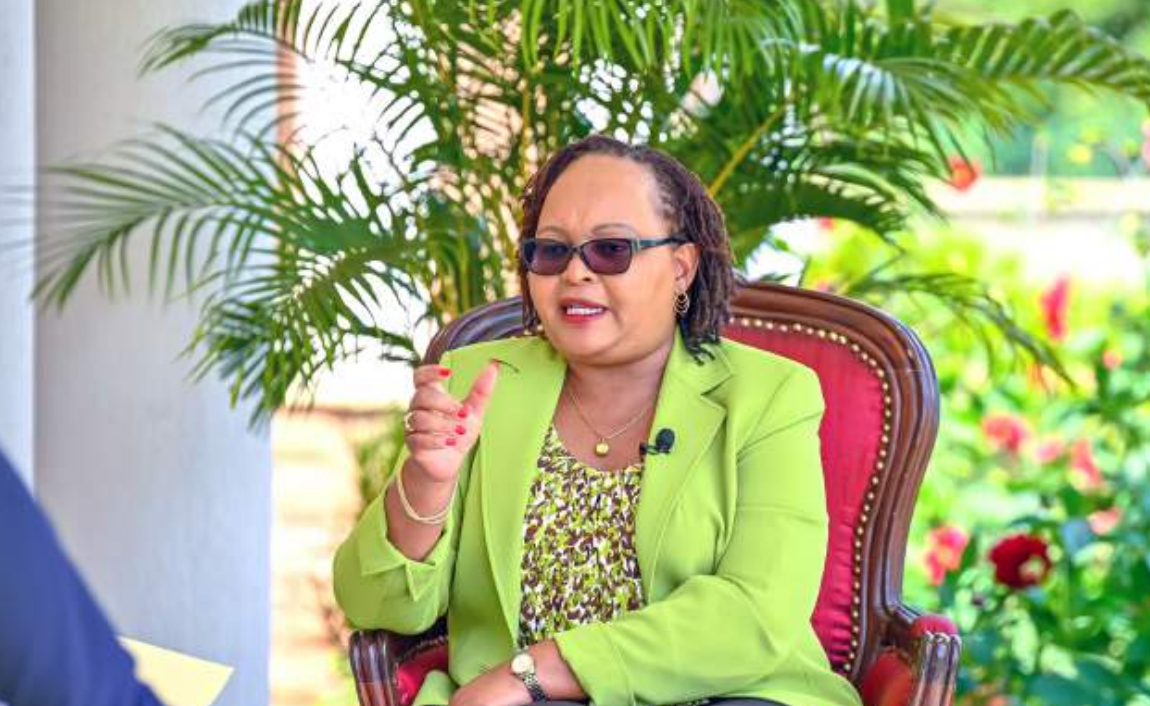
As she approaches the final stretch of her second term, Kirinyaga Governor Anne Waiguru has signalled that her public service journey is far from over. Amid growing speculation about her national ambitions ahead of 2027, the governor speaks candidly about leadership, experience and the future.
From her early days as a government reform adviser and IFMIS director to her role as Cabinet Secretary, where she helped roll out the Huduma programme, Waiguru says her career has prepared her for higher responsibility.
In this wide-ranging interview with the Star, she reflects on legacy, Mt Kenya’s political future and why she believes she still has “fuel in the tank”.
This being your last term as governor, how do you rate your performance during your tenure?
By God’s grace, I have done fairly well. Various assessments and ratings, both from within and outside government, have consistently rated my performance among the top.
These evaluations reflect the progress we have made in service delivery, governance and development across the county.
How do you define your leadership style, and how has it evolved over the years?
I define my leadership style as transformative, democratic and widely consultative, especially in the political field. I believe people need to own our programmes for them to succeed, and, therefore, there is a need for delegation, consultation and inclusive leadership.
What single achievement do you believe will define your legacy?
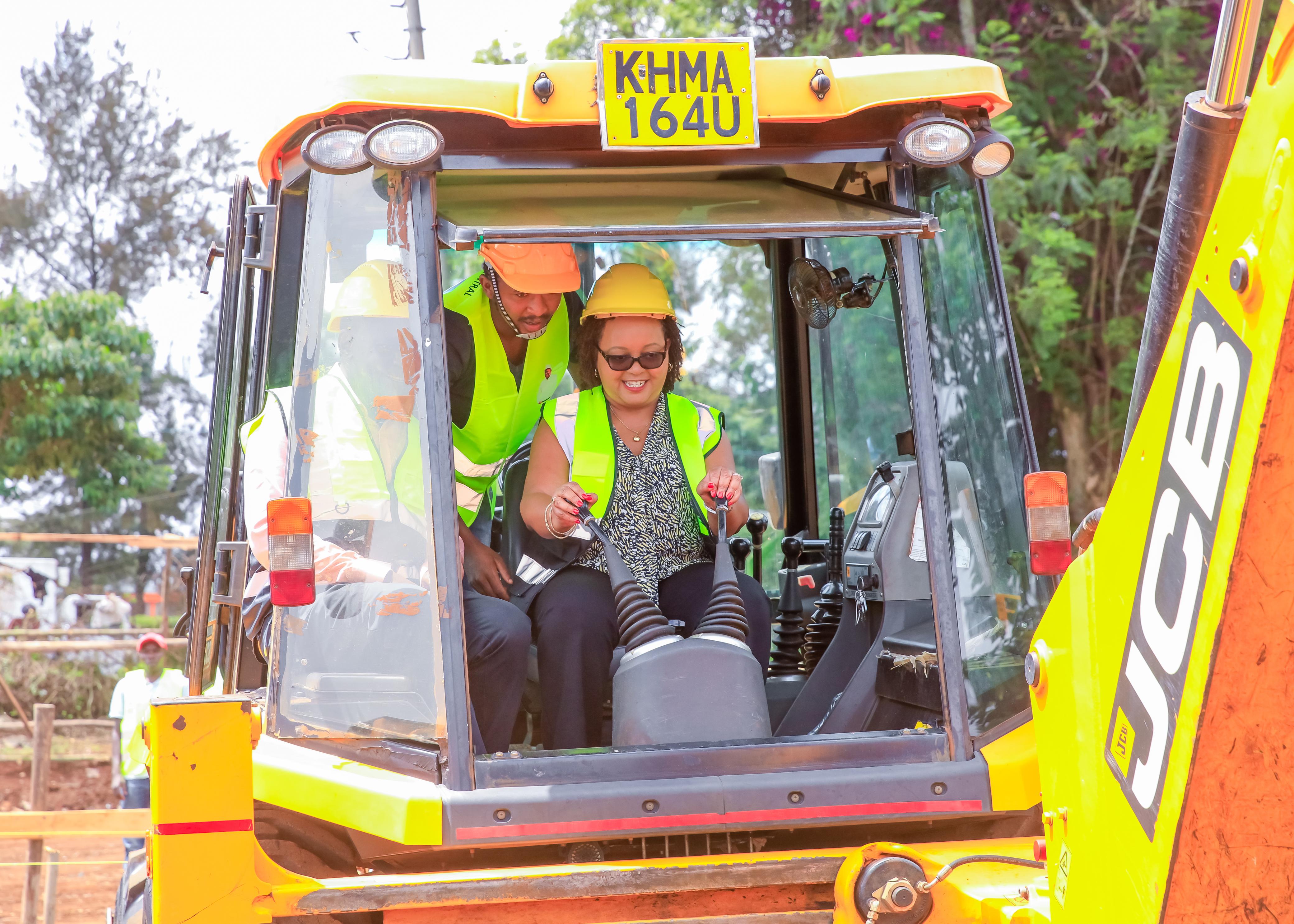 Kirinyaga County Governor Anne Waiguru has broken ground for the first-ever Kenya Medical Training College (KMTC) in the county./HANDOUT
My main legacy will be health. We have improved infrastructure and service delivery across the county. We upgraded Kerugoya County and Referral Hospital from Level 4 to Level 5, enabling the provision of specialised services. We also upgraded Kimbimbi, Kianyaga and Sagana hospitals from Level 3 to Level 4, ex-panding the scope of services offered. In addition, we have constructed and equipped 24 health facilities to strengthen primary healthcare at the grassroots. We have improved health human resource capacity and digitised all hospitals in the county through the Health Management Information System at Kerugoya Level 5 Hospital and the Electronic Health Information System in all other health facilities.
Beyond health, which other sectors have recorded notable progress under your administration?
In agriculture, we have supported more than 100,000 households through the Wezesha Kirinyaga Programme to improve production and productivity. As a result, farmers’ earnings from crops such as rice, coffee, tea and tomatoes have tripled, uplifting many households from poverty.
In trade and industrialisation, we have developed the Sagana Industrial City, which includes an Export Processing Zone, a Special Economic Zone and a County Aggregation and Industrial Park. This is a first and has become a benchmark for other counties. Once complete, the industrial park will enable farmers to earn more through value addition, processing and marketing, and will create more than 10,000 direct jobs and more than 100,000 indirect jobs. We have also constructed more than 20 new markets, providing farmers and traders with conducive trading environments.
What key infrastructure and service delivery projects stand out during your tenure?
In infrastructure, we have upgraded roads and towns through a cabro paving project, laying more than 118,000 square metres of cabro in Kerugoya, Wang’uru, Sagana, Kagio, Kutus, Kianyaga and Kagumo. In the water sector, we have supplied more than 100,000 households with adequate water for domestic and irrigation use. We have also digitised revenue collection through the Kiripay System, which has enhanced efficiency, sealed revenue leakages and made it easier for citizens to pay for permits and licences.
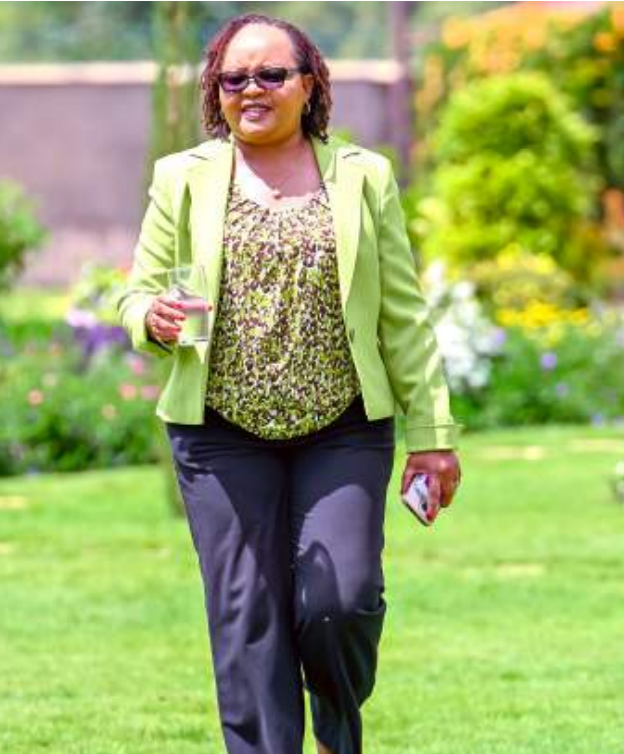 The governor arrives for the interview /HANDOUT
Was there any major goal you feel may not be fully achieved by the end of your term?
Our 2018 Mountain Cities 2032 Blueprint designated each constituency as a pillar of our development agenda. Ndia, designated as the county’s Industrial City, has progressed well with the development of the Sagana Industrial City. Kirinyaga Central, designated as the Wellness City, has taken shape with the upgrading of Kerugoya County and Referral Hospital and the establishment of the Kenya Medical Training College.
Mwea has taken off as the county’s Agricultural City, particularly as a leading rice and tomato producer. What we may not have fully achieved by now, but are still on course to deliver, is the development of Gichugu as the county’s Resort City. However, we have begun developing a tourism plan to market Gichugu through agritourism, Thiba Dam, Castle Lodge and Mount Kenya climbing trails, which we hope to achieve before my term ends.
How is your administration addressing youth unemployment and economic empowerment in Kirinyaga?
We have streamlined the women and youth agenda across all development programmes and projects. Women and youth form the bulk of beneficiaries under the Wezesha Kirinyaga Programme. We are also positioning young people as the main beneficiaries of employment opportunities at the upcoming Sagana Industrial Park. In addition, we have a women and youth policy to guide empowerment efforts, as well as a County Empowerment Fund that provides grants to groups undertaking socioeconomic empowerment projects. The Sagana Industrial Park, as a flagship investment, will create more than 10,000 direct jobs and about 170,000 indirect jobs, significantly boosting household incomes and reducing unemployment in the county.
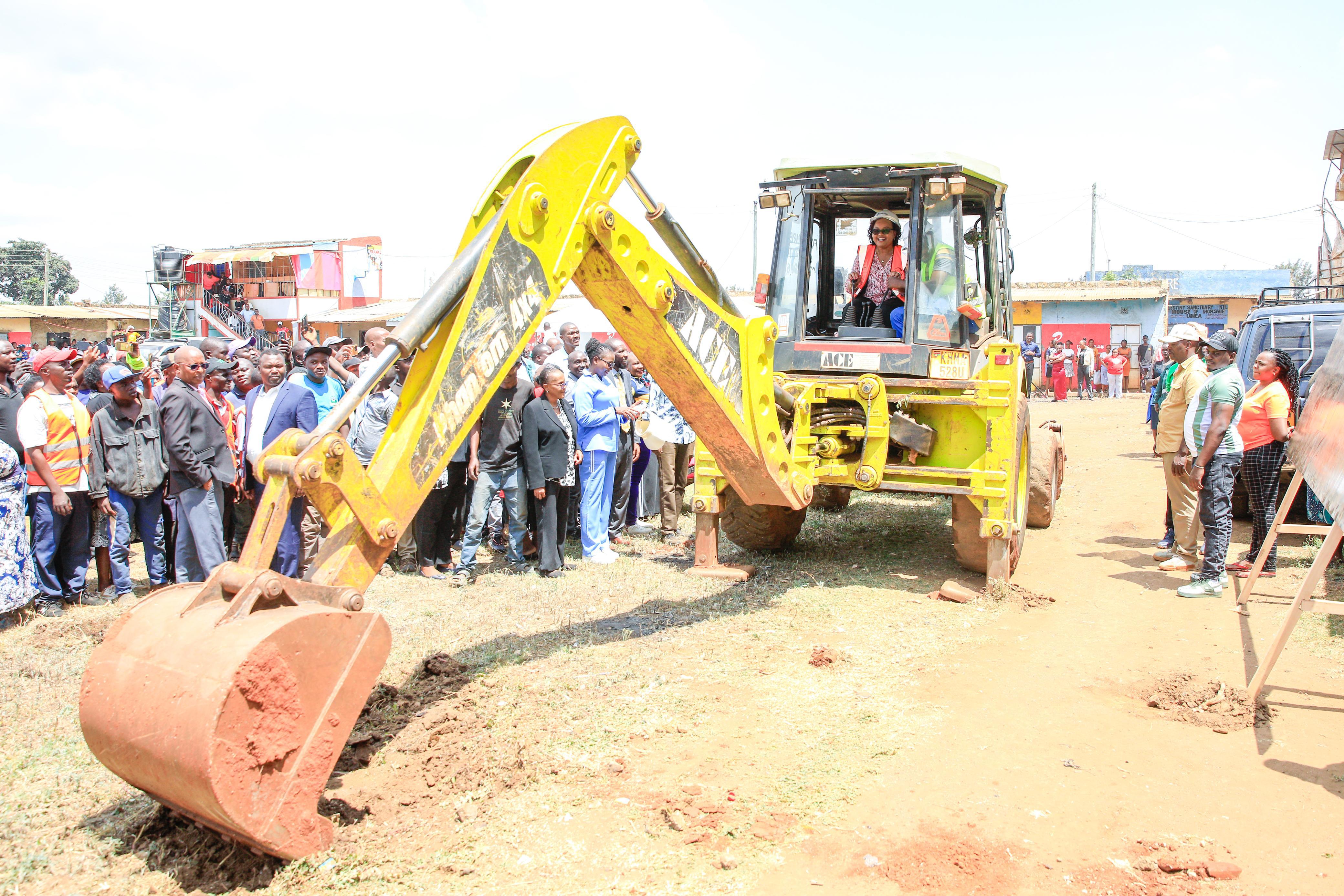 Governor Anne Waiguru during the ground breaking of Kiumbu and Wamumu markets in Kirinyaga on September 11, 2025./HANDOUT
How do you ensure women and youth are included in leadership and decision-making?
We focus on continuous mentorship and wide consultation on development matters, while providing platforms for women and youth to freely express their views. This includes initiatives such as the Daughters of Kenya (DoK) programme, which encourages participation and leadership development.
Mt Kenya is expected to play a decisive role in the 2027 elections. How do you plan to ensure the region’s interests are represented in the next government?
We will continue to ensure that the region is represented at the decision-making table. Our priority is to safeguard key projects and protect agriculture, particularly gains made in coffee, tea, rice and milk production. We are also focused on delivering effective services, such as healthcare, building trust in government through social protection and safeguarding democracy and human rights.
There has been growing speculation that you could be a running mate in 2027. Do you harbour such ambitions?
I have been fortunate to serve Kenya in key responsibilities, including as a government adviser on reforms in my 30s, director of Ifmis and Cabinet Secretary in one of the most impactful ministries, where I initiated the Huduma Programme. I was elected governor in my 40s and re-elected in the 2022 General Election.
I also served as chair of the Council of Governors for two years. These responsibilities have enhanced my capacity for public leadership, and I believe there is still fuel in the tank to serve Kenya in other capacities. I am a committed participant in national development and intend to remain active in politics and governance, serving in any suitable position beyond 2027.
Who has been your role model in politics, and why?
My role model is [former Liberian President] Ellen Johnson Sirleaf, who overcame many obstacles to become Africa’s first elected female head of state. She continues to inspire many leaders, particularly women, and remains active in influencing policy even in her 80s.
What challenges have shaped your political career, and how have you overcome them?
My political journey has been shaped by significant challenges that tested my resilience, character and commitment to public service. I have faced intense political opposition, public scrutiny and moments when my integrity and resolve were questioned. I overcame these challenges by focusing on service delivery and results rather than distractions. I let my work speak for me and relied on faith, family and the support of the people of Kirinyaga.
What is your parting message to Kenyans as the year ends?
We are honoured to be Kenyans, citizens of a country rich in diversity and culture and blessed with immense economic potential. Our nation has matured democratically and is built on a strong constitutional and institutional foundation. It is our duty to preserve, protect and enhance these achievements, and I hope to continue playing a role in this journey. I also wish all Kenyans a Merry Christmas and a happy and prosperous New Year 2026.
by ALICE WAITHERA

![Six Kenyan Creatives Win Sh4.5M in Capture the Good Challenge [Details]](https://www.breakingkenyanews.com/wp-content/uploads/2026/09/cfbe48b2-fc56-43e3-93d4-3a1de9043bf5-768x512.webp)