

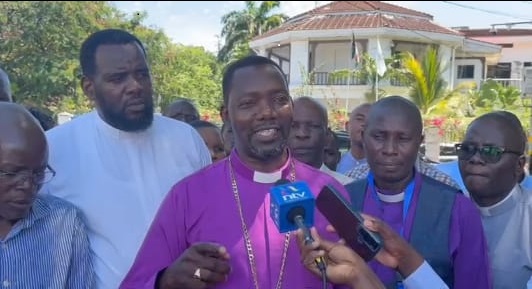
Church leaders in Mombasa County have rejected a proposed religious regulation bill, terming it unconstitutional and a threat to freedom of worship guaranteed under the Constitution.
Speaking on behalf of the Mombasa Pastors Fellowship, Chairman Reverend Peter Onyango said religious leaders across the county oppose the proposed legislation, arguing that it seeks to suppress rather than support faith-based institutions.
“We as Christians and religious leaders believe it is God who allows us to serve citizens. There should be no laws that suppress freedom of worship,” Reverend Onyango stated during a meeting with clergy in Mombasa.
He noted that spiritual matters are guided by faith, rather than secular legislation. He added that churches have played a critical role in rehabilitating individuals with criminal backgrounds, transforming them into productive members of society.
Bishop Tee Nalo, an advisor to the Mombasa Pastors Fellowship, called on religious leaders to unite against the bill, arguing that the church operates under divine authority and cannot be subjected to secular regulation.
Bishop Nalo questioned the practicality of certain provisions in the proposed law, particularly requirements for financial audits. “One of the clauses talks about churches giving audits, yet some rural churches collect less than one thousand shillings in offerings. What kind of audit are they expected to give?” he asked.
The advisor further faulted the process leading to the bill, saying there was inadequate public participation and that the views of clergy were ignored. He maintained that some clauses in the bill contradict constitutional provisions on freedom of worship.
“The churches that are problematic are already known. There is no need for a blanket law to deal with issues that can be addressed using existing structures,” he said, urging the government to withdraw the bill.
Bishop Gabriel Imel shared his personal testimony to highlight the transformative role of the church in society. He revealed that he was once involved in criminal activities before his conversion to Christianity and eventual ordination as a pastor.
“When you bring a bill that does not match spiritual beliefs, you are pushing people back to where they came from. The church is led by God himself, not by human beings,” Bishop Imel said.
Bishop Nancy Njeru also opposed the legislation, questioning the government’s motives after churches complied with earlier directives to form umbrella bodies for self-regulation.
“When they say there are conmen, it means they already know them. Let them follow the law and leave the church alone,” she stated, warning that excessive regulation of religious institutions would disrupt worship and negatively affect the nation.
The church leaders collectively urged the government to uphold constitutional provisions on freedom of worship and engage in broader consultations with religious stakeholders before pursuing any legislation affecting faith-based institutions.
by KNA