


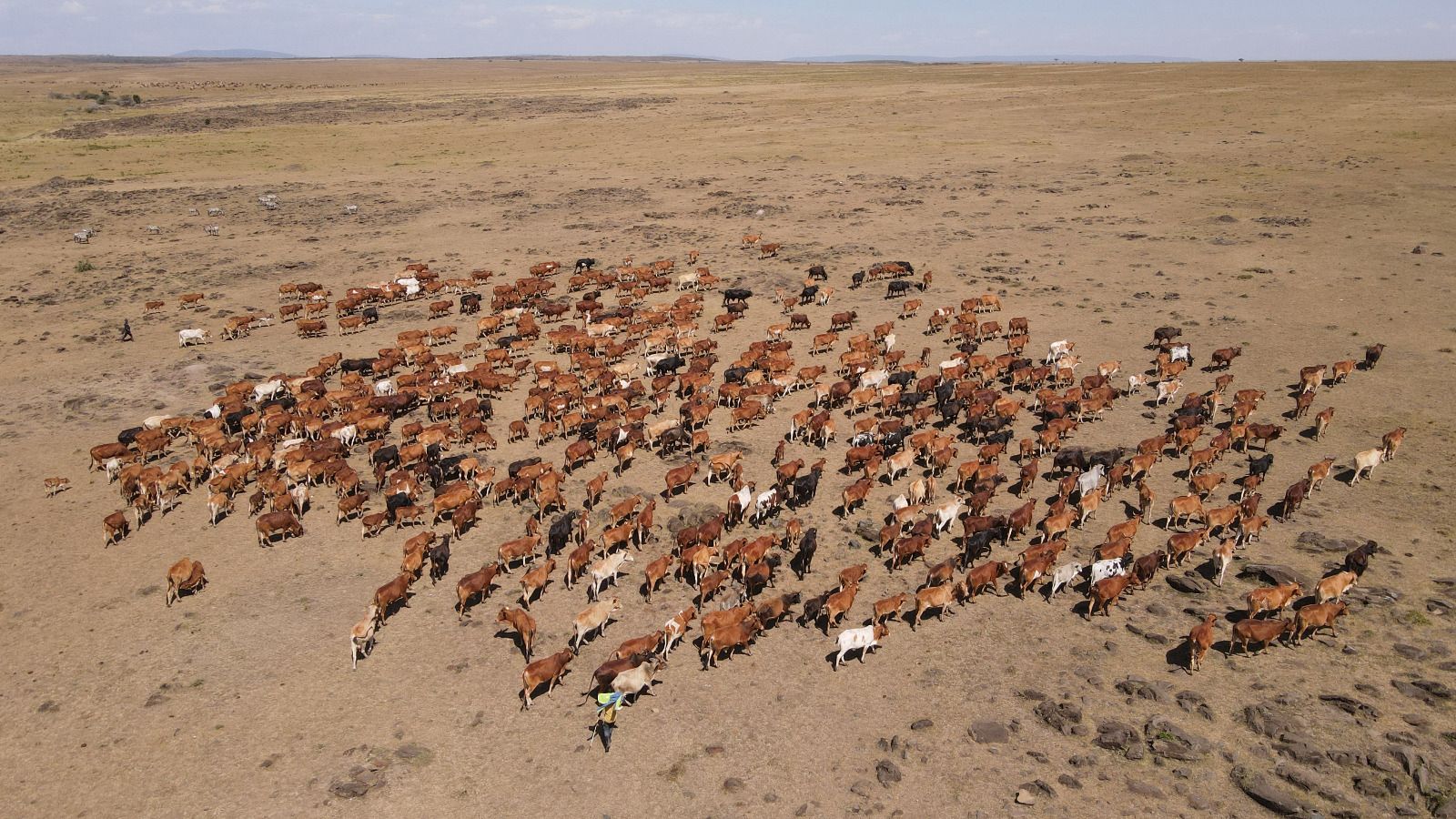
At the heart of the plan, which targets 22 million cattle and 50 million sheep and goats, is the Mifugo 360 platform on which farmers are registered, enabling them to access subsidised services through a digital e-voucher system.
Under the FMD programme, farmers pay Sh50 per animal while the government contributes Sh110 through e-subsidy.
Previously, farmers had to shoulder the whole Sh160 per animal, making the vaccination beyond the reach of millions of smallholder farmers.
The livestock are also onboarded on the Mifugo 360 platform by using muzzle technology, which identifies an animal through unique muzzle patterns.
This is a major improvement from the current manual tagging and branding, which have been in use for a long time.
Capturing an animal’s muzzle digitally brings a number of key benefits in animal husbandry, including accurate data which provides correct and timely information for farmers.
Once created in this manner, the livestock data cannot be manipulated easily, unlike the branding and tagging which are prone to tampering in addition to being costly to maintain.
Moreover, the new technology also enhances traceability and disease surveillance while curbing livestock theft.
“This technology will revolutionise the livestock subsector as it captures unique identities of the cows, making it easy to track them,” says a livestock expert and former Managing Director the Kenya Animal Genetic Resource Centre (KAGRC) David Kios.
Smooth tracking of livestock, Kios notes, is crucial for disease control, monitoring and surveillance.
The vaccination campaign, which is a partnership between the government, the private sector and the World Bank through the National Value Chain Development Project (NAVCDP), has been rolled out in 11 counties, including Bomet, Narok, Meru, Kiambu, Uasi Gishu, Laikipia, Kajiado and Bungoma.
The project seeks to attain 70 per cent vaccination coverage in four years, the threshold required to effectively control FMD.
As of November 27, 2025, about 40,000 farmers and 250,000 cattle had been onboarded onto the programme, with 185,719 animals vaccinated so far.
The use of technology is central to the attainment of these ambitious targets as the new system is poised to deliver the efficiency and speed necessary to vaccinate such a high number of animals.
As it pushes for healthier animals through vaccination, the government is also taking advantage of the project to modernise the management of livestock as part of a broad strategy to unlock the sector’s vast potential.
The availability of accurate data is believed to be a game-changer in the efforts to transform livestock sub-sector.
Besides capturing an animal’s unique IDs, which enhances transparency, the technology also links each animal to its owner for better monitoring.
Thanks to its tracking feature, the adoption of the new technology helps in curbing livestock theft as animals can be easily tracked. This is a boon to farmers domiciled in areas prone to cattle-rustling and banditry.
Further, the system is designed to provide integrated services, including modules for health records, financial services, and market access.
The ultimate aim of the new technology is to lift farmers by improving incomes and creating structured markets.
“Application of technology will boost provision of a wide range of services to livestock farmers,” says Joseph Ganda, Bungoma County deputy director, veterinary services.
The technology, Ganda adds, is key in delivering efficiency and accelerating the vaccination programme.
The process of transitioning to the new chapter in the country’s animal management system starts with the registration of farmers by a veterinary expert.
This involves recording the farmers’ important data and scanning the animals’ muzzles.
After capturing the data and the identities of their livestock, the farmer gets through the phone an e-voucher for subsidised vaccination service.
The third step is for the farmer to redeem the voucher, which animal health officers use to administer vaccinations for diseases like FMD.
The new system goes a long way in modernising the management of animal and disease control, transitioning livestock husbandry from manual to digital.
Riding on accurate data, the app tracks health, vaccination, and ownership, aiding in disease control and market linkages. In addition, it aids in achieving widespread vaccination, leading to healthier herds.
“We are now using a system that will go a long way in modernising the management of our livestock. This will bring many benefits, including better disease control,” says Rebeccah Lusweti, Bungoma NAVCDP coordinator.
She says muzzle technology captures unique identities for various animals, enabling the provision of tailor-made services for farmers.
Overall, the digital management of livestock supports Kenya’s goal to boost the subsector’s contribution to economic growth.
The project is part of the government’s broad plan to transform agriculture.
The livestock subsector contributes Sh1.4 trillion to the economy annually and employs half of the agricultural workforce, highlighting the immense role it plays in catalysing the economy.
The vaccination campaign seeks to boost livestock’s contribution to the economy from 12 per cent currently to 20 per cent by 2027.
By improving animal health and protecting the dairy and meat sectors from diseases, the initiative aims to enhance production, livelihoods, food security and boost job creation.
Milk production currently stands at about 6 million litres annually, which is insufficient to meet the seven million litres consumed locally.
The deficit of 1 billion litres is met by imports.
Also, the vaccination aims to reduce farmers’ losses, which can be as high as Sh62 billion annually.
Just like the fertiliser subsidy programme, the reduced cost of vaccination aligns with the Kenya Kwanza administration’s Bottom-up Economic Transformation Agenda (BETA), whose primary role is to uplift millions of low-income households by enriching livelihoods, reducing the cost of living and creating jobs in agriculture.
by FELIX KIPKEMOI