



Property developers are raising concerns over volatile construction costs in Kenya, warning that rising prices of building materials, fuel and inflation are threatening the delivery of affordable housing and putting pressure on investment returns.
International Housing Solutions (IHS) Kenya says unpredictable construction costs are complicating project planning, forcing developers to rethink building designs, procurement strategies and contractor arrangements to keep projects financially viable.
The concerns come as developers increasingly turn to rental housing to tap into growing demand from urban households priced out of homeownership, even as the cost of delivering residential developments continues to rise.
IHS Kenya Managing Director Kioi Wambaa said fluctuations in construction expenses were making it difficult for developers to maintain predictable project budgets, with rising fuel and steel prices adding to the financial burden.
“Construction costs are very volatile, to say the least. You look at inflation and you look at the construction cost, the inflation component is very high. You look at things regarding fuel and what we’ve seen globally. It’s having a significant effect,” said Wambaa.
The rising costs are forcing developers to explore alternative ways of containing expenditure without compromising construction quality or pushing housing prices and rents beyond the reach of potential occupants.
IHS said it is adjusting apartment sizes, procuring some construction materials directly and adopting competitive tendering processes while negotiating more flexible arrangements with contractors.
The company says managing construction expenditure has become particularly important as it expands its rental housing portfolio, where developers must balance investment returns against tenants’ ability to pay.
The challenge is reflected in its latest investment, a Sh1.2 billion residential development in Nairobi’s Karen End area.
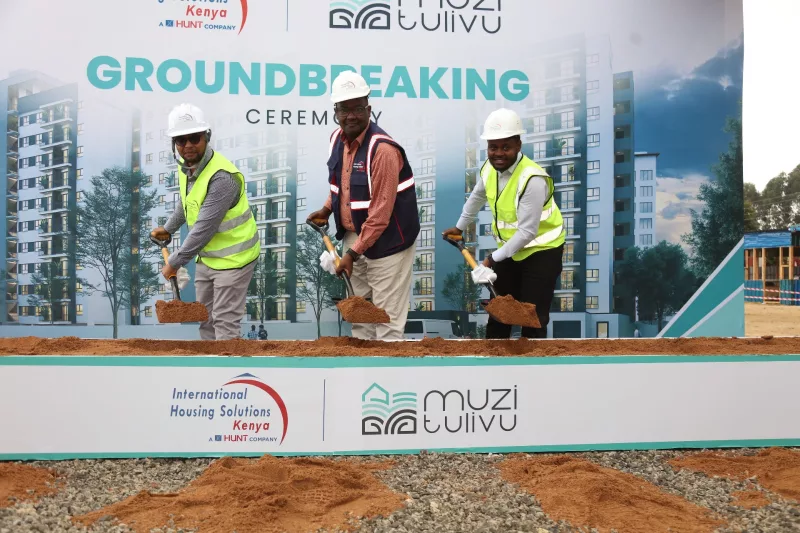
IHS broke ground on Muzi Tulivu, a 210-unit apartment development comprising 90 one-bedroom and 120 two-bedroom apartments. The project is expected to be completed in 2028.
The development will primarily target the rental market, serving working professionals, young couples and small families seeking accommodation within reach of Nairobi’s employment centres.
Wambaa said the project is designed to bridge the housing market between Dagoretti and the more affluent Karen neighbourhood, offering households access to established infrastructure without the premium costs associated with higher-end residential areas.
The development sits along the Dagoretti-Thogoto corridor and is accessible through the Southern Bypass, connecting residents to offices, schools, shopping malls and healthcare facilities.
Beyond construction expenses, developers are also increasingly considering the long-term operating costs of residential buildings as they seek to make rental housing more affordable.
The project is part of IHS Kenya’s wider expansion strategy, with the company developing a pipeline of approximately 3,100 homes across Nairobi, Kiambu and Eldoret through 10 projects.
Its latest development follows the launch of Muzi Enzi, a Sh1.9 billion rental housing project in Tatu City in October 2026. The company is targeting approximately 4,000 green homes by 2030.