
The United States government issued a health alert to its citizens living in or travelling to Kenya following the country’s first reported case and death from Ebola.
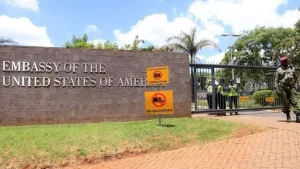
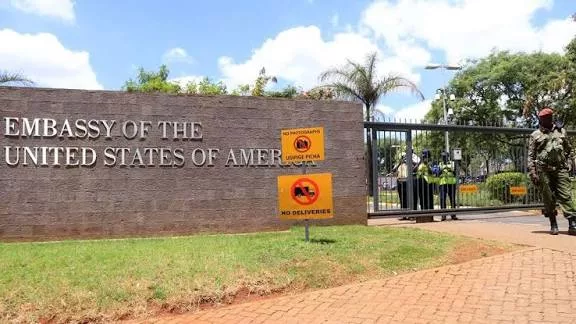
The US Embassy in Nairobi on Wednesday, October 7, urged American citizens who may have been exposed to the virus to monitor their health and seek medical guidance if they develop symptoms associated with Ebola.
“The Government of Kenya reported a case of Bundibugyo virus disease (‘Ebola’) on October 6. Health officials are tracing the patient’s contacts,” the embassy said.
According to the embassy, the patient travelled by land from the Democratic Republic of Congo (DRC) to Uganda before travelling onwards to Kenya. He later boarded Jambojet flight 8523 to Jomo Kenyatta International Airport (JKIA) on October 3, 2026.
The embassy described Ebola as a rare, severe and often fatal haemorrhagic fever illness and advised Americans considered at risk of exposure to inform their healthcare providers if they develop symptoms consistent with the disease.
“If at risk for Ebola, alert your healthcare provider if you are experiencing symptoms consistent with Ebola to receive guidance before presenting for care,” the embassy said.
US citizens were also advised to monitor their health for 21 days after travelling to an area experiencing an Ebola outbreak.
The embassy advised travellers to continue taking malaria prophylaxis as recommended by their doctors, noting that malaria symptoms can resemble those of Ebola and could result in preventable health concerns.
Americans with urgent health concerns or requiring assistance were advised to contact the US Embassy in Nairobi’s Gigiri area through its toll-free number for guidance and consular support.
The alert came a day after Health Cabinet Secretary Aden Duale confirmed Kenya’s first imported case and death from the Ebola Bundibugyo virus.
Duale said the deceased was a 40-year-old Kenyan man who had lived in the DRC for about seven years before travelling back to Kenya.
According to the CS, the man fell ill about a month earlier and sought treatment at several health facilities in the DRC before travelling by road to Kampala, Uganda.
He subsequently boarded a Jambojet flight to Nairobi and arrived at JKIA on Saturday afternoon, October 3.
The man was later admitted to Nairobi Hospital after his condition deteriorated. He developed severe symptoms, including fever, fatigue and bleeding under the skin, before dying at about 11:30pm on Monday, October 5.
The Kenyan government has since intensified surveillance, contact tracing and other public health measures as authorities work to identify and monitor people who may have been exposed to the virus.
President William Ruto has directed the National Security Council Committee (NSCC) to assess the situation following the death of a patient confirmed to have an imported case of Ebola Virus Disease in Kenya.
Following the NSCC meeting, the government has stepped up surveillance, contact tracing and other public health measures to prevent further transmission.
Eight family members of the deceased have been placed under quarantine and are undergoing daily monitoring for symptoms, while 21 healthcare workers who attended to the patient have also been quarantined and are being closely monitored.
Authorities have also extended contact tracing to passengers who travelled on the same flight as the deceased when the patient entered Kenya.
So far, 27 passengers who may have come into contact with the deceased have been identified and contacted, with public health measures being implemented.
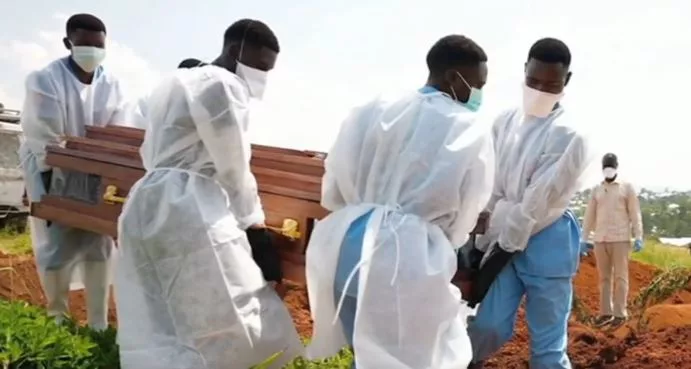
The deceased has since been safely buried in accordance with established public health protocols.
The government said surveillance and rapid response teams are on the ground, building on preparedness measures and surveillance systems maintained since the Ebola outbreak began in May 2026.
As of October 6, 2026, Kenya had screened 652,584 travellers and tested 267 samples at five laboratories.
The laboratories include the National Virology Reference Laboratory (NVRL), KEMRI Nairobi, KEMRI Kisumu, and mobile laboratories deployed at the Busia and Lwakhakha border points.
Of the 267 samples tested, only one — belonging to the deceased patient — has returned positive. No additional positive cases have been detected.
The government said 4,971 healthcare workers have been trained at national and sub-national levels on Ebola prevention, detection and management.
Kenya has also designated several facilities for Ebola case management. These include Kenyatta National Hospital, with eight beds; Moi Teaching and Referral Hospital, with 50 beds; National Police Hospital, with 49 beds; and The Nairobi Hospital, with 143 beds. County-level isolation centres are also available, with the government saying capacity will be expanded as necessary.
The government has urged Kenyans to remain calm and vigilant while observing strict hand hygiene and avoiding contact with people displaying symptoms associated with Ebola.