

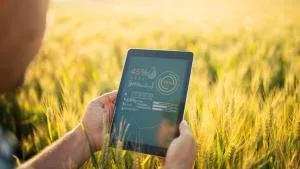
Artificial intelligence is increasingly finding its way into agriculture, with experts saying access to reliable and locally relevant data will determine whether the technology can deliver useful advice to farmers.
The development comes as Kenya steps up efforts to use AI in agriculture, including precision farming, digital extension services and climate-related advisories.
The Centre for Agriculture and Biosciences International (Cabi) has published its first artificial intelligence-ready agricultural datasets on Hugging Face, a platform used by developers and researchers to share machine-learning models, datasets and other AI resources.
According to Cabi, the datasets have been developed under the Generative AI for Agriculture (GAIA) project, supported by the Gates Foundation and UK International Development.
Katherine Cameron, Cabi global lead for digital advisory services, said making trusted agricultural information available in AI-ready formats could improve the accuracy of digital advisory tools and support better decision-making.
“This is important because there is growing demand for AI tools that provide practical, locally relevant agricultural advice,” she said.
“By making agricultural knowledge available in AI-ready formats, we can help improve the accuracy of digital advisory tools and support better decision-making across the agricultural sector.”
One of the first datasets, Cabi Plant Health Knowledge for AI, brings together practical information on crop pests and diseases from Kenya, Ethiopia and India. It includes farmer factsheets, pest-management decision guides and plant-health case studies.
For Kenya, such information could help developers build AI tools capable of providing farmers with more relevant advice on crop pests, diseases and management practices, rather than relying mainly on general information from the internet.
A 2025 study involving 120 farmers in Kiambu, Kakamega, Meru and Nakuru counties says while AI-generated advisories were generally considered clear, farmers raised concerns about their cultural relevance, gender inclusivity and credibility. Many participants continued to prefer extension officers and local radio as trusted sources of agricultural information.
The study is titled ‘Understanding farmer information ecosystems in Kenya: Insights on access, trust, digital channels, and AI-assisted advisory evaluation across Kiambu, Kakamega, Meru, and Nakuru counties’.
Kenya launched its Artificial Intelligence Strategy 2025–30 in March 2025, identifying agriculture among the priority sectors for AI applications.
The strategy focuses on AI infrastructure, data, research, innovation and commercialisation, while also emphasising ethical, equitable and inclusive use of the technology.
Already, Kenyan innovators are experimenting with AI applications for farming.
The Food and Agriculture Organization of the United Nations (FAO) has pointed out Klima360, a Kenyan initiative that combines weather, soil and market data to forecast climate risks and support farmers and insurers.
Other African innovators are using AI to identify crop pests, diseases and nutrient deficiencies from photographs taken by farmers.
FAO says AI could also strengthen agricultural early-warning systems, precision farming and farmer advisory services by identifying patterns in large volumes of weather, soil and crop data.
But it stresses that AI systems need quality local data and must be tested in real farming conditions.
Dr Jawoo Koo, senior research fellow at the International Food Policy Research Institute and GAIA project lead, said well-curated agricultural content can help strengthen AI advisory services by giving developers access to reliable knowledge.
“Cabi’s AI-ready dataset on palm weevils and date palm production provides a valuable resource for strengthening tools such as AI advisory services for managing red palm weevils,” Koo said.
“Making well-curated agricultural content available through platforms such as Hugging Face supports the development of AI applications that can provide more relevant and useful information.”
Cabi’s GAIA project seeks to make agricultural knowledge more accessible to developers while addressing issues around data governance, licensing, fairness and responsible use of AI.
The project plans to release additional datasets, including information covering poultry and cattle, while expanding its plant-health collection.