



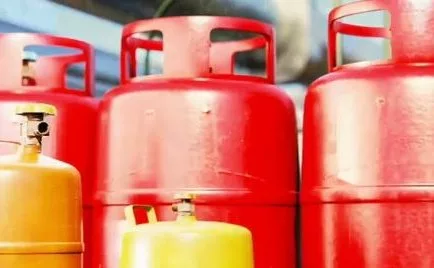
Kenyan households are likely to pay more for cooking gas next month after a sharp rise in the international prices of propane and butane, two key components used to produce liquefied petroleum gas (LPG).
Petroleum industry executives said the increase in global LPG costs, linked to disruptions caused by the conflict in the Middle East, is expected to push up prices in the local market.
Data from Saudi Aramco, a major supplier of LPG in the Middle East, shows that the price of butane rose by 25.8 per cent to $628 (Sh81,326), up from $499 (Sh64,620.50) in August.
Propane prices also increased by 23.2 per cent, rising to $494 (Sh63,973) from $401 (Sh51,929.50).
Saudi Aramco’s LPG contract prices are a key benchmark for the commodity across Middle Eastern and Asia-Pacific markets.
Kenya sources most of its LPG from Saudi Arabia and other Middle Eastern producers, while additional supplies come from global trading hubs and African suppliers.
A petroleum sector executive said the increase in the cost of the two products would be reflected in local prices.
“LPG prices should go up next month, and this mainly boils down to the Saudi Aramco CP (contract prices). Average prices of butane and propane have significantly gone up this month, and this will affect local prices next month,” the executive of a leading oil marketer said.
The latest increase comes months after Kenyan consumers experienced a significant rise in cooking gas prices.
Local LPG prices increased by more than Sh390 in May after Saudi Aramco raised its prices in response to the Middle East conflict. Prices later eased slightly as the conflict cooled.
However, renewed fighting between the United States and Iran has disrupted operations at a key Saudi Arabian port that has been used to export petroleum products amid the near paralysis of the Strait of Hormuz.
The disruption at the Yanbu port has affected LPG exports, prompting Saudi Aramco to increase the prices of propane and butane.
The Yanbu terminal, which Saudi Aramco has used as an alternative export route to the Strait of Hormuz, has also come under attack by Houthi rebels.
The attacks have affected exports to Asian markets. Shipments from the terminal fell to 71,200 tonnes last month, down from 240,300 tonnes in July and 302,600 tonnes in June.
Exports are expected to decline further to 51,700 tonnes this month.
In Kenya, TotalEnergies Marketing is currently selling a 13-kilogramme cylinder at Sh3,400, down from Sh3,510 in May.
At Rubis Energy, the same-size cylinder is retailing at Sh3,202.50, compared with Sh3,530 in May.
The expected increase in LPG prices comes as motorists also face the prospect of higher fuel costs next month, with diesel, petrol and kerosene prices also expected to rise.
“Right now, with the geopolitical dynamics, the cost is going up, and local prices will definitely increase,” an executive from another oil marketer said.
Unlike petrol, diesel and kerosene, whose monthly prices are set by the State, LPG retail prices are not controlled or capped by the government.
The cost of cooking gas is instead determined by market conditions and individual distributors.
Oil marketers and dealers have previously faced criticism over claims that consumers have not fully benefited from tax exemptions introduced in 2023.
The measures removed VAT on LPG, as well as the 3.5 per cent Import Declaration Fee and the two per cent Railway Development Levy.
Despite high prices, demand for cooking gas continued to grow in the six months to June 2026.
LPG consumption rose to 248.82 tonnes during the period, compared with 224.52 tonnes recorded in the corresponding period last year.