

For 15 years, Kalonzo Musyoka’s political bargain at the national table was straightforward: deliver Ukambani as a bloc, and demand a top seat in return.
That bargain helped deliver the Vice Presidency, two runs as Raila Odinga’s running mate, and Kalonzo’s enduring status as Ukambani’s political kingpin.
But in 2027, a harder question is confronting both State House and the opposition: Does Kalonzo still control enough of Ukambani to use the region as a bargaining chip?
Developments in Kitui, Makueni and Machakos suggest the political bloc is beginning to fragment — and with it, the value of the chip.
THE NATIONAL SQUEEZE: WHY THE TOP TABLE HAS CHANGED
When Raila Odinga died, Kalonzo’s calculation appeared clear. He would inherit Azimio, consolidate the opposition and enter the 2027 negotiations as the undisputed alternative to President William Ruto.
That has not happened.
Instead, two other leaders have crowded the opposition space.
Former Deputy President Rigathi Gachagua has seized much of the anti-government populist narrative through his Mt. Kenya Wamunyoro politics, drawing large crowds and, in some instances, eclipsing Azimio events.
Former ODM Secretary General Edwin Sifuna, through the Linda Mwananchi Movement, has emerged as a prominent urban and youth-driven opposition voice — angry, digitally organised and increasingly street-active.
Kalonzo finds himself in a difficult middle ground. He is neither commanding the Mountain like Gachagua nor commanding the urban opposition space like Sifuna.
He remains at the SKM Command Centre, holding Azimio meetings that key affiliates, including NLP, say they were not invited to.
And that creates a fundamental political question: If Kalonzo cannot dominate the national opposition space after Raila, can he still assume that he automatically owns Ukambani?
That uncertainty has created an opening at home.
THE HOME REVOLT: THREE LEADERS WHO ARE NO LONGER WAITING
Across Ukambani, the question is increasingly shifting from “Will you support Kalonzo?” to a more immediate one:
“What are you bringing to us directly?”
Three different answers are emerging.
1. KITUI: AUGUSTUS KYALO MULI AND THE EMPOWERMENT MODEL
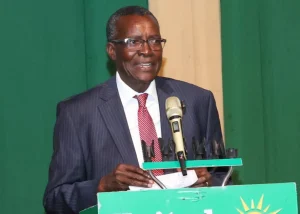
In Kitui, NLP Party Leader Dr. Augustus Kyalo Muli is testing whether direct economic empowerment can compete with traditional political loyalty.
As patron of the 400,000-member Anzauni community, Muli is building a grassroots network rather than relying on political convoys.
NLP is opening offices in Kitui Central, Kitui Rural, Kitui West, Mwingi North and Mwingi South, while organising young people, boda boda riders and women around empowerment programmes, enterprise training, business support and market linkages.
The message is straightforward: Do not wait for State House to benefit. Start empowerment at the grassroots.
Muli’s planned installation as Chief of the Anzauni on 3 October at Anzauni Grounds will further formalise his cultural base.
But his larger political test is whether the empowerment network can translate into votes.
If it does, Kitui may no longer be delivered as a single political block. It may have to be fought for village by village.
That would directly reduce the size of the bloc Kalonzo can credibly take to any negotiating table.
2. MAKUENI: MWENGI MUTUSE AND THE DEVELOPMENT RECEIPT
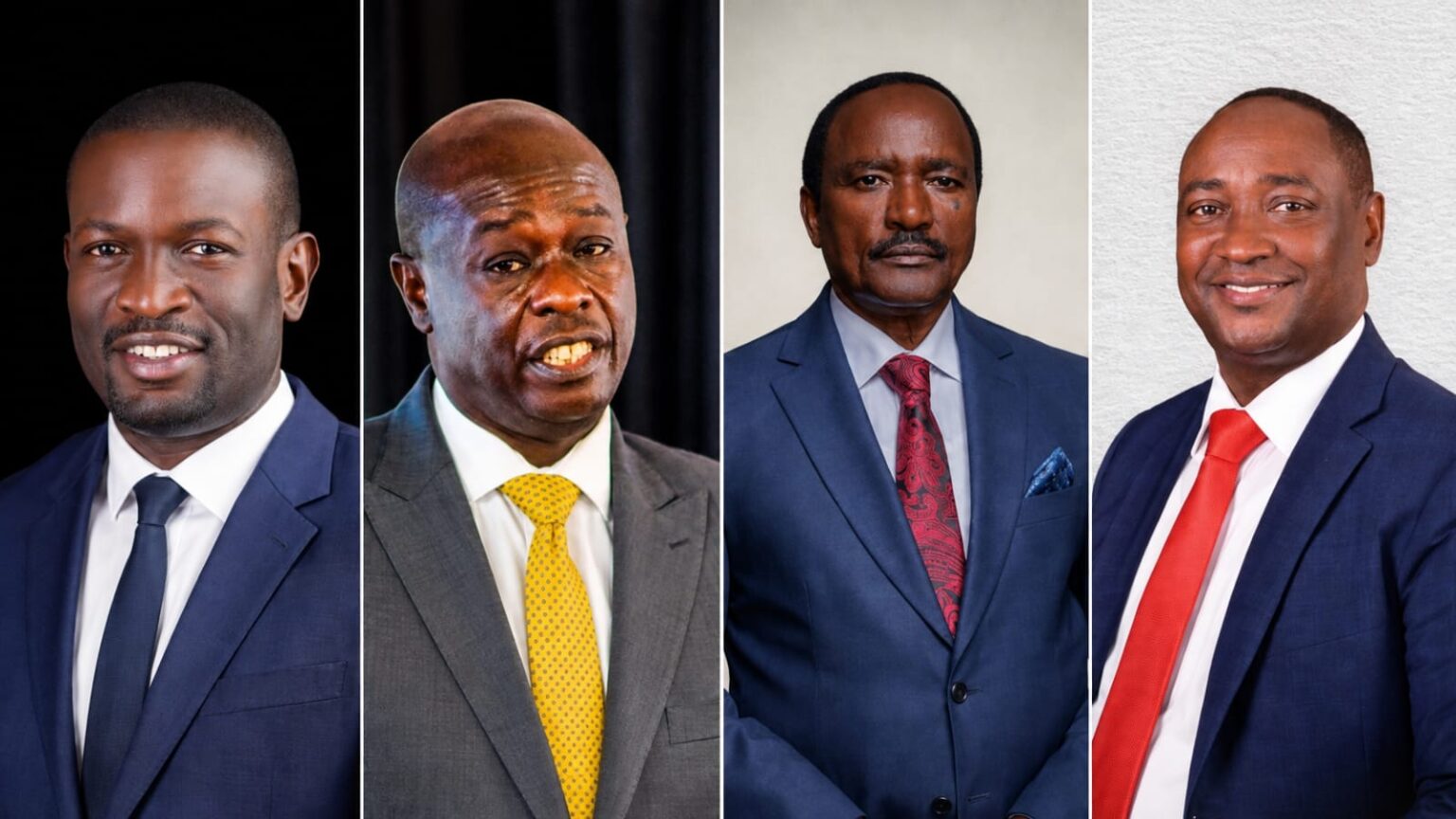
In Makueni, Kibwezi West MP Hon. Mwengi Mutuse represents a different kind of challenge.
Through Maendeleo Chap Chap, which is working with President Ruto’s administration, Mutuse offers something the opposition currently struggles to provide at the local level: a direct development receipt.
His national profile rose sharply during the impeachment of Gachagua. He is now seeking to convert that visibility into tangible development, including roads and modern markets in Kibwezi.
For a voter in Kibwezi, the choice in 2027 may not feel like a contest between Azimio and Kenya Kwanza in Nairobi.
It may be much simpler:
A promise of national opposition leadership — or a tarmac road at home.
Mutuse is betting on the road.
3. MACHAKOS: VINCENT KAWAYA AND THE STATE MACHINE
In Machakos, Mwala MP Hon. Vincent Kawaya is building the most traditional political machine: UDA.
As Organising Secretary for UDA in Ukambani and a close ally of President Ruto, Kawaya is issuing membership cards, opening offices in Kangundo, Matungulu and Mwala, and presenting himself as a direct political link to State House.
He does not necessarily need to defeat Kalonzo in a political debate.
He only needs to persuade Machakos voters that there is another door through which they can access development, jobs and government opportunities.
SO, WHAT IS UKAMBANI WORTH IN 2027?
This is the heart of Kalonzo’s bargaining problem.
For years, he could walk into coalition negotiations with a simple proposition:
“I have Ukambani. Give me a top position.”
But what happens if he no longer controls the region as a bloc?
One emerging political scenario puts the arithmetic dramatically differently.
Kalonzo: 40%
Augustus Kyalo Muli: 20%
Vincent Kawaya: 20%
Mwengi Mutuse: 20%
That is not a united political kingdom.
It is a fragmented political marketplace.
Under such an outcome, Kalonzo would remain the single largest individual political force in Ukambani — but he would no longer possess a majority of the region’s vote.
And that changes everything at the national negotiating table.
A leader controlling 40 per cent of Ukambani cannot credibly walk into a coalition negotiation and present the entire region as his political property.
He can negotiate.
He can demand.
He can still be extremely important.
But he cannot make the same price claim as a leader who commands 80 or 90 per cent of the region.
THE NEW UKAMBANI ARITHMETIC
The significance of the 40/20/20/20 scenario is not simply that Kalonzo loses votes.
It is that the bargaining structure itself changes.
Muli would control an empowerment-driven constituency.
Kawaya would control a constituency connected to the State machinery and UDA.
Mutuse would control a constituency tied to development and the administration.
Kalonzo would retain the largest single share, together with his established Wiper structures and national political profile.
But the region would have four competing political centres.
That means President Ruto would not need to win all of Ukambani to weaken Kalonzo.
He would only need to ensure that the three alternative centres retain enough support to prevent Kalonzo from claiming the region as a single bargaining unit.
Likewise, an opposition coalition could no longer simply assume that Kalonzo delivers every Ukambani vote.
It would have to ask a harder question:
How many votes can Kalonzo actually deliver?
THE YOUTH QUESTION
The most important long-term question may be generational.
Younger voters are increasingly less interested in historical political loyalty and more interested in who has delivered something tangible to their group, business or community recently.
If Muli’s empowerment model gains traction, if Kawaya’s State-linked strategy delivers political returns, and if Mutuse converts development into electoral support, the old bloc arithmetic becomes increasingly difficult to sustain.
The era when one leader could simply declare “Ukambani is with me” may be coming to an end.
THE VERDICT: FROM KINGPIN TO FIRST AMONG SEVERAL?
Kalonzo Musyoka remains the single most recognisable political figure in Ukambani.
He has history, Wiper structures and the Azimio brand.
But the political market is changing.
Nationally, Gachagua and Sifuna have ensured that Kalonzo is no longer the automatic heir to Raila’s opposition space.
Locally, Muli, Mutuse and Kawaya are creating alternative political centres that could prevent him from claiming a monopoly over the region.
If the 40/20/20/20 scenario materialises, Kalonzo would still be first among Ukambani’s political leaders — but no longer the undisputed kingmaker.
He would enter the 2027 negotiations carrying 40 per cent of the region, while three other leaders each carry their own 20 per cent political constituencies.
That is still a powerful hand.
But it is no longer a winning hand by itself.
As one elder in Kitui put it:
“The throne is not empty. But it no longer has only one claimant. And a king who cannot bring his whole kingdom cannot demand the whole price.”
The question for 2027, therefore, is not whether Ukambani will vote.
It will.
The real question is whether Kalonzo can still use that vote to bargain his way to the top — or whether he will first have to bargain his way back into Ukambani.