

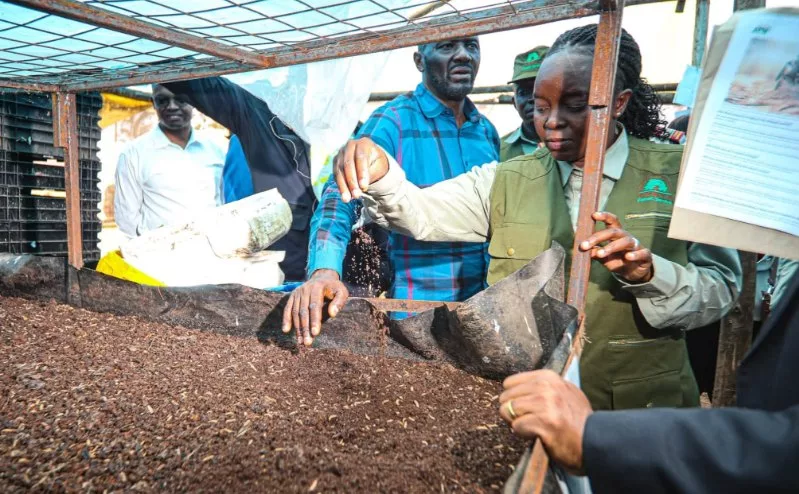
The government has challenged avocado processors operating in Murang’a county to stop treating waste as a burden and instead turn it into a source of jobs, income and new business opportunities.
Environment Cabinet Secretary Deborah Barasa said avocado waste could be converted into useful products while protecting communities from the health and environmental risks associated with poor disposal practices.
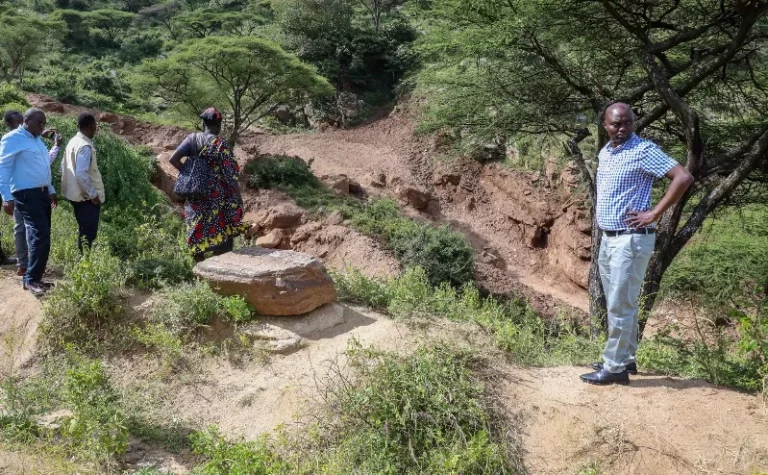
Barasa spoke in Murang’a county on Friday, after inspecting several avocado processing factories and waste disposal sites in Kandara and Maragua subcounties following complaints over the illegal dumping of untreated avocado waste.
The complaints had been raised by residents before the Senate Committee on Land, Environment and Natural Resources, who expressed concern over waste being dumped near homes and learning institutions.
The CS was accompanied by the Senate committee, led by its chairperson Senator Mohammed Faki, vice chairperson Senator Karen Nyamu, and Senators Joe Nyutu (Murang’a) and Maryam Omar (Mandera), as well as officials from the National Environment Management Authority.
The team visited several sites where avocado waste had been dumped and raised concern over the health and safety risks posed to neighbouring communities.
Of particular concern was the Mitubiri dumping site, located near Peter Kariuki Primary and Secondary Schools. The team said that some former open mining sites had been turned into dumping grounds without adequate safety measures, including fencing to keep residents, especially children, away from hazardous waste.
Barasa called on avocado processors and communities to embrace a circular economy approach in managing waste, where materials that would otherwise be discarded are converted into useful products.
She added that such an approach could create employment, generate income and support economic growth in line with the government’s Bottom-Up Economic Transformation Agenda.
“Waste should be viewed as an opportunity, not a threat,” Barasa said.
She directed Nema to identify gaps in existing policies and strengthen systems for regulating waste disposal. She also called for greater engagement with communities to create awareness about the economic opportunities that can be generated from avocado waste.
The CS commended companies that had already invested in technologies to convert avocado waste into useful products, saying their efforts demonstrated that environmental conservation could go hand in hand with economic development.
Nyutu, who had raised the matter in the Senate, said the committee had inspected several waste disposal sites and found that more needed to be done by avocado processing companies.
“We can see something is being done to address this problem, but much, much more needs to be done, especially with the management of this waste from the avocado factories,” he said.
He expressed particular concern over a site containing liquid waste, saying inadequate fencing exposed children and other members of the public to danger.
Nyutu also raised concern about pollution near Peter Kariuki Primary School, insisting that the health and safety of residents should remain a priority even as the county benefits from the growing avocado processing industry.
“We must look at the health of our people before we look at the economic benefits that may result from this,” he said.
The senator added that the committee would seek to find a balance between protecting the environment and supporting the growth of the avocado industry.
He urged the county government to consider setting aside land where waste management companies could operate, noting that some firms were already converting avocado waste into useful agricultural products.
Faki said communities had a right to a clean and safe environment and called for stronger efforts to transform waste into wealth.
Although avocado processing generates large volumes of waste, he said that emerging innovations were showing that the waste could be reused to produce valuable agricultural inputs.The Senate committee chairperson warned that economic benefits should not come at the expense of public health and environmental safety. “We cannot put money first and put health behind,” Faki said.
He welcomed innovations that convert avocado waste into agricultural products, including alternatives to some imported inputs used in animal production.
Nyamu said the government was not against industrial and economic activities, including avocado farming and processing, but stressed that such activities must be undertaken responsibly.
“We want to maintain the industrialisation. We want to maintain the activity. We want to maintain avocado farming and the whole ecosystem of avocado. But at the same time, we have a mandate to make sure that they are doing the activities in a safe way for everyone,” she said.
Nyamu said the government’s objective was not to target individual companies but to ensure that industrial activities were carried out in ways that protect surrounding communities while promoting economic growth.