



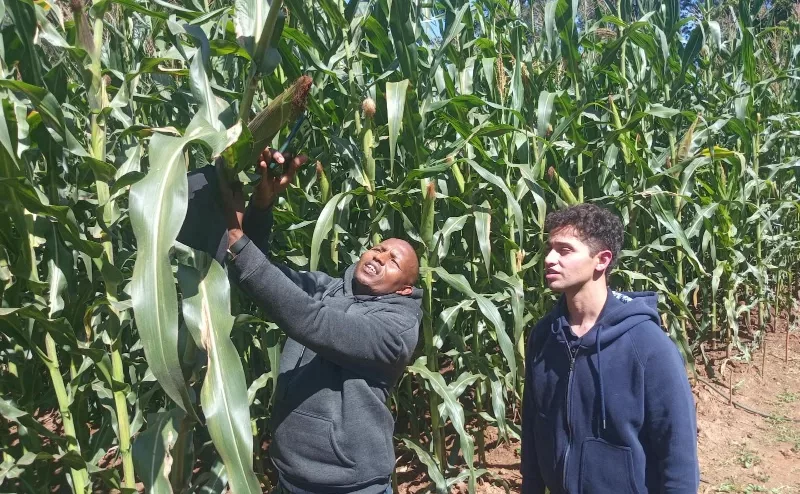
Maize seed producers in Kenya are stepping up innovation and research to develop varieties that can help farmers cope with the effects of climate change.
The move comes as farmers in many regions face the risk of heavy losses from unpredictable weather. Failed rains have already caused significant damage to maize crops in high-producing areas.
Farmers have lost more than 60 per cent of their crops in some areas after maize fields dried up due to depressed rainfall.
Western Seed Company has unveiled a new generation of drought-mitigation maize varieties that it says will help farmers reduce losses caused by inadequate rainfall.
Working with the Kenya Agricultural and Livestock Research Organisation (Kalro), the company has released at least seven varieties to the market, targeting farmers facing increasingly difficult weather conditions.
The company said it had invested heavily in innovation and research to develop early-maturing hybrids that can withstand drought and perform well under different Kenyan ecological conditions.
Tarek Albalah, the commercial lead at Western Seed Company, said the firm had been able to breed varieties suited to Kenya’s diverse ecologies through innovation.
He said some of the varieties were particularly suited to local soils and dryland conditions, including Aminika WH505, which matures within 90 days.
“WH505 is an ultra-early breed that needs 250mm of rain and matures before the dry spell hits. It is suitable for dryland regions such as Turkana, Kitui, Makueni and Baringo counties,” Albalah told stakeholders during a Kitale National Show breakfast forum.
Unlike traditional varieties, which require about 800mm of rainfall, the new hybrids require less than 350mm to mature.
Other fast-maturing varieties currently on the market include Haraka WH101, WH301, WH401, WH507 and WH508.
“We have bred maize seed that can either escape drought in 90 days or tolerate 21 days without water at flowering,” Albalah said.
He said the company had expanded its operations to Uganda, Tanzania and Zambia.
Simon Kipngetich, a senior technician at Western Seed Company, said the firm had increased its production from seven million kilos to 12 million kilos after embracing irrigation farming.
Kenya Seed Company has also introduced new varieties, including H6506, H675 and H6507, which take between 90 and 110 days to mature and require about 350mm of rainfall.
This compares with older hybrids such as H614 and H625, which require about 800mm of rainfall and take up to 180 days to mature.
To protect the seed from pest attacks, the companies have also introduced four-layer coating technology.