

Conservationists are calling for Lake Victoria to be considered for international heritage protection under Unesco.
They warned the region’s largest freshwater ecosystem is facing mounting environmental threats.
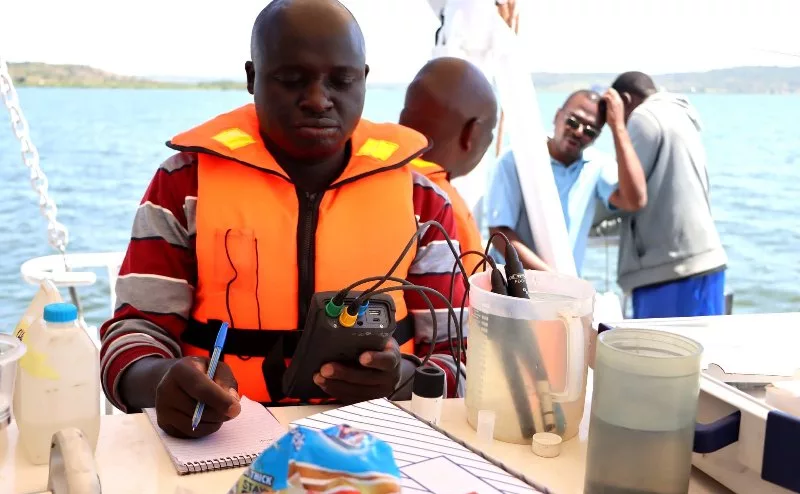
The lake is grappling with pollution, wetland loss, invasive species and climate change, while illegal fishing, deforestation and overfishing are worsening its condition.
East Africa Climate Change Network (EACCN) executive director Kamotho Githinji said urgent action was needed to protect the lake and the millions of people who depend on it.
“The damage to tributaries, wetlands, catchments and connected ecosystems is negatively affecting populations who rely on the lake directly for food and water,” he said.
Lake Victoria is Africa’s largest freshwater lake and the world’s second largest by surface area. It is shared by Kenya, Uganda and Tanzania.
Its wider watershed includes wetlands, rivers, tributaries, islands, shorelines, cultural sites, fishing communities and ecosystems that support millions of people.
Githinji said pollution and environmental degradation in the lake have consequences beyond its immediate shores.
“As the water flows downstream, it creates cumulative, long-term impacts on fisheries, drinking water, food security, cultural sites, biodiversity and livelihoods,” he said.
Because the lake feeds into the Nile River system, he said its protection also matters to downstream countries including South Sudan, Sudan and Egypt, as well as other Nile Basin countries such as Ethiopia.
The calls for heritage protection were made by conservation advocates from across East Africa during the 48th Session of the World Heritage Committee in Busan, Republic of Korea, held from July 19 to July 29.
The advocates said the process should recognise Lake Victoria as a living cultural landscape worthy of further study, community consultation and transboundary protection.
“For communities around the lake, Lake Victoria is not simply a body of water but a source of food, water, culture, memory, livelihood and spiritual identity,” they said.
They said communities around the lake and its islands have developed fishing practices, oral traditions, rituals and ecological knowledge over generations. The region also contains important archaeological and cultural heritage.
The conservationists said any nomination should be developed through consultation with resident communities and indigenous peoples, alongside scientific research, cultural mapping, ecological and hydrological studies, livelihood assessments and expert review.
They said the appropriate boundaries, and whether the nomination should be cultural, natural or a mixed cultural-natural site, should be determined through this process.
The advocates said conservation should not come at the expense of communities that depend on the lake.
They called for customary livelihoods and local knowledge to be protected, women’s roles in fish economies to be recognised and young people to be given a greater role in conservation.
They also called for safeguards against displacement, exclusionary conservation and restrictions imposed without community consent.
Githinji said the challenges facing Lake Victoria must be addressed holistically, with the future of the lake shaped by the communities that have lived with and cared for it for generations.
The push comes as Kenya continues to strengthen protection of its wetlands through Ramsar designation.
Kenya has six Ramsar sites: Lake Nakuru, Lake Naivasha, Lake Bogoria, Lake Baringo, Lake Elementaita and the Tana River Delta.
Plans are also underway to list the Msambweni-Vanga sea and landscape as Kenya’s first marine Ramsar site, while King’wal wetland is also lined up for listing.
Ramsar sites receive enhanced conservation and sustainable-use measures, while the designation promotes international cooperation, monitoring, research, education and public awareness.
Conservationists now want similar international attention focused on Lake Victoria, arguing that protecting the lake is essential to safeguarding its biodiversity, culture and the livelihoods built around it.