


Kenya has a narrowing window to reverse the decline in wetlands before the ecological and economic damage becomes irreversible, conservationists now warn.
Kenya has lost a quarter of its wetlands since 2010, threatening water security, biodiversity and the livelihoods of millions of people who depend on these ecosystems.
Data from the National Environment Management Authority (Nema) shows a 3.6 per cent decline in wetlands between 2010 and 2015, followed by a 7.1 per cent loss between 2015 and 2020, and a further 16 per cent loss between 2020 and 2026.
Wetlands cover about 3.4 per cent of Kenya’s land area, equivalent to 14,000 square kilometres and directly benefit about 5.2 million people.
The ecosystems provide critical services, including water purification, flood control, carbon storage, biodiversity conservation and support for livelihoods.
Nema estimates the annual value of ecosystem services provided by wetlands at Sh3.24 trillion. Water purification alone accounts for more than a quarter of the total value, underlining the importance of wetlands to the country’s water security.
The main threats include agricultural encroachment, climate change and increasing aridity, pollution, over-abstraction of resources, invasive and alien species and urban expansion and development.
State Department for Wildlife Conservation Secretary John Chumo said urgent action was needed to reverse the decline.
“Communities have a role to play, as do other stakeholders, in reversing the threats facing wetlands in the country,” Chumo said.
He said counties also have an important role in protecting wetlands within their jurisdictions, given their contribution to the country’s development agenda.
Even wetlands recognised internationally for their importance have not been spared.
Kenya has six Ramsar sites designated under the Ramsar Convention on Wetlands, an international treaty adopted in Ramsar, Iran, in 1971.
They include Lake Nakuru, Lake Naivasha, Lake Bogoria, Lake Baringo, Lake Elementaita and the Tana River Delta.
The sites cover a combined area of more than 265,000 hectares and include lakes, swamps, marshes and other wetland ecosystems.
However, several are experiencing significant degradation.
Lake Elementaita has recorded moderate degradation. Lake Bogoria and the Tana River Delta have experienced significant degradation. Lake Naivasha and Lake Baringo have suffered severe degradation, while Lake Nakuru has recorded moderate degradation.
The decline is also putting wildlife at risk. More than 340 wetland-dependent species in Kenya are currently classified as endangered or vulnerable.
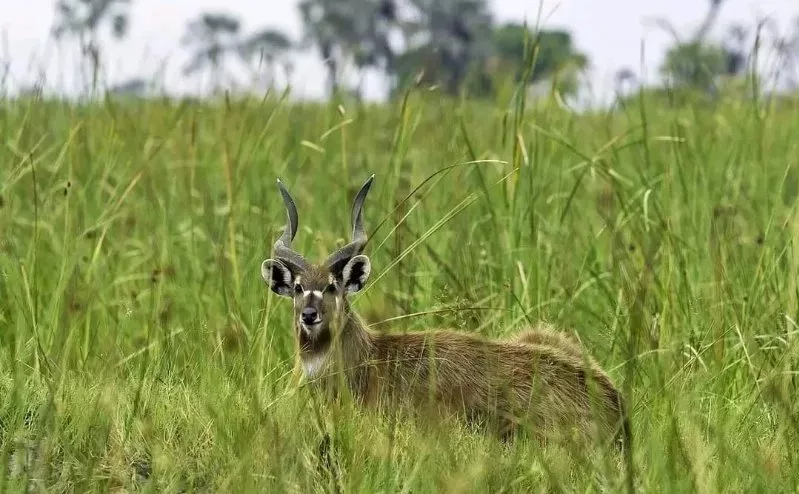
The sitatunga antelope, whose main range includes King’wal Swamp, Saiwa Swamp and Yala Swamp, is threatened.
The shoebill stork, mainly found in papyrus habitats in Yala Swamp, is vulnerable, while the grey crowned crane, found in highland and lowland marshes, is endangered.
Hippos in the Rift Valley and Tana Basin are also vulnerable. More than 30 indigenous fish species found in Lake Victoria and its basin tributaries are threatened.
Conservation efforts face sever al challenges, including fragmented mandates among government agencies and weak enforcement capacity.
Funding is another major hurdle. Wetland protection receives less than 0.1 per cent of the total environment budget, while fewer than 15 per cent of wetlands have active management plans.
Of the country’s wetlands, about 1,800 square kilometres of swamps and marshes are critical habitats for endemic and endangered species.
Lakes and reservoirs account for about 4,200 square kilometres, while flood plains cover 950 square kilometres.
Coastal estuaries cover 350 square kilometres and streams account for about 3,100 square kilometres.