

State projects with no commercial viability will be locked out of the National Infrastructure Fund (NIF), with the Treasury setting strict investment tests.
The National Treasury is designing the Sh340 billion fund around a strict commercial principle, where capital must be preserved, investments must generate income and projects must be capable of attracting private money.
According to Cabinet Secretary John Mbadi, “politically attractive” projects, or those with strong social benefits but weak financial returns, will not automatically qualify for NIF financing.
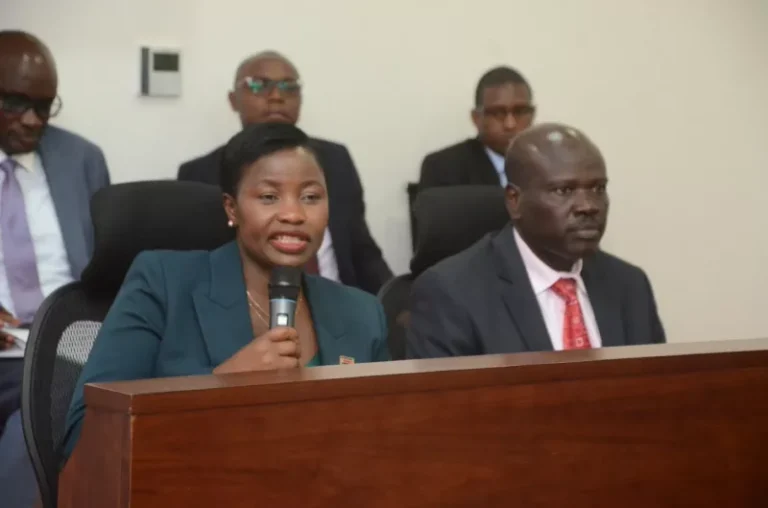
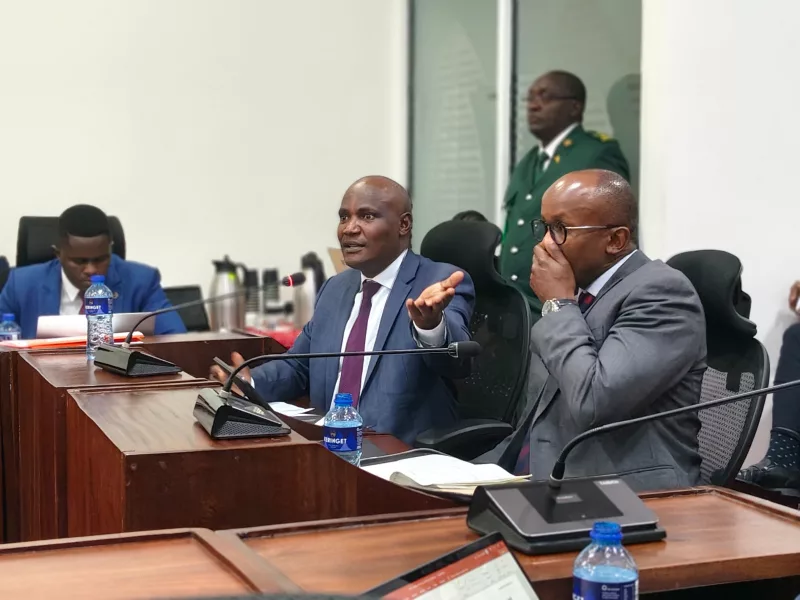
“A project may be socially important, but if it is not commercially viable, it is not a candidate for NIF,” Mbadi told the finance and planning committee.
He warned that allowing non-viable projects into the fund would undermine its sustainability and expose public capital to unnecessary losses.
This means that projects deemed not profitable in the short and medium term will continue relying on the Exchequer for funding.
The hardline position comes as the government moves to operationalise the NIF, which will be seeded with proceeds from the privatisation and divestiture of State assets and is expected to become a major new vehicle for financing infrastructure outside the conventional national budget.
But while the Jomo Kenyatta International Airport (JKIA) upgrade has emerged as the first major project seeking NIF backing, questions remain over how much the fund will ultimately commit, who the other investors will be and whether the airport project will pass the same commercial tests being imposed on all other projects.
Mbadi told lawmakers that social importance alone will not be enough to unlock money from the fund.
Instead, the Treasury argues that commercially viable projects financed through the fund will free up budget resources for roads, schools, hospitals and other projects with high social returns but limited ability to generate direct financial returns.
Under the proposed structure, projects will have to demonstrate commercial viability, financial sustainability and the ability to mobilise additional capital before receiving approval.
They will also have to undergo technical and financial feasibility assessments, with the NIF board retaining the final authority to approve investments.
“The Treasury is particularly keen to prevent the fund from becoming another source of financing for politically motivated projects,” said Mbadi
Mbadi warned that allowing political considerations to influence investment decisions would destroy the fund, saying the government was deliberately setting high thresholds to keep non-viable projects out.
One of the key safeguards will be the requirement for projects to attract substantial debt financing.
Mbadi said at least 60 percent of a project’s capital structure is expected to come from debt, creating an additional commercial test because lenders will only provide non-recourse financing to projects capable of generating adequate returns.
“If the project is not properly appraised and found to be commercially viable with adequate and sufficient internal rate of return, that would convince an investor,” Mbadi said.
The NIF will focus on priority infrastructure sectors, including transport, energy, agriculture and livestock, water and irrigation, as well as other sectors approved through the government’s policy framework.
However, Mbadi told the lawmakers that diversification limits are being introduced to stop the fund from becoming overly exposed to a single sector or project.
Under the framework, no priority sector will account for more than 40 per cent of the fund, while investment in a single project will be capped at 20 per cent of the total fund value.
With the fund currently estimated at Sh340 billion, this would place the theoretical maximum NIF exposure to one project at Sh68 billion.
Each project will also be placed in a separate special purpose vehicle (SPV), insulating the wider fund from project-level liabilities.
Centum Investment chief executive James Mworia, who is involved in the NIF structure, told lawmakers that the fund’s exposure would be limited to its equity investment in the SPV, while debt raised for the project would be non-recourse to the shareholders.
“This means that if a project fails, creditors would not automatically have a claim on the wider NIF or its other investments. The maximum value at risk for the fund is the equity that has been invested in that particular vehicle,” Mworia said.
Mworia said money not yet committed to projects will be exclusively invested in government securities, generating an expected average return of about 12.5 percent annually.
At that rate, the Treasury expects the fund to generate roughly Sh38 billion in annual income, which could initially be used to finance investments before the government begins drawing heavily on the core capital.
Mworia said the fund could eventually reach Sh1 trillion if investments are successfully recycled and capital is preserved.