


Banks, development financiers and private investors should absorb the high upfront costs of water and sanitation projects to make them commercially viable over the long term, experts have told policy makers.
They argue that as Kenya seeks to bridge a persistent infrastructure financing gap while expanding access to essential public services, it is necessary to provide value for investors.
Infrastructure experts argue that unlike sectors such as energy and telecommunications, water, sanitation and social good projects often struggle to attract commercial capital because tariffs remain subsidised and rarely reflect the true cost of supplying the service.
According to World Bank, to achieve universal access to clean water and sanitation by 2030, Kenya requires a total investment of approximately $7.7 billion (Sh1 trillion).
However, with only Sh529 billion projected from traditional public allocations, the country faces a financing gap of Sh325.6 billion to Sh471 billion, prompting the government to aggressively court private investors and public-private partnerships (PPPs).
As a result, financiers are being urged to provide patient capital, first-loss financing and blended finance structures that reduce investment risk until projects mature.
The proposal comes as Kenya intensifies efforts to mobilise private capital into public infrastructure through Public-Private Partnerships (PPPs) and the recently established National Infrastructure Fund, which is expected to support commercially viable projects while financing infrastructure with strong social benefits.
According to PwC, Kenya’s water sector requires a different financing model because water is both an economic asset and a public good.
“WASH (Water, Sanitation and Hygiene) sector investments potentially require blended finance structures, given water is a social good with subsidised tariffs that are often not cost reflective. Patient and first-loss capital can play a catalytic role by providing viability gap funding,” said PwC Kenya and East Africa director for government & public sector Benson Okundi.
The argument reflects a growing shift among infrastructure financiers who increasingly view early-stage concessional funding as the key to crowding in commercial investors later, rather than expecting projects to generate attractive returns immediately.
The financing debate comes against the backdrop of Kenya’s widening infrastructure deficit.
A new report on water resources management estimates that the country requires nearly Sh995 billion by 2030 to secure universal access to safe water and sanitation, but is currently grappling with a Sh325.6 billion ($2.52 billion) funding gap.
The World Bank estimates that Kenya faces an annual infrastructure financing gap of approximately $2.1 billion (Sh270 billion) and requires close to $4 billion (Sh517 billion) in annual investment to meet its infrastructure needs.
Traditionally, such projects have relied heavily on government budgets, concessional loans and donor funding.
However, mounting public debt and tighter fiscal conditions have reduced the government’s ability to finance infrastructure alone, forcing policymakers to seek greater private sector participation.
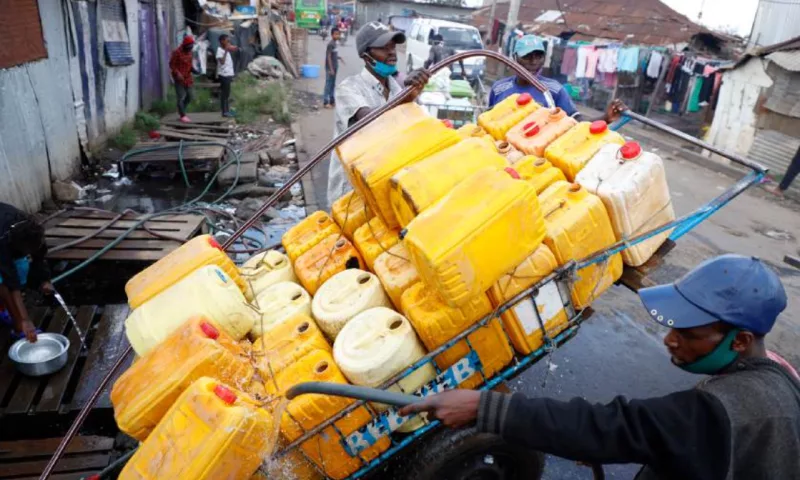
Water infrastructure has proved particularly difficult to finance because returns materialise over decades while tariffs are regulated to keep services affordable.
Unlike toll roads or energy generation projects that produce relatively predictable revenues, water supply systems generate lower and slower financial returns despite producing significant social and economic benefits.
The experts say this mismatch explains why commercial banks often shy away from financing large-scale water projects unless additional risk-sharing mechanisms are introduced.
The PwC report argues that the National Infrastructure Fund could help bridge this financing gap by offering viability gap funding, guarantees and blended finance structures that reduce risks borne by private investors during the early years of projects.
The approach aligns with reforms under the Water (Amendment) Bill, 2023, which seeks to strengthen partnerships between county governments and private investors by allowing counties to enter direct agreements with private firms for water and sanitation services.
“Just as energy security is foundational, so too is water management. The government’s national strategy prioritises bulk water infrastructure, creating pathways for private sector involvement in these capital-intensive projects,” said the consultancy firm’s associate director of transaction services Isaac Otolo.
The legislation is expected to provide greater legal certainty for investors while expanding opportunities for private participation in bulk water infrastructure and local sanitation systems.
Infrastructure specialists argue that such reforms could fundamentally change how water projects are financed if governments absorb some of the initial commercial risks.
They say that the concept of “first-loss capital” has gained traction globally because it allows development finance institutions or governments to take the first losses if projects underperform, thereby protecting commercial investors and encouraging them to commit capital.
Once projects become operational and revenue streams stabilise, commercial investors can gradually assume a larger financing role.
The same financing philosophy has increasingly been used in renewable energy, climate adaptation and affordable housing projects across developing economies.
Kenya is positioning the National Infrastructure Fund to play a similar catalytic role across several strategic sectors.
Beyond water, the fund is expected to mobilise investment into transport, renewable energy, digital infrastructure and urban development by combining public resources with institutional and private capital.
According to PwC, Kenya offers one of Africa’s more attractive environments for infrastructure investment, supported by the PPP Act, 2021, an active PPP Directorate and government support mechanisms such as guarantees and letters of support that improve project bankability.
The report notes that Kenya’s relatively stable macroeconomic environment and clearer risk allocation frameworks also help reduce foreign exchange and political risks that have traditionally discouraged long-term investors.
The African Development Bank estimates that Africa requires between $130 billion and $170 billion annually for infrastructure development, yet current investment amounts to only $68 billion to $108 billion, leaving a financing shortfall of as much as $62 billion every year.
Despite institutional investors and sovereign wealth funds managing more than $2.1 trillion in assets across Africa, less than five per cent of those assets are invested in infrastructure.
Experts believe better project preparation and stronger risk-sharing mechanisms could unlock significantly more domestic capital.
Many infrastructure projects fail to reach financial close because investors perceive excessive risks during the planning and construction stages.
With national infrastructure funds being cited as key in addressing this by financing project preparation, offering guarantees and absorbing early-stage risks before private investors step in.
According to PwC’s Public Sector and Infrastructure Insight 2026 report, only about 10 per cent of African infrastructure projects reach financial close because of political uncertainty, currency risks, lengthy payback periods and weak project preparation.
Noting that infrastructure funds can therefore improve bankability by financing feasibility studies, environmental assessments and engineering designs before projects seek commercial financing.
Experts caution, however, that attracting private capital into public services requires robust governance.
Infrastructure funds must operate independently, use transparent project selection criteria and allocate funding on merit rather than political considerations if they are to maintain investor confidence.
Without such safeguards, there is a risk that funds become politicised or crowd out conventional government financing.
The stakeholders says the immediate challenge is mobilising enough long-term capital to finance projects that improve access to clean water while remaining affordable to consumers.
Rather than expecting commercially viable returns from the outset, experts say financiers should recognise that investments in public goods create wider economic benefits including improved public health, higher productivity and stronger urban development that eventually translate into sustainable financial returns.