


Persistent drought once condemned Kandeki farmers to a single, uncertain harvest every season. Today, however, reliable irrigation is powering year-round farming, higher incomes and renewed hope, turning the once water-scarce community into a thriving agricultural hub.
Smallholder farmers in Kirinyaga county are steadily abandoning rain-fed agriculture in favour of year-round commercial production following the rollout of community-managed irrigation projects that are boosting food production, household incomes and rural livelihoods.
At the Kandeki Irrigation Project, farmers who once relied on erratic rainfall are now growing high-value crops throughout the year, while others have diversified into livestock farming thanks to a reliable water supply.
“The irrigation project has changed my farming completely. I no longer worry about water shortages, and I have been able to invest in different enterprises that generate income throughout the year,” Jane Wairimu said.
Wairimu said access to irrigation water has eliminated her dependence on costly petrol-powered pumps, significantly reducing production costs and allowing her to venture into dairy farming, fish production, avocado, French beans, maize and macadamia.
She, however, appealed to the government to strengthen market linkages, saying unstable prices continue to erode farmers’ profits despite increased production.
The project has also attracted young people to agriculture, with many embracing farming as a viable source of income after struggling to secure formal employment.
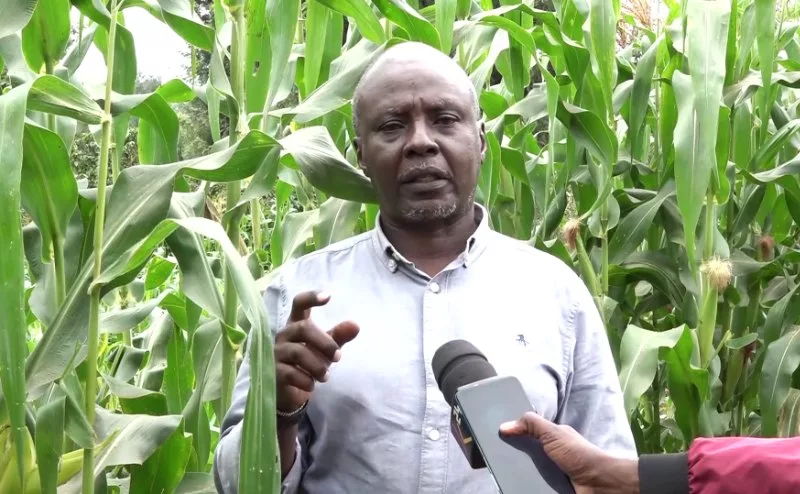
Among them is Erick Mwendia, a diploma holder in community health who turned to farming after failing to find a job. He now grows French beans, coffee and indigenous vegetables, including sukuma wiki, spinach and amaranth.
“After I failed to get employment, I decided to return home and try farming. Today it provides for my needs, and irrigation has made it even more profitable because we no longer spend heavily on fuel to pump water,” he said.
Eric Mwendia, a young farmer and beneficiary of Kandeki irrigation project in Kirinyaga county/ ALICE WAITHERA
Mwendia challenged unemployed youth with access to land to consider agriculture, saying it offers sustainable livelihoods when supported by reliable irrigation. He also urged the government to expand youth-focused irrigation projects and subsidise farm inputs, particularly pesticides and crop protection chemicals, to lower production costs.
According to Kandeki Water Project chairman Henry Kariuki, the Sh91 million initiative has transformed the area’s agricultural fortunes by enabling about 245 farmers to produce throughout the year instead of depending on unreliable rainfall.
He said the scheme, which also supplies households with domestic water, has enabled farmers to diversify into horticulture and other high-value enterprises, improving incomes and food security.
Kariuki urged the government to help farmers access reliable markets, noting that tomato growers are currently grappling with low prices that barely cover production costs.
“Before the project, we only used rain-fed agriculture and planted just maize and beans, and sometimes they would fail because this area is a low-land area and the rainfall is not that reliable.”
Speaking during an inspection of the project on Tuesday, Irrigation Principal Secretary Ephantus Kimotho said the government is investing in sustainable irrigation infrastructure to improve agricultural productivity, increase farmers’ incomes and strengthen national food security.
“Our goal is to ensure farmers have reliable water throughout the year so they can increase production, improve their incomes and contribute to national food security. Irrigation is no longer an option; it is the future of climate-smart agriculture in Kenya,” Kimotho said.
Kimotho said farmers are being encouraged to form cooperatives and Irrigation Water Users Associations to improve access to affordable credit, quality farm inputs, extension services and better markets.
“We are encouraging farmers to organise themselves into cooperatives and irrigation water users associations because this makes it easier for them to access affordable credit, quality farm inputs, extension services and reliable markets,” he said.
Kimotho said the model has already supported 19 irrigation projects across the Mt Kenya region, with about 95 per cent of participating farmers reporting improved productivity and higher incomes.
Building on the success, the government has secured about Sh3 billion to expand similar projects to western Kenya while investing in water harvesting infrastructure in arid and semi-arid areas as part of the national target of increasing Kenya’s irrigated land to 2.5 million acres.