



Kenya’s banking sector overcame a lower interest rate environment delivering the strongest quarterly performances, with a combined pre-tax profit of Sh83.5 billion.
The latest Q1 2026 (Jan-March) Kenya Banking Sector Report by African Wall Street shows the industry’s profit before tax rose by 13.6 per cent compared to the same period last year, signalling the resilience of lenders even as the regulator pursued an aggressive rate cut to stimulate private sector credit.
The strong performance came after the CBK cut its benchmark lending rate by a cumulative 400 basis points since 2024, bringing the policy rate down to 8.75 percent by the end of the first quarter.
“While lower rates typically squeeze banks’ interest margins, Kenyan lenders successfully protected profitability by sharply reducing funding costs, improving operational efficiency and expanding non-funded income streams,” the report reads.
It notes that lower interest expenses more than compensated for declining lending rates, allowing banks to maintain healthy margins while supporting increased credit growth.
Seven of the country’s eight listed lenders expanded their loan books during the quarter, with lending growth ranging between 13 per cent and 20 per cent among the largest institutions.
The industry’s balance sheet also reached a historic milestone, with total assets rising to Sh8.73 trillion, underscoring sustained growth in deposits, lending and investment portfolios.
Among the country’s largest lenders, Equity Group, KCB Group and Co-operative Bank remained the dominant players.
Equity Group reported the strongest earnings growth among the top tier lenders, posting a record net profit of Sh19.05 billion, representing a 24.1 per cent increase from the corresponding quarter last year.
The lender’s total assets expanded to Sh2.04 trillion, reinforcing its position as one of the region’s largest financial institutions.
Digital banking continued to underpin its performance, with nearly 90 per cent of customer transactions processed through digital channels, helping maintain one of the industry’s lowest operating cost structures.
KCB Group followed with a net profit of Sh18.2 billion during the quarter, a 10 percent improvement from a year earlier, while its balance sheet expanded to Sh2.25 trillion, driven by strong customer deposit growth and an expanding loan portfolio.
The lender also benefited from lower funding costs, with loan loss provisions declining as asset quality gradually improved across most subsidiaries.
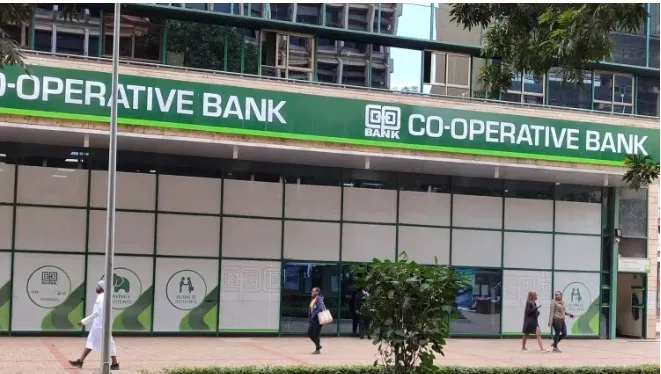
Co-operative Bank continued its consistent growth trajectory, recording a record quarterly net profit of Sh8.41 billion, up 21.3 percent from the same period in 2025.
Its total assets grew to Sh884.57 billion while customer deposits crossed the Sh600 billion mark for the first time.
The lender also improved its cost-to-income ratio to 53 per cent, its best first-quarter efficiency level in more than a decade, reflecting disciplined cost management and improving operational efficiency.
The strong financial performance also translated into better shareholder returns.
According to the African Wall Street report, Equity Group emerged as the best-performing listed lender in earnings per share (EPS), posting Sh5.05 during the quarter.
KCB followed with an EPS of Sh2.18 while Co-operative Bank ranked third at Sh1.12.
According to the report, the three lenders demonstrated a rare ability to sustain earnings growth, supported by disciplined cost control, improving asset quality and expanding digital banking platforms.
Equity’s extensive digital ecosystem significantly reduced transaction costs, while Co-operative Bank’s improving efficiency ratio highlighted its successful cost optimisation strategy.
The report further notes that the first quarter marked the first full reporting period reflecting the impact of the CBK’s monetary easing cycle, making the banks’ performance particularly significant.
Analysts say the results demonstrate the resilience of Kenya’s banking model, where diversified income sources and technology investments are increasingly cushioning lenders against interest rate fluctuations.
“The easing cycle has reduced deposit costs while encouraging borrowing, creating favourable conditions for earnings growth even as lending yields moderate.”
Similar trends have been observed across African banking markets, where stronger digital adoption and diversified revenue streams are helping lenders sustain returns despite changing monetary conditions.
However, the report cautions that asset quality remains the sector’s biggest challenge.
Although several banks have reported declining non-performing loans and lower provisioning charges, the industry’s overall bad loan ratio remains elevated after the difficult credit cycle experienced in 2023 and 2024.
The report warn that an aggressive expansion in lending before asset quality fully recovers could expose banks to renewed provisioning pressures should economic conditions deteriorates.