



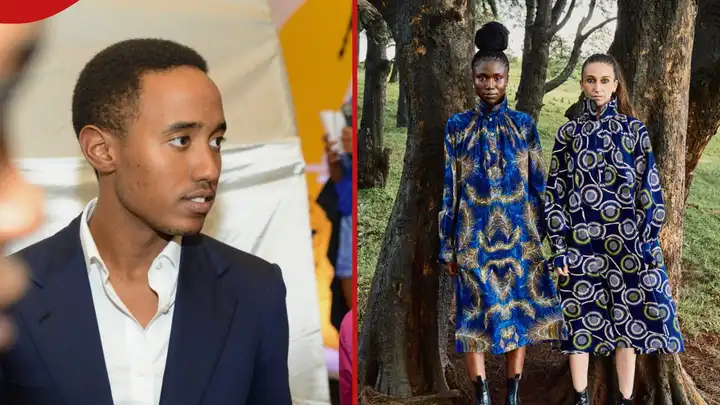
The company operates three separate clothing labels under one roof. There is Nomadic Artisan, which focuses on women’s wear, Hayan Collection, dedicated to men’s fashion and My Little Samurai, a line for babies and children. Each brand carries its own distinct aesthetic, though all three share a commitment to producing unique, one-of-a-kind garments. How much are clothes at Muhoho Kenyatta’s company? The creative force driving the company is a designer duo, Ayumi Awil-Taki and Rayzak Awil, who are based in Nairobi. All garments are produced in-house by a lean team of just seven seamstresses, reflecting the brand’s hands-on, artisanal approach to fashion. Ayumi’s journey to Kenya is a story in itself. She left Japan in 2014 and spent five years travelling across 45 countries before arriving in Rwanda in 2017, where a chance encounter with vibrant Kitenge fabrics at a local market planted the seed for what would eventually become Artisan Collective.
She relocated to Nairobi in October 2018, sewing machine in tow, and the rest followed. The brand has made notable strides in a relatively short time. In 2022, the Nomadic Artisan label secured shelf space at African Lifestyle Hub inside The Village Market, one of Nairobi’s most prominent upmarket shopping destinations. That same year, the company opened its own flagship store in a bustling Nairobi neighbourhood. Hayan Collection, the men’s line, has caught the attention of some big names in the global music scene. International artists including Stephen Marley, Flea of the Red Hot Chilli Peppers, Anderson Paak, and K’naan have all been spotted wearing the brand’s pieces. Some of the clothes by Artisan Collective Ltd. The price points reflect the premium, slow-fashion positioning of the brand. Dresses under the Nomadic Artisan label range from KSh 11,000 for styles like the Skipper Dress and Double Strap Camisole Dress, up to KSh 17,500 for the Pintuck Smock Dress. The website states that fabrics used include Kitenge and Maasai Shuka, grounding the collections firmly in East African textile traditions. The company has also indicated plans to expand beyond Kenya, with pop-ups planned for North America, Europe, and Japan, alongside aspirations to participate in international fashion weeks.