


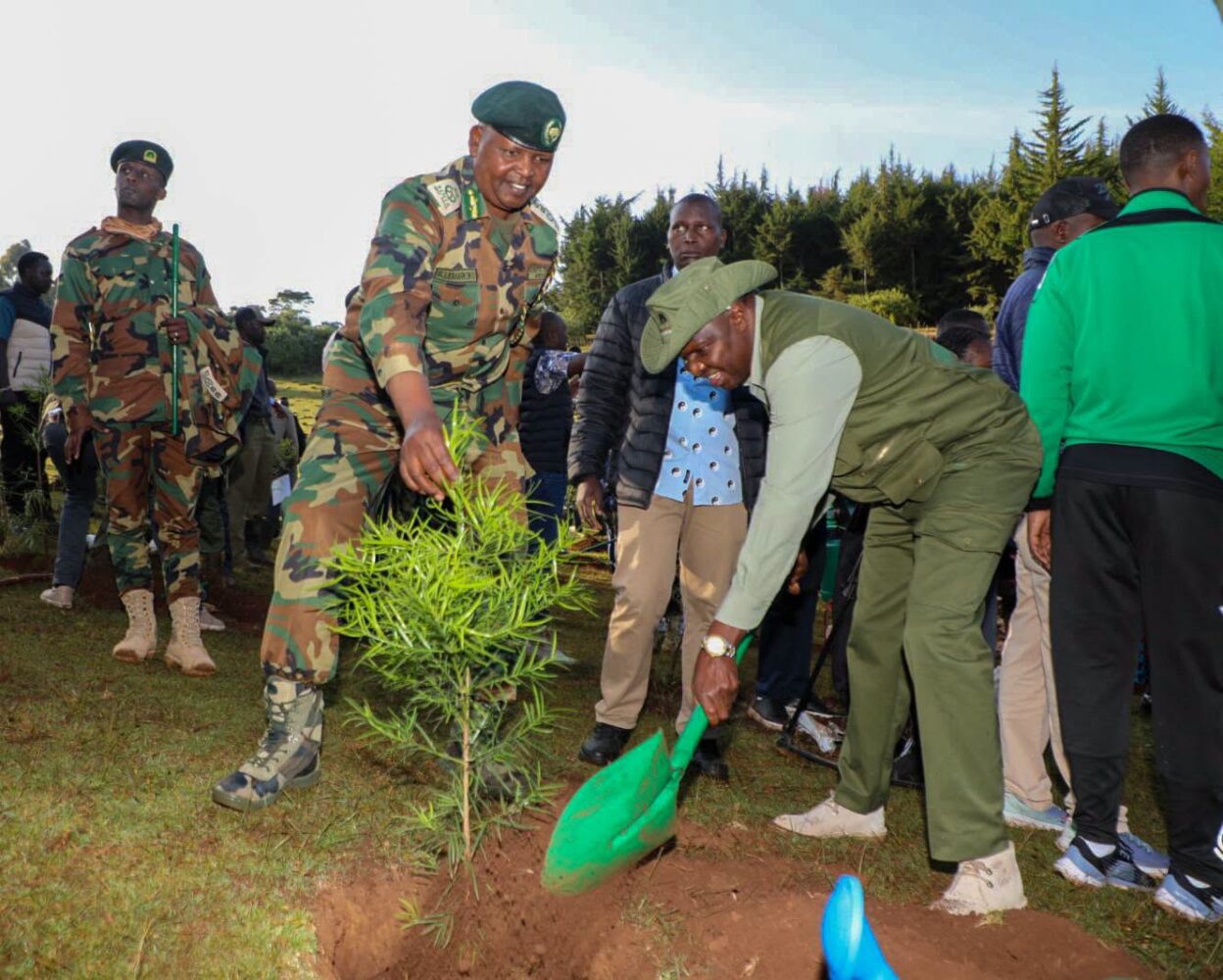
The countdown to the main celebrations marking the 10th anniversary of the Kaptagat Integrated Conservation Programme (KICP) gathered momentum on Friday with a large-scale tree-growing exercise at Sabor Forest Station, bringing together government leaders, conservation partners and local communities in a renewed commitment to protect one of Kenya’s most important water towers.
The exercise formed part of a series of build-up activities leading to Saturday’s main event, which is expected to be presided over by President William Ruto.
Among the key activities, the Kenya Forest Service (KFS) reaffirmed its commitment to promoting clean energy solutions as part of a broader strategy aimed at reducing pressure on forests, cutting reliance on firewood and advancing sustainable environmental conservation.
The commitment was demonstrated when Head of Public Service Felix Koskei officially commissioned a new 50-cubic-metre biogas plant constructed by KFS at St. Agatha Mokwo Girls Secondary School in Elgeyo Marakwet County.
The Chief Conservator of Forests, Alex Lemarkoko, alongside other government officials, accompanied the Head of Public Service during the commissioning exercise.The newly commissioned facility significantly strengthens the school’s transition to renewable energy and complements an existing 30-cubic-metre biogas plant and bakery previously established by the Kenya Forest Service under the Green Zones Development Support Project (GZDSP).
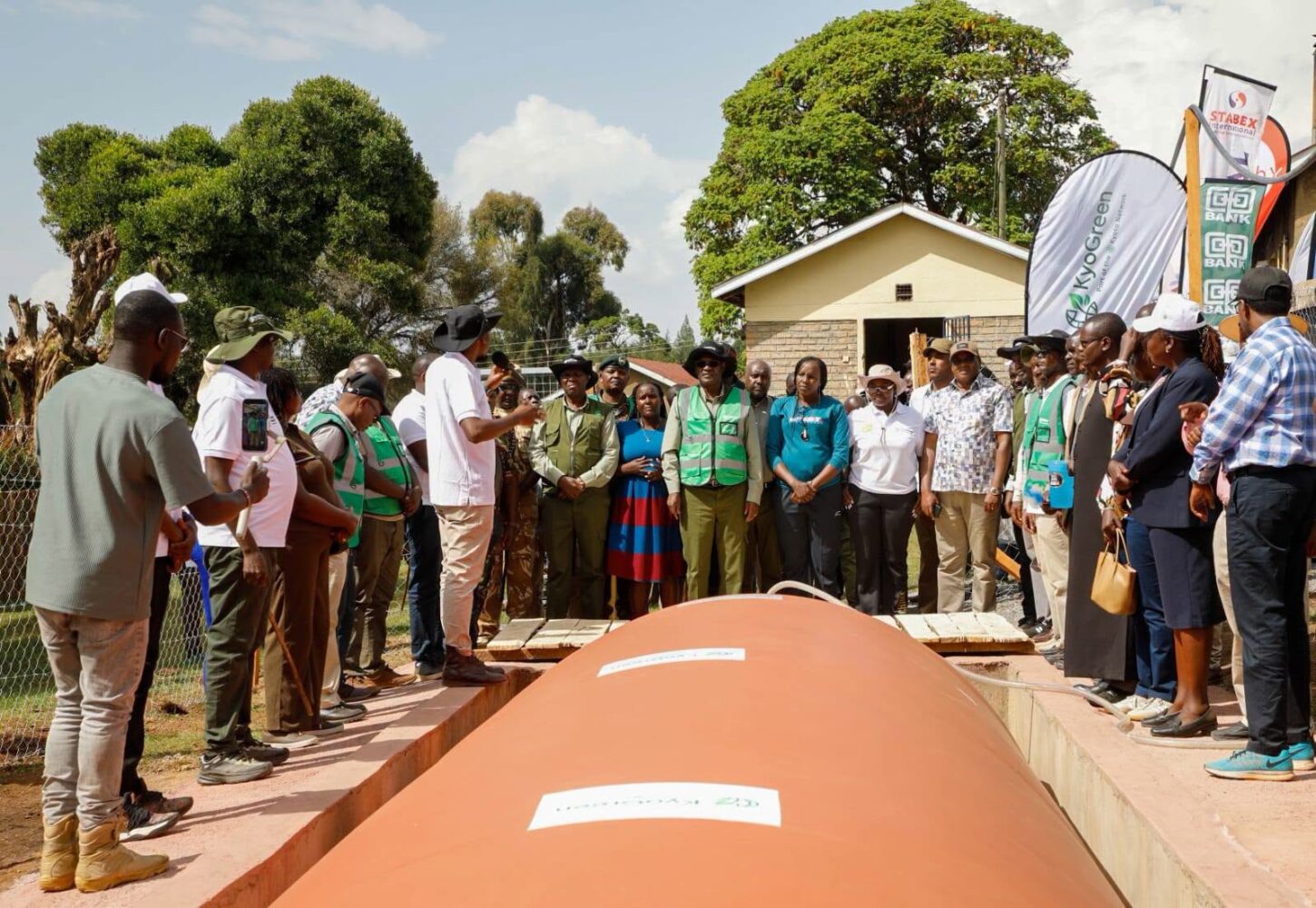
With the addition of the new plant, the school is expected to substantially increase its clean energy capacity, reducing dependence on firewood while lowering cooking costs and improving the learning environment.
The investment also contributes to national climate action efforts by reducing carbon emissions and easing pressure on surrounding forest ecosystems, including the fully restored Kaptagat Forest.
Chief Conservator of Forests Alex Lemarkoko said the expansion of clean cooking technologies remains a critical component of Kenya’s long-term forest conservation strategy.
“Reducing dependence on fuelwood is essential if we are to protect and restore our forests. Investments in clean energy solutions such as biogas help institutions lower costs while reducing pressure on our forest ecosystems,” said Lemarkoko.
He noted that integrated interventions combining restoration, clean energy and community livelihoods are central to achieving the Government’s target of growing 15 billion trees by 2032.
National Treasury Principal Secretary and Patron of the Kaptagat Integrated Conservation Programme, Dr Chris Kiptoo, said Kaptagat had demonstrated that conservation delivers the greatest impact when communities directly benefit from environmental restoration efforts.
“The Kaptagat Forest Ecosystem comprising Kipkabus, Penon, Kaptagat, Sabor, Kessup and Elgeyo forest stations has now been fully restored following the rehabilitation of the final degraded section at Chebior in Sabor Forest Station,” said Dr Kiptoo.
“As we celebrate this milestone, the next phase of KICP will focus on rehabilitating the Keiyo Escarpment and hanging valleys while promoting tree growing on community and private farms through high-value cash crops that improve household incomes while increasing tree cover.”
As part of the build-up activities, the delegation led by the Head of Public Service also inspected the venue designated to host the landmark celebrations.
Marking a decade of community-led restoration, this year’s event is expected to bring together government agencies, conservation partners, community representatives, development organisations and the private sector to celebrate ten years of achievements in forest restoration, biodiversity conservation and sustainable livelihoods.
The commissioning of the new biogas facility ahead of the celebrations underscores the growing role of clean energy innovations in complementing forest conservation efforts and advancing Kenya’s vision of sustainable development through integrated ecosystem management.