



More than a decade after Kenya celebrated its elevation to lower-middle-income status, the country has once again fallen short of the next economic milestone.
This verdict is captured in the latest World Bank income classifications that retained East Africa’s economic powerhouse in the same bracket, even as six countries climbed the development ladder.
The category comprises countries with a Gross National Income (GNI) per capita of between $1,136 (Sh146,771) and $4,495 (Sh580,754).
Upper middle-income countries have a GNI per capita ranging from $4,496 (Sh580,883) to $13,935 (Sh1.8 million).
Kenya’s latest Atlas-method GNI per capita stands at about $2,200 (Sh284,240), leaving the country comfortably above the lower middle-income threshold but still less than half the level required to graduate into the upper middle-income category.
The annual World Bank rankings are based on Gross National Income per person using the Atlas method, which smooths exchange-rate fluctuations to provide a more stable measure of national income.
Besides economic growth, factors such as inflation, population changes, exchange-rate movements and revisions to national accounts can influence a country’s classification.
This year, five countries: Vietnam, the Philippines, Sri Lanka, Jordan and Micronesia, crossed into the upper middle-income group, while Togo advanced from low-income to lower middle-income status.
The World Bank noted that each country’s journey reflected different drivers, including sustained economic growth, statistical revisions, post-crisis recovery and demographic changes.
Kenya’s latest status underscores both the progress it has made and the distance it still has to cover.
The country attained lower middle-income status in 2014 following a rebasing of its Gross Domestic Product that significantly increased the measured size of the economy.
The upgrade was celebrated as a major milestone under Vision 2030, with policymakers viewing it as recognition that Kenya was transitioning into a more diversified and resilient economy.
Since then, successive governments have pursued policies aimed at accelerating industrialisation, expanding infrastructure, boosting manufacturing and increasing exports to propel Kenya into the upper middle-income league.
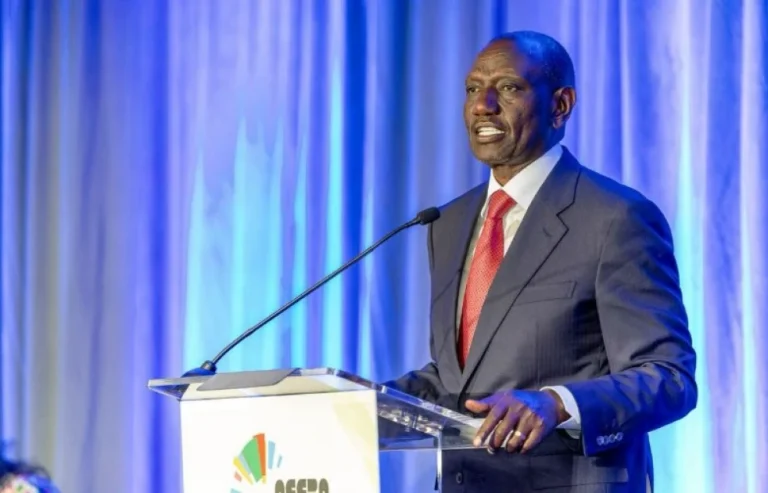
President William Ruto has repeatedly argued that Kenya’s long-term ambition is to become an upper middle-income economy through higher productivity, industrialisation, value addition, digital transformation and expanded regional trade.
His administration has maintained that stronger private-sector investment, affordable housing, agricultural reforms and the Digital Superhighway are intended to raise incomes and improve living standards.
Yet the latest figures suggest that achieving that ambition remains a work in progress.
Although Kenya has recorded respectable economic growth relative to many African peers, rapid population growth has diluted gains in income per person.
According to mid-2026 demographic projections by the KNBS, Kenya’s population has now reached approximately 54.2 million, up from 47.5 million captured during the last census in 2019.
The country has also grappled with a weakening shilling in recent years, high public debt, elevated borrowing costs, climate-related shocks affecting agriculture and sluggish job creation in the formal sector.
Income classification measures what the average citizen earns rather than the overall size of the economy.
Consequently, even as Kenya remains among Africa’s largest economies, average incomes have not risen quickly enough to breach the upper middle-income threshold.
Within the East African Community, Kenya remains one of the region’s highest-income economies but still shares the lower middle-income category with neighbours such as Tanzania and Uganda.
Burundi and South Sudan remain among the lowest-income economies globally.
Although Rwanda has continued to narrow the income gap through sustained economic reforms but also remains in the lower middle-income bracket.
Graduating to upper-middle-income status would carry significant symbolic and economic benefits.
It would signal stronger economic capacity, enhance investor confidence, improve the country’s international standing and demonstrate rising average incomes.
It could also strengthen Kenya’s credit profile and reinforce perceptions that the economy has become more resilient.
However, the transition also comes with trade-offs.
Countries that attain upper-middle-income status often become less eligible for concessional financing and grant funding from multilateral institutions and bilateral development partners.
They increasingly rely on commercial borrowing, which typically carries higher interest rates and stricter repayment obligations.
Development partners may also redirect aid towards poorer countries.
Economists caution that income classification should not be mistaken for a complete measure of development.
A country can move into a higher-income category while still grappling with poverty, inequality, unemployment, and inadequate public services.
While nations battle to improve their economic status, the World Bank insists that income classification is primarily a statistical tool used to compare economies, guide lending decisions, and monitor development trends, rather than to provide a comprehensive assessment of living standards.
Economic experts predict that the population of Kenya will continue to grow in the near future.
According to Alfred Mukasa, a statistical consultant, this trend aligns with the global population, which is projected to rise to 9.7 billion by 2050, according to the United Nations.
He says that while some experts are concerned about the population surge amid a global food crisis, a growing population could drive rapid economic growth.