

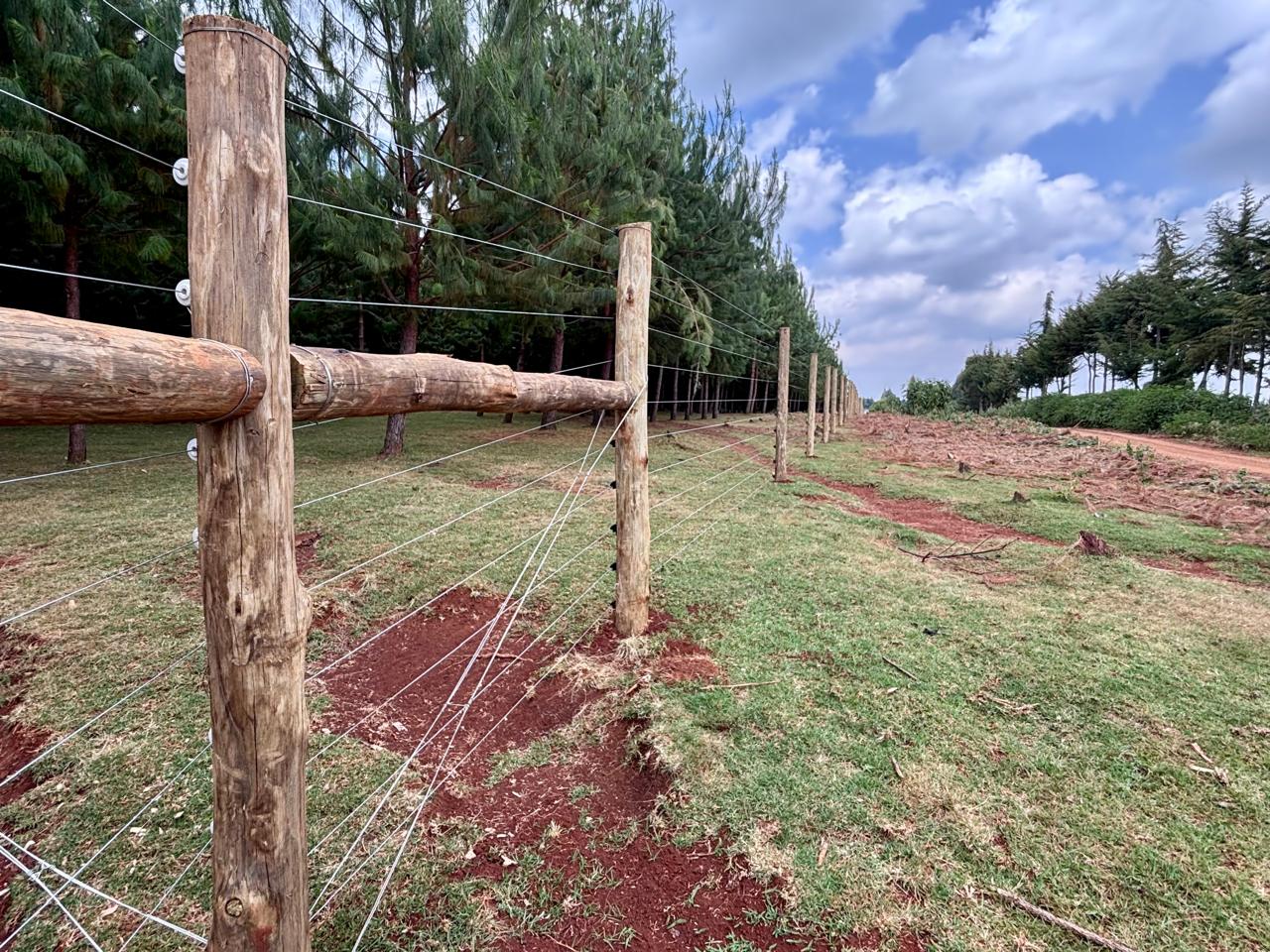
Residents living adjacent to the Kaptagat Forest have expressed overwhelming support for the ongoing ecosystem fencing programme, describing it as a timely intervention that will strengthen conservation while creating new economic opportunities for local communities.
Speaking during a community baraza, community members dismissed claims that fencing would deny them access to the forest, insisting that the initiative is about protecting a shared natural resource rather than restricting legitimate users.
Local farmer Hosea Rotich said fencing is a normal and necessary practice that promotes order and safeguards valuable resources.
“A farm that is not fenced is not a proper farm,” Rotich said, adding that the same principle applies to forests. “Fencing does not mean people are being locked out. There are designated gates through which authorised users can access the forest.” He added.
He noted that members of the community who depend on the forest for livelihoods, including beekeeping, would continue accessing the area through established procedures.
“We have no conflict with anyone. This forest belongs to all of us as Kenyans, and it is our responsibility to protect it. If I have permission to enter and harvest honey from my beehives, I can still do so. We have no problem with the fencing because even our own farms are fenced, and visitors use the gate instead of entering anywhere they want,” he said.

Rotich observed that protecting the forest ultimately benefits neighbouring communities by securing water sources, preserving biodiversity and ensuring the sustainable use of forest resources for future generations.
Another resident, Gladys Chebiwott, welcomed the project, saying it would transform livelihoods in Kaptarakwa and neighbouring villages.
She said fencing would improve wildlife conservation, creating opportunities for eco-tourism and increasing the area’s attractiveness to visitors.
“As residents of Kaptarakwa, we stand to benefit greatly once the forest is fenced. We expect to see more wildlife in this area, which will attract tourists and open up new economic opportunities for our community,” Chebiwott said.
She added that the healthy regeneration of the forest would also improve the availability of pasture for livestock, supporting local farmers who depend on dairy and livestock production.
The sentiments from the residents reflect growing community support for the Kaptagat ecosystem fencing programme, a key Government conservation initiative aimed at protecting one of Kenya’s critical water towers.
Besides curbing illegal activities, the project is expected to reduce human-wildlife conflict, restore degraded forest ecosystems and strengthen collaboration between local communities and forest managers in safeguarding the country’s natural heritage.