



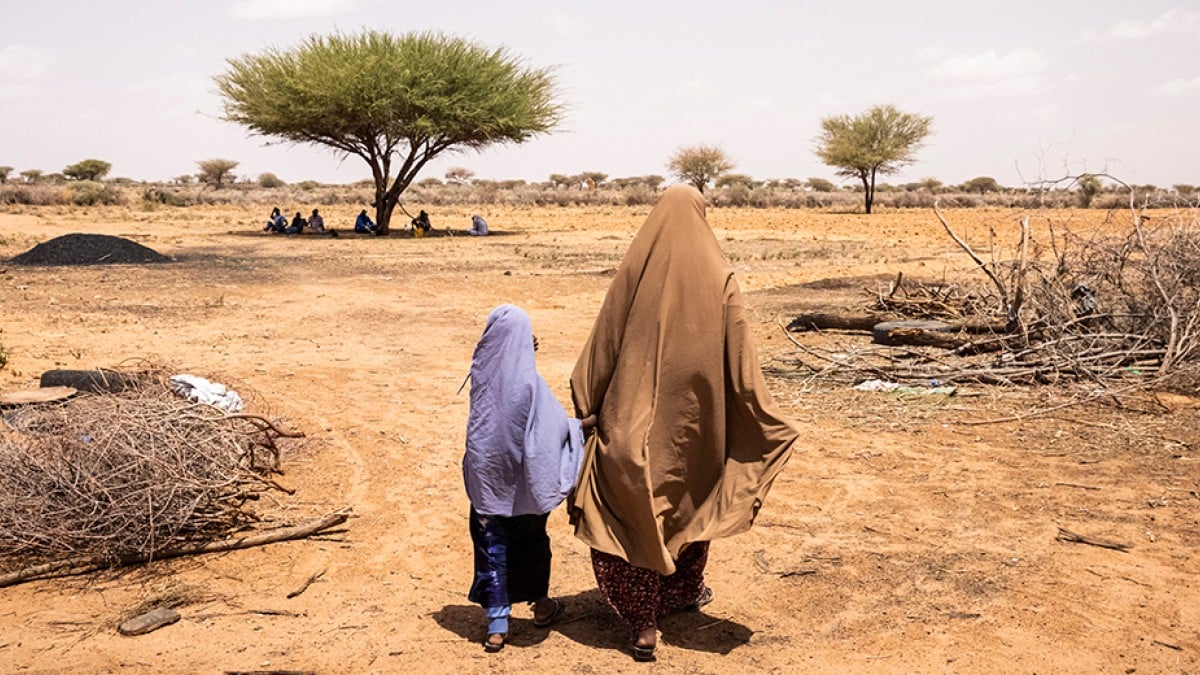
Over two million people across Kenya are facing worsening food insecurity following one of the driest October to December 2025 rainy seasons on record.
The prolonged drought has led to rising rates of malnutrition, increased risk of disease outbreaks, and disrupted access to essential health services.
According to the country’s National Drought Management Authority (NDM), the 2025 short rains, which normally bring seasonal rainfall between October and December, delivered only 30 to 60 percent of the long-term average in most areas, producing the driest season recorded since 1981 in parts of eastern Kenya.
The drought’s severe impacts are also being felt in neighboring countries such as Somalia, Tanzania, and Uganda, where millions more are at risk due to similar weather patterns and water shortages.
State data shows that 10 counties are experiencing drought conditions.
Nine counties, Wajir, Garissa, Kilifi, Marsabit, Kitui, Kwale, Kajiado, Isiolo, and Tana River, are in the “alert” phase, while Mandera is in the critical “alarm” phase.
The report shows that 13 other counties in the ASAL region are currently categorised as “normal” and are increasingly showing signs of drought stress, particularly in water and livestock indicators.
The government has warned that 2.5 million citizens are at risk of severe hunger and water scarcity if the drought persists.
World Resources Institute places the number of Kenyans who are at risk of food security at approximately 15 million people, about 28 per cent of the population.
The current state of affairs has seen Kenya ranked 103 out of 136 countries on the Global Hunger Index, with a score of 25.9, placing it on par with Mozambique and below regional peers Tanzania (91st) and Zimbabwe (90th).
The Global Hunger Index 2025 report places the country in a “serious” hunger situation, far worse than eight years ago, when Kenya scored 23.1.
Moreover, Kenya’s food inflation has exerted pressure on household budgets, with items like maize flour, sugar,r and local vegetables all recording year-on-year price increases, even as headline inflation stabilized.
“Acute food insecurity in ASAL counties could surge from 1.8 million to 3.5 million people if interventions stall,” said Agriculture CS Mutahi Kagwe.
In the optimistic rollout of emergency response to Kenya’s deepening drought, the national government recently announced a Sh6 billion allocation aimed at mitigating the worst effects of drought in the country’s arid and semi-arid lands (ASALs).
The funds to be disbursed in phases since late December 2025 are directed at a mix of food assistance, cash transfers, safe water initiatives, medical supplies, and livestock support to vulnerable households across northern and eastern counties hit by failed rainfall.
Deputy President Kithure Kindiki said the injection of funds would help to ensure enough food is available across drought-prone regions, with an additional Sh4 billion planned each month to sustain the crisis response.
“This climate-induced situation will affect the country in the short term, but the government has made arrangements to ensure that we provide enough food for the people of Kenya. They should not panic,” said Kindiki
by JACKTONE LAWI