


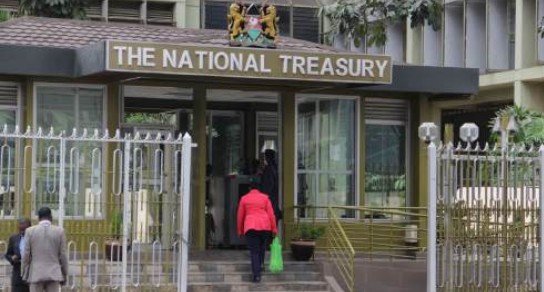
Kenya plans to source more than 80 per cent of gross borrowing locally in the next five years, a move the National Treasury says offers a sustainable balance between cost and risk exposure.
This as per the latest Annual Public Debt Management Report 2024/5, released on Wednesday, outlining a plan to source 82 per cent of gross borrowing from domestic sources, up from the current target of 75 per cent.
In the new plan, external financing will account for only 18 per cent.
This is expected to be achieved gradually, starting in the next financial year, where the net borrowing mix is projected at 78 per cent domestic and 22 per cent external.
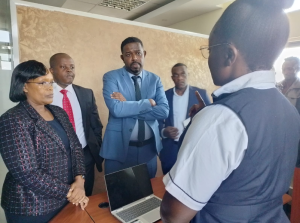
Speaking during the launch of the report in Nairobi, Director General of Public Debt Management at the National Treasury, Raphael Owino revealed that the exchequer also plans to gradually reduce Treasury bills while lengthening debt maturities through medium to long-term securities.
This, he said, will reduce debt servicing pressure that has forced the country to procure more expensive loans to avoid defaults.
Kenya has been relying heavily on external loans, mostly denominated in foreign currencies, with interest rates skyrocketing anytime the local currency loses value.
The government has already identified flagship projects that could be handed over to the private sector, including roads, railways, airports, and power plants.
“As we look for new ways to finance development without deepening debt burden, blended finance is increasingly being discussed as part of the solution,’’ Owino said.
“The approach, which combines public or concessional funding with private capital, is being positioned as a way to attract long-term investment into priority sectors while managing risk for investors.”
In Mid December, the cabinet approved the establishment of the National Infrastructure Fund (NIF) and the Sovereign Wealth Fund (SWF), two key long-term initiatives shepherded by President William Ruto to source private-sector capital to finance priority investments, with a key focus on reducing reliance on borrowing and taxation.
Every shilling invested through the Sh5 trillion Fund is expected to crowd in up to Sh10 additional shillings from long-term investors, including pension funds, sovereign partners, private equity funds, and development finance institutions.
The Sovereign Wealth Fund, on the other hand, will manage revenues from mineral and petroleum resources, dividends from public investments, and a portion of privatisation proceeds.
On the external front, the government says it will prioritise concessional and semi-concessional loans with minimal commercial borrowing, including new instruments such as sustainability-linked bonds.
By the end of the current financial year, the exchequer targets a public debt composition of 60 per cent domestic and 40 per cent external, compared to a 55:45 percent mix in 2024/5.
The gross external financing will be composed of 10 per cent concessional, two per cent semi-concessional, and six per cent commercial borrowing.
As of end-June 2025, Kenya’s stock of public and publicly guaranteed debt stood at Sh1.8 trillion (67.8 per cent of GDP
Domestic debt accounted for Sh6.32 trillion and external debt Sh5.5 trillion, with multilateral and bilateral loans making up the bulk of external borrowing.
The report shows Kenya’s debt remains sustainable but carries a high risk of distress.
“To safeguard debt sustainability and reduce elevated risk of debt distress, it is recommended that the government adopt targeted policy measures aimed at strengthening external debt indicators,” reads the report.
“Specifically, the government should prioritise broadening and diversifying the export base to enhance foreign exchange earnings, while simultaneously building and maintaining robust gross international reserves to provide a stronger buffer against external shocks.”
It stresses that these measures will improve the debt service-to-exports ratio, ease pressure on external debt sustainability thresholds, and reinforce Kenya’s overall resilience in managing public debt obligations.
The medium term debt review report introduces key reforms to enhance fiscal credibility, including a review of the Public Debt and Borrowing Policy and development of a Liability Management Policy to guide debt operations.
Both the Controller of Budget and the IPF boss, Daniel Ndirangu, appealed to the exchequer to strive to live within its means, saying that it is impractical to lower the deficit when the initial budget is reviewed upward but revenue declines.
“We targeted a budget deficit of 3.6 per cent, but it overshot to 5.2 per cent. Where do we expect extra revenue to come from? Fiscal discipline is not negotiable if we dream of cutting reliance on debt,’’ Margaret Nyakang’o said.
by VICTOR AMADALA