


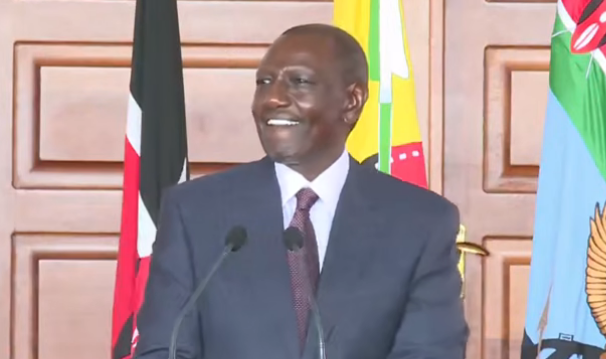
President William Ruto has said his administration will respect all court decisions and directives despite disagreements over certain judicial rulings.
Ruto acknowledged that on several occasions, he has questioned judicial decisions that he believes could impede the implementation of key public policies.
“These concerns are neither expressed lightly nor out of disregard or contempt for the court. It is out of duty to speak honestly and candidly about the consequences such decisions have on the lives and livelihoods of the Kenyan people,” he said.
The President said his administration has always chosen lawful avenues, including appeals where available.
“Where we have been dissatisfied, we have chosen the lawful path of appeal where available rather than defiance or disregard of court orders,” he said.
“I want to give you my undertaking that this administration will not disregard any court rulings. At all times and in all circumstances, we remain guided by one immutable principle: the rule of law must prevail, because without it, no policy, programme, government or country can endure.”
Ruto also congratulated the newly appointed judges of the Court of Appeal, praising their role in strengthening the country’s judiciary.
Beyond affirming respect for the courts, the President said he will approach the Judiciary to seek clarity on the status of policy documents such as election manifestos when their implementation is legally challenged.
“The ultimate authority in the Republic of Kenya is the people, and they speak to us through their votes. I want to understand when the people vote for a manifesto and it is endorsed as a policy document, where does it stand when its implementation is challenged, sometimes on account of public participation, to the detriment of millions who voted for it?” Ruto asked.
He said understanding the legal standing of manifestos is crucial for separating political discourse from individual personalities and focusing on policies, programmes and ideas that form the foundation of government.
The President’s remarks come amid a broader national conversation about the intersection of judicial oversight and government policy execution.
By raising concerns about the legal treatment of manifestos, Ruto highlighted the need to balance judicial scrutiny with the electorate’s mandate, especially when court decisions delay or block the implementation of popular policy initiatives.
Ruto’s administration has faced several legal challenges over policy implementation, including public participation requirements that have stalled certain programmes.
The President’s move to seek judicial guidance signals an attempt to align governance with constitutional obligations while ensuring the government can effectively deliver on its manifesto promises.
by SHARON MWENDE