

By the time most children were learning to ride bicycles or play with dolls, Nusrat Mohammed was learning to rescue.
At just seven, she would walk the narrow streets of Mombasa’s Old Town with her mother, scanning for the vulnerable—a sick kitten, a trembling puppy, an injured bird— and quietly slipping them into her bag.
Sometimes she carried them home after school. Sometimes she simply helped where she could along the way. What mattered was that the creature was defenseless, and Nusrat, even then, felt compelled to act.
That instinct never left her.
Today, Nusrat is a wellness consultant by profession, but in the alleys and backstreets of Mombasa, she is known for something else entirely: a relentless, personal crusade to protect stray cats and shift long-held negative attitudes toward animals.
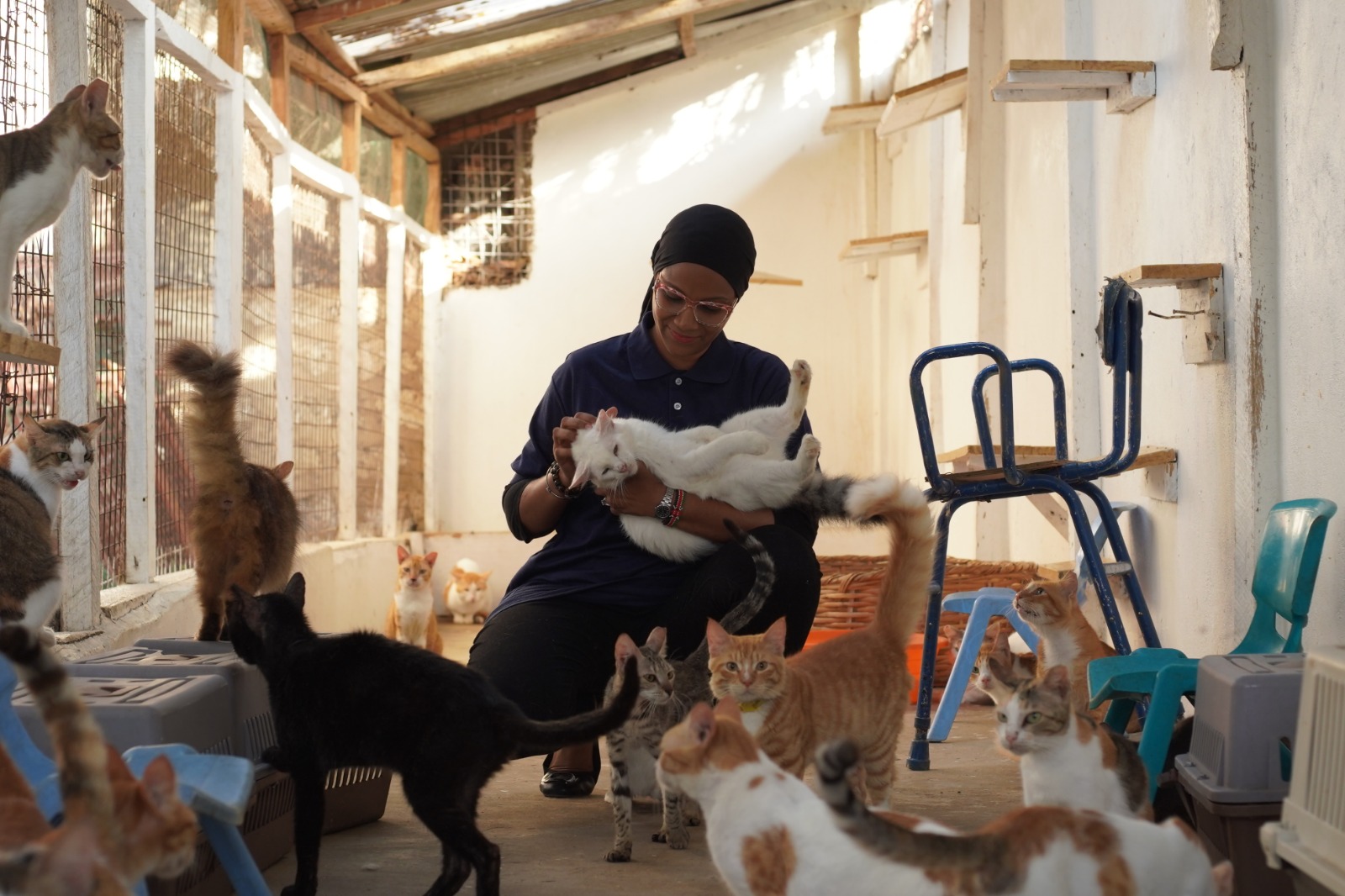
Behind her family home in Kisauni now stands a sanctuary—a haven where cats are sheltered, treated, rehabilitated and celebrated. It is a mission built on love, learning and courage.
Growing up, rescuing animals was rarely welcomed. Nusrat returned home with ticks, fleas and the occasional ringworm infection.
Neighbours and relatives fretted over the “diseases” she brought into the house. Her mother would discover ticks while bathing her.
Yet the discomfort never dimmed her resolve. “I always ended up with ringworms, but over the years, I built my immunity,” she laughs.
In hindsight, her work with animals was more than kindness—it was companionship. As the eldest child with a younger sibling and an often-absent father working in Dubai, Nusrat experienced deep loneliness.
“I saw a lonely creature and I felt lonely too,” she says. “Taking in animals was my way of coping.”
Her childhood rescues grew into structured care. Wherever she lived, she fed community cats, took sick animals to the Kenya Society for the Protection and Care of Animals, and volunteered at Petwell Veterinary Clinic during school breaks.
By 16, she was learning the realities of veterinary care firsthand.
Even after marriage and motherhood, Nusrat never stopped rescuing. While working at Southern Cross Safaris, she bottle-fed abandoned neonatal kittens.
The office garden became an informal “cat zone.” Her dog-loving boss initially resisted. “He said, ‘I don’t want cats here,’” she laughs. By the time she left, Southern Cross had over five cats and a thriving community cat care programme. “It showed me that minds can change. You just have to keep showing people another way.”
But working on the ground also exposed her to cruelty: poisoned cats, drowned kittens, beaten dogs. She observed that much of the abuse stemmed not from religion, but from cultural misunderstanding.
“There’s a belief that dogs are haram,” she explains. “But how can God create an animal and then declare it forbidden to exist?” Myths surrounding cats, often considered ‘jinns’ or evil spirits, are equally misguided. “Male cats make noise when marking territory—that’s all. Nothing to do with spirits,” she says.
Determined to challenge these narratives, Nusrat began engaging sheikhs, madrasa teachers and community leaders, reframing animal welfare through teachings of compassion and stewardship in Islam.
In 2019, journalist and animal activist Mudathir Karim asked her a question that would change everything: “Why don’t you start your own organisation?”
Pwani Animal Welfare (PAW) was born—not as a shelter, but as a movement. Nusrat proposed rabies awareness and vaccination drives to Mombasa county veterinary department, facing initial skepticism.
Public grounds refused her requests, citing religious concerns about dogs. Eventually, Makadara Grounds agreed. The turnout stunned her: over 400 cats and dogs vaccinated, alongside chickens, parrots and rabbits.
“That’s when I realised education was everything,” she says.
PAW promotes neutering, vaccination and treatment where animals live. “If you remove one colony, another will move in,” Nusrat explains. “But if you neuter and vaccinate, you create a healthy, stable community.”
From 2019 to 2021, she operated from home. A rescued kitten testing positive for rabies prompted her family to take pre-exposure vaccinations—a practice they repeat annually.
A backyard shack provided space for rescues, later renovated in 2023 with support from a Memon community foundation. Today, the sanctuary houses about 54 cats, separated by condition, with quarantine and treatment areas.
“Our goal isn’t to be a dumping ground. It’s harmony—healthy animals, informed communities, reduced disease,” she says. Each cat has a name, some inspired by their rescue stories. Since 2019, PAW has handled 200–300 cats annually, totaling nearly 2,000 animals rescued, treated, or rehabilitated.
Staff — fully vaccinated against rabies — manage rescues, community engagement, and daily care. Education is key: Nusrat runs outreach campaigns, school programmes and rabies drives that include interactive games and art for children.
Over 3,000 students have participated in structured animal welfare and environmental curricula with Darwin Animal Doctors (New Zealand), earning certificates and gaining work experience.
Nusrat also confronts resistance in her community. “If family planning isn’t haram for humans, why is it haram for animals?” she asks during neutering campaigns.
Her efforts have transformed human-animal relationships in Mombasa, reducing stray populations and human-animal conflicts, while fostering empathy and stewardship, especially among children.
Mombasa Old Town chief Saida Omar Makkah, supports PAW, mobilising communities for rabies drives and promoting compassion toward street cats.
Dr Mohammed Ahmed of the Kenya Veterinary Association Coast branch praises Nusrat’s work: “She’s linked animal welfare with human livelihoods, public health, and social development.
Communities are actively participating, reporting abuse and sustaining initiatives—making interventions culturally acceptable and sustainable.”
Looking ahead, Nusrat envisions a Mombasa where street cats and dogs coexist safely with humans, cruelty is replaced by understanding and compassion is taught as deliberately as fear once was.
Every rescued cat, every vaccinated dog and every informed child is a step toward that vision.
For Nusrat Mohammed, every alleyway in Old Town still holds a story—of survival, hope and the enduring bond between humans and animals.
by CHARLES MGHENYI