

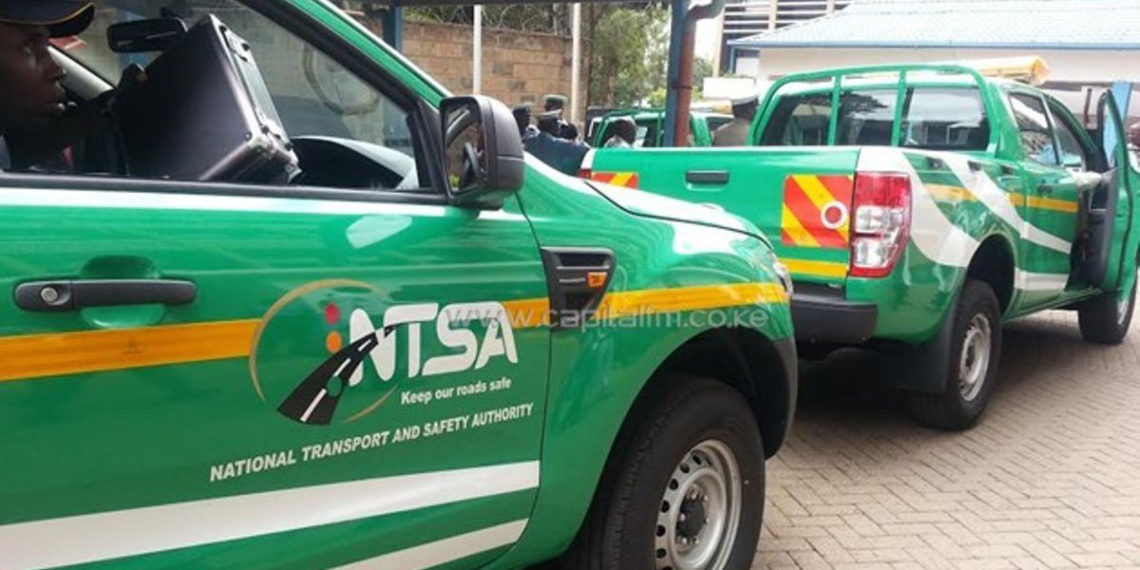
The National Transport and Safety Authority (NTSA) has cautioned the public purchasing former government vehicles against skipping the mandatory re-registration process.
In an advisory posted on its official platforms on Monday, the authority warned that failure to do so could expose buyers to legal and ownership complications.
NTSA said that purchasing an ex-Government of Kenya (GK), parastatal or county government vehicle does not in itself confer full ownership unless the vehicle is formally re-registered under the buyer’s name.
Ex-GK vehicles are typically disposed of through public auctions or direct sales by government institutions.
However, NTSA noted that some buyers fail to complete the re-registration process, leaving vehicles legally tied to the disposing institution.
According to the authority, such omissions can create challenges when transferring ownership, insuring the vehicle, conducting inspections, or in cases where the vehicle becomes involved in traffic offences or criminal investigations.
“Purchased an Ex-GK, Parastatal or County vehicle? Don’t stop at purchase. Re-register the vehicle to enjoy full ownership and avoid future complications,” NTSA warned.
The authority explained that re-registration is conducted through the NTSA Service Portal and involves both online and physical verification stages.
Buyers are required to submit prescribed application forms, identification documents, KRA PIN details, and proof of disposal from the relevant government entity.
The authority further outlined a step-by-step process that buyers must follow to successfully complete the re-registration of ex-GK vehicles.
First, the buyer is required to log in to the NTSA Service Portal at serviceportal.ntsa.go.ke and select the motor vehicle re-registration option under motor vehicle services.
The applicant should then fill in all the required details, including the vehicle particulars and KRA PIN, before proceeding to the next stage.
Once the details are captured, the buyer is required to select the type of number plate to be issued and upload all the mandatory supporting documents.
These include the prescribed application forms, copies of the buyer’s national identification card and KRA PIN certificate, proof of disposal from the government institution, and where applicable, auction-related documents.
After attaching the documents, the applicant should accept the declaration and submit the application, after which payment for re-registration and inspection fees is made through the portal.
NTSA explained that the buyer will then be prompted to log into their account to accept or decline consent for the transfer.
At this stage, the applicant is also required to select the preferred collection point for the number plates and logbook and provide details of an authorised person, if any, who will collect the documents on their behalf.
The seller or disposing institution will subsequently receive a notification prompting them to book a vehicle inspection.
NTSA said the seller is required to log in, book the inspection, and select a preferred inspection centre and date.
Following the inspection, the applicant must submit all the required original physical documents to NTSA for verification.
These documents are examined to confirm ownership details, vehicle identity, and compliance with the authority’s requirements.
Upon successful verification and approval, NTSA will proceed to allocate new number plates and process the logbook in the buyer’s name.
NTSA advised buyers to ensure they follow all the outlined steps and submit complete and accurate documentation to avoid delays in processing.
The authority urged members of the public acquiring ex-government vehicles to complete the process promptly after purchase, warning that failure to do so could result in future challenges.
NTSA further noted that the re-registration process is supported by specific statutory forms and documentation that must be completed accurately for an application to be approved.
According to the authority, buyers are required to fill a prescribed Application Form “A”, which must be duly completed and signed by the applicant.
In addition, Application Form “C” must be filled, signed and stamped by both the disposing government institution and the buyer, confirming the lawful transfer of the vehicle.
NTSA said applicants must also surrender the original GK number plates or present a retention letter from the disposing institution.
Where available, the GK registration certificate (logbook) should be submitted, and in cases where the logbook is missing, the applicant is required to formally notify the authority in writing explaining its unavailability.
Other mandatory requirements include copies of the buyer’s national identification card and KRA PIN certificate, as well as a tape lift of the chassis and engine numbers obtained from the Directorate of Criminal Investigations (DCI).
For vehicles acquired through public auction, NTSA said applicants must provide additional documentation, including a valid auctioneer’s licence, KRA PIN details, and, where applicable, a certificate of incorporation.
“Number plate and Registration certificate not applicable for ex- military vehicles,” the advisory noted.
The authority added that for vehicles whose import duty was not previously paid, a new entry form must be submitted after settling the requisite duty.
NTSA emphasised that all documents must be uploaded through the NTSA Service Portal and later presented in original form during physical verification, noting that incomplete or inaccurate submissions are a common cause of delays in re-registration approvals.
by JAMES GICHIGI