



A transformative shift is sweeping across Lamu county as the near-completion of a modern cotton ginnery in Mpeketoni and the rollout of high-yielding BT cotton seeds signal a full-scale revival of a once-dormant industry.
The ginnery project, a partnership between the national government, the Lamu county government and privately owned Thika Cloth Mills (TCM), is positioned as a cornerstone of Kenya’s broader push to rebuild the cotton-to-textile value chain and reduce reliance on imported raw materials for local manufacturers.
According to the project contractor Duncan Muigai, construction of the Mpeketoni facility is 95 per cent complete, with installation of modern ginning machinery scheduled for February.
Once operational, the plant is expected to employ hundreds of residents, especially the youth, providing a direct boost to the local economy and creating new skills in agro-processing and logistics.
The decision to set up the ginnery in Mpeketoni addresses a long-standing logistical and security challenge.
For decades, cotton farmers in Lamu had to transport their harvest to ginneries in counties such as Meru, Kitui and Makueni, often through insecure routes.
Hesmond Olweny, a Cotton Development Officer at TCM, said the new facility keeps value within the county and reduces risks faced by transporters and farmers.
“By processing cotton closer to where it is grown, we cut costs, improve turnaround time and ensure more of the benefits remain with the local community,” Olweny said.
The industrial investment is being matched by a government-backed intervention at farm level.
The Agriculture ministry, working with TCM and farmer cooperatives, has launched a large-scale rollout of BT cotton seeds, a genetically enhanced variety designed to resist the African bollworm, one of the most destructive pests in cotton production.
Speaking to farmers in Mpeketoni last week, Agriculture PS Paul Rono said the technology would help stabilise yields, reduce the need for repeated chemical spraying and lower production costs.
 A ginnery that is being constructed by the national government in partnership with Lamu county government and Thika Cloth Mills (TCM) in Mpeketoni, Lamu.
“Our goal is to equip farmers with the best inputs so cotton can once again become a reliable source of income and employment,” Rono said, adding that the government is committed to ensuring timely access to certified, high-quality seed.
The impact of the twin interventions is already being reflected in production and earnings.
Lamu county now leads the country in cotton output, supported by four active cooperative societies and a network of more than 10,000 registered farmers.
Last season alone, growers in the county sold approximately 3.5 million kilogrammes of cotton, earning about Sh335 million, largely through off-take agreements with TCM.
The guaranteed market has restored confidence among farmers who struggled for years with unstable prices and the collapse of local ginneries.
TCM CEO Tejal Dhodhia said the company’s strategy is to build a reliable local supply chain that benefits both farmers and manufacturers.
“Lamu produced the highest volume of cotton in the country last season, which shows the potential that exists when farmers are supported with the right inputs and assured markets,” Dhodhia said.
Beyond the economic gains, community leaders say the revival is driving important social change.
Migwi Mwangi, the chairperson Lamu Farmers Cooperative Union, noted that rising prices, up from about Sh52 to Sh72 per kilogramme in some areas, have altered attitudes toward land use and farming among families.
“Parents are now more willing to entrust land to their children because they can see real returns. Cotton has brought back discipline, purpose and hope in many households,” Mwangi said.
Youth participation has become a defining feature of the county’s cotton strategy. At the Lake Kenyatta Cooperative Society, once a major cashew nut collector and now focused on revitalising cotton farming through modernisation, over 1,000 young farmers have been integrated into production and leadership structures.
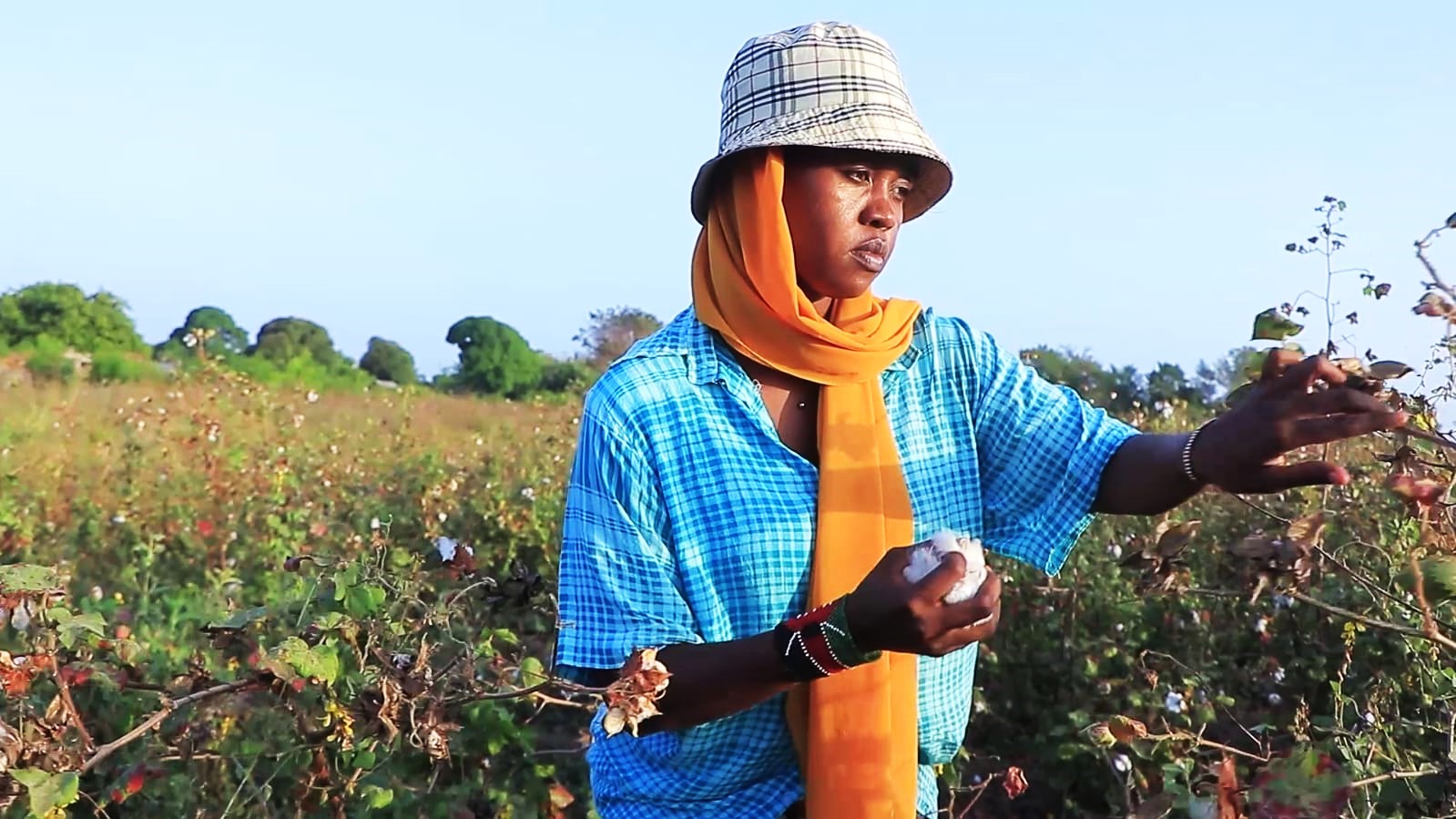 Jennifer Wambui, a farmer, picking cotton in a farm in Lamu county/ ALICE WAITHERA
Jennifer Wambui, a youth leader and cotton farmer, said the crop is increasingly being viewed as a modern and viable business rather than a subsistence activity.
“This has given young people a reason to stay engaged. We are seeing fewer cases of idleness and substance abuse because farming now offers a clear path to income and responsibility,” she said.
The success of BT cotton has also improved productivity. Farmers report stronger plants, higher yields and fewer losses to pests, allowing them to focus resources on expansion and quality improvement rather than constant chemical control.
Kenya’s cotton sector has historically suffered from neglect, ageing ginneries and competition from cheaper imports.
At its peak in the 1980s, the country supported dozens of operational ginneries and hundreds of thousands of farmers, but the industry later collapsed due to liberalisation, high input costs and weak markets.
The current public-private model in Lamu is a blueprint for revival of the sector in other cotton-growing regions such as Busia, Siaya, Kitui and Makueni.
By combining improved seed technology, local processing infrastructure and guaranteed markets, the approach aims to rebuild confidence across the entire value chain—from farmer to factory.
As final installations are completed at the Mpeketoni ginnery and the new planting season begins, optimism is high that Lamu’s ‘white gold’ can once again anchor rural livelihoods while feeding Kenya’s growing textile and apparel industry.
by ALICE WAITHERA