
The Kenya Union of Clinical Officers has renewed pressure on the national government and the Council of Governors to urgently resolve the ongoing nationwide strike by clinical officers, warning that continued stalemate is crippling healthcare service delivery across the country.
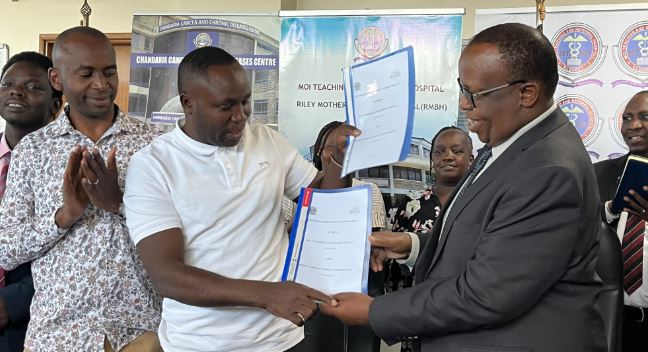
Even as the national strike persists, the union has suspended its industrial action at Moi Teaching and Referral Hospital in Eldoret following successful negotiations with the hospital’s management. The move came after both parties signed a return-to-work agreement aimed at restoring services and safeguarding patient care at the facility.
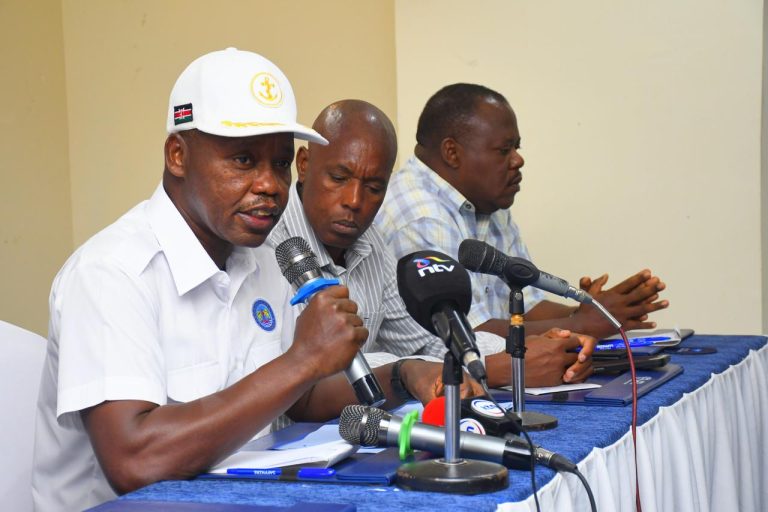
The agreement was signed by MTRH chief executive Dr Phillip Kirwa and Kuco secretary general George Gibore, marking the end of weeks of disruption at one of the country’s largest referral hospitals.
In a notice issued to members, Gibore confirmed that the union had formally called off the strike in the interest of service continuity.
He directed all members employed at the hospital to resume duty within 24 hours, and no later than 48 hours after the signing of the agreement.
“Pursuant to the return-to-work agreement signed between Kuco and the hospital, and in the interest of service continuity and patient care, Kuco hereby suspends its industrial action at MTRH,” he said.
The clinical officers’ strike began on December 23 last year, with the union citing long-standing grievances including delays in signing a new collective bargaining agreement, unresolved welfare concerns and unfavourable working conditions.
Gibore cautioned that the union would closely monitor the implementation of the agreement, warning against any acts of victimisation, coercion or unfair treatment of its members following the suspension of the strike.
“Kuco expects MTRH to honour all commitments set out in the agreement. Any violations arising from this suspension must be reported to the union immediately,” he said.
He praised the hospital’s management for opting for dialogue, noting that the strike had significantly disrupted service delivery and patient care at the facility.
While welcoming the breakthrough at MTRH, the union maintained that the broader national strike remains unresolved. Gibore accused the Ministry of Health and the Council of Governors of failing to engage meaningfully with the union, despite the growing impact of the strike on public health services.
“We want the Ministry and the Council of Governors to emulate MTRH and act with urgency to engage in dialogue and bring this strike to an end,” he said.
Among the union’s key demands is the immediate signing and implementation of a CBA negotiated in 2023 but yet to be signed by the Ministry of Health. It is also calling for the implementation of previously agreed return-to-work formulas, which it says were signed but never honoured.
Additional demands include the absorption of universal health coverage workers into permanent and pensionable terms, inclusion of clinical officers’ facilities in the Social Health Authority system, payment of outstanding dues owed to interns, salary and allowance increments and greater recognition of clinical officers’ role in healthcare delivery and professional dignity.
Dr Kirwa welcomed the return to normalcy, acknowledging that the strike had taken a toll on service provision at the hospital.
“We value the contribution made by all workers to service delivery, and that is why we take issues concerning their welfare seriously,” he said.
As talks at the national level remain stalled, the resolution at MTRH stands out as a rare example of dialogue prevailing — even as pressure mounts on the government to act before the crisis deepens further.
BY MATHEWS NDANYI