
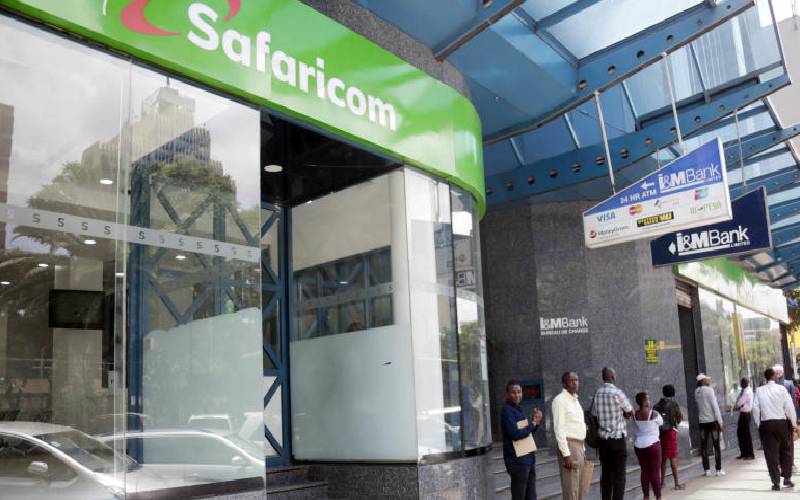
The National Assembly has officially closed the window period for members of the public to submit comments on the proposed sale of the government’s 15 per cent stake in Safaricom.
The public participation, which commenced on December 8, ended on Thursday at 5 PM, with the Departmental Committee on Finance and National Planning, together with the Public Debt and Privatization Committee, receiving well over 12,000 comments by the time of going to press.
A source at the office of the Clerk of the National Assembly hinted to the Star that most of the comments are opposing the deal but declined to give more details.
The public participation complies with Article 88(1)(b) of the Constitution and is a vital step in the government’s bid to raise Sh244.5 billion from the transaction.
The end of public participation now sets the stage for the Parliamentary debate on the deal that has sparked debate, with some Kenyans raising concerns about the potential undervaluation of one of the country’s most profitable companies.
For instance, Kiharu MP, Ndindi Nyoro, has argued that using the current market price as the reference point for the transaction is a facade that would deny Kenyans fair value.
He wants the government to establish the right and optimal value for the stake and questions whether the Nairobi Securities Exchange (NSE) reflects the true worth of major companies.
“Several listed firms trade far below what is considered their real value. Safaricom should not be priced solely based on its share price.”
“The valuation is grossly bad for Kenya. Safaricom shares were trading at Sh45 in 2021, valuing the company at Sh1.8 trillion. Now, the government is selling at Sh34 per share, with a valuation below Sh1.4 trillion. A 24 per cent discount from the 2021 valuation. Either there was self-interest or incompetence in negotiating for a better deal for Kenyans,” said Nyoro.
The former Deputy President, Rigathi Gachagua, and Wiper Leader, Kalonzo Musyoka, who have threatened to oppose the deal in court, share his sentiments.
Even so, the government has defended the planned sale, insisting that it offers a fair value to the country.
“The sale of a 15 per cent stake, which represents 6,009,814,200 ordinary shares at Sh34 per share, gives us a premium of 26.5 per cent. The Kenyan government still holds a significant 20 per cent to influence decision-making,’’ National Treasury boss, John Mbadi said when he officially announced the deal late last year.
He has challenged Ndindi Nyoro to raise his concerns over the sale of Safaricom shares in Parliament.
He instructed the Kiharu legislator to face him before the National Assembly Committees for a balanced debate to gain a factual and realistic picture of the controversy-ridden sale of Safaricom shares.
He said that he was set to shed more light before the Finance and Planning Committee and the Privatization Committee to clarify the records about the highly politicized transaction once parliamentary sessions resume.
The exchequer argues that the partial divestment aims to mobilize non-tax revenue to fund critical infrastructure projects in sectors such as energy, roads, aerospace, water, and digital transformation.
Apart from the actual sale, which could bring in Sh204.3 billion, Vodacom Group will pay Sh40.2 billion upfront instead of future dividends
by VICTOR AMADALA