

In the sweltering heat of a Nairobi summer, President William Ruto’s administration found itself squeezed between the anvil of Western demands and the hammer of Eastern overtures, as the global tempests of 2025 battered Kenya’s fragile political edifice.
From Donald Trump’s return to the White House to stalled IMF talks and the unrelenting ripple effects of the Ukraine war, external forces amplified domestic fissures, fuelling youth unrest and forcing Ruto into a high-wire act of diplomatic diversification.
What emerged was a year in which Kenya’s politics, once insulated by regional clout, became a microcosm of multipolar realignments—a nation navigating superpower rivalries while grappling with bread-and-butter crises that toppled approval ratings and reshaped coalitions.
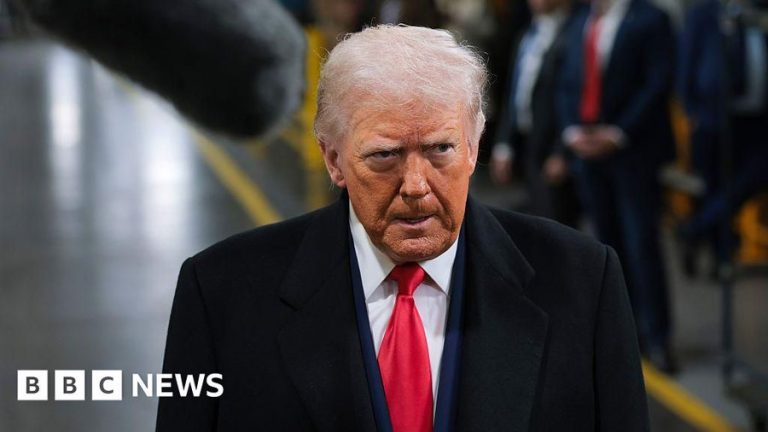
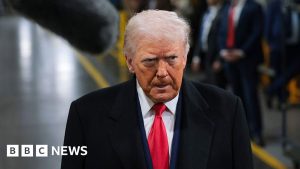
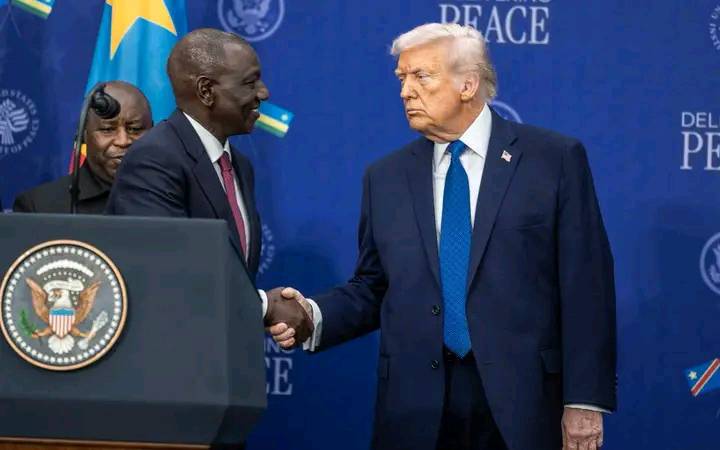
The re-election of Trump in November 2024 cast an immediate shadow over US–Kenya ties, injecting uncertainty into a partnership that had flourished under Joe Biden.
Kenya’s designation as a Major Non-NATO Ally in 2024—a nod to its Haiti deployment—unlocked military aid and training, but Trump’s “America First” ethos raised fears of retrenchment
By mid-2025, Secretary of State Marco Rubio’s visit underscored continuity on security, praising Kenya’s “heroic role” in Haiti during the signing of a $2.5 billion health pact in December.
The deal, replacing USAID frameworks dismantled earlier in the year, funnelled $1.7 billion into HIV, malaria and tuberculosis programmes, emphasising faith-based providers and Kenya’s insurance system.
Yet whispers in Washington corridors hinted at reviews of Kenya’s ally status, triggered by Ruto’s embrace of Beijing.
Haiti’s gang inferno became Kenya’s unlikely geopolitical fulcrum.
The June 2024 deployment of 1,000 Kenyan police officers—still numbering nearly 1,000 by year’s end—evolved into the UN-backed Gang Suppression Force (GSF) after a September mandate expansion.
A fifth contingent of 230 officers landed in Port-au-Prince on December 8, relieving rotations and bolstering operations that reopened roads and schools.
GSF commander Godfrey Otunge hailed the “synchronised blows” against gangs, crediting Kenyan leadership with restoring humanitarian corridors.
Domestically, the mission burnished Ruto’s image as a global player, earning US plaudits and countering critics who decried diverted funds amid 4.5 per cent GDP growth strained by debt.
But protests erupted in October, with activists such as Boniface Mwangi decrying “Haiti before home” as deaths in police custody, including that of blogger Albert Ojwang, ignited fury over resource misallocation.
China, sensing opportunity in the US pivot, deepened its foothold during Ruto’s April state visit to Beijing.
The trip elevated ties to a “Comprehensive Strategic Partnership,” yielding 20 agreements worth $950 million in manufacturing, agriculture and tourism.
Infrastructure pacts revived the stalled Standard Gauge Railway extension and highways, financed through concessional loans and public-private blends.
Xi Jinping and Ruto vowed an “all-weather” community, with China pledging 670 training slots under its 2025 Human Resource Plan.
A zero-tariff trade pact, fast-tracked in October, targeted Kenyan exports such as tea and avocados, countering US tariffs of up to 10 per cent on key goods.
Ruto’s effusive praise—dubbing Kenya and China “co-architects of a new world order”—irked Washington, prompting threats to revoke ally perks and fuelling domestic debates on sovereignty.
These superpower tussles exacerbated Kenya’s economic vice, where global shocks intersected with fiscal austerity.
The Ukraine war’s third-year hangover—spiking wheat, fertiliser and oil prices—eroded household welfare, with real consumption dipping by 2 per cent and nominal incomes falling by 8 per cent in simulations.
Kenya, which imports about 80 per cent of its wheat, saw food inflation hit 12 per cent by mid-year, amplifying Gen Z-led protests that began as Finance Bill commemorations but morphed into broader anti-corruption crusades.
The IMF programme’s April expiry—a $3.6 billion lifeline—left a void, with talks on a new $1.3 billion arrangement stalling over the debt classification of securitised infrastructure loans.
Treasury Cabinet Secretary John Mbadi insisted negotiations would continue into 2026, but analysts warned of a 0.13 per cent GDP hit without a deal, straining Ruto’s “bottom-up” agenda.
A November securitised bond for roads signalled improvisation, but critics lambasted it as off-balance-sheet sleight of hand.
Climate volatility, amplified by COP30 deliberations in Brazil in November, wove another thread into the political tapestry.
Landslides in Kenya’s Rift Valley in early November—killing 21 people and displacing thousands—underscored Vice President Kithure Kindiki’s plea at COP: “Once-in-a-century droughts and floods wipe out lives.”
Ruto’s UN advocacy for AI-driven sustainable development and a proposed Global Trust Summit positioned Kenya as a green leader, with 90 per cent renewable energy and NDC 3.0 targeting a 35 per cent emissions cut by 2035.
Yet African Union Commission chair Mahmoud Ali Youssouf demanded “climate justice” at COP, noting that Africa’s 4 per cent share of global emissions belied its disproportionate suffering.
Domestically, the Nairobi Climate Summit in September rallied youth support for adaptation, but funding shortfalls—despite $300 billion in pledges—fuelled accusations of elite greenwashing amid pastoralist displacement.
These global currents converged to roil Kenya’s internal politics, accelerating Ruto’s July Cabinet purge and the inclusion of a team of rivals from Raila Odinga’s camp in a bid for stability after his death in October.
Meanwhile, Gen Z’s digital mobilisation—from #RejectFinanceBill2 to climate hashtags—democratised dissent, with Nerima Wako of Siasa Place observing that smartphones had become young people’s “first political office.”
Freedom House’s “partly free” rating cited graft and security-force brutality, though judicial independence—annulling polls in 2017 and upholding results in 2022—offered glimmers of institutional resilience.
by BRIAN ORUTA